There are signs that an outbreak of the explosive diarrhea-causing parasitic illness cyclosporiasis is slowing in Michigan, the hardest-hit state in the U.S.
While health officials in the Wolverine state have been regularly reporting increases of thousands of cases in recent weeks, updated tallies are starting to shrink. On Wednesday, total case numbers in the state broke 10,000, according to the Michigan Department of Health and Human Services.
That’s a whopper of a number — but it’s still just a few hundred more than the 9,680 cases the state reported Tuesday and the 9,200 cases reported earlier in the week.
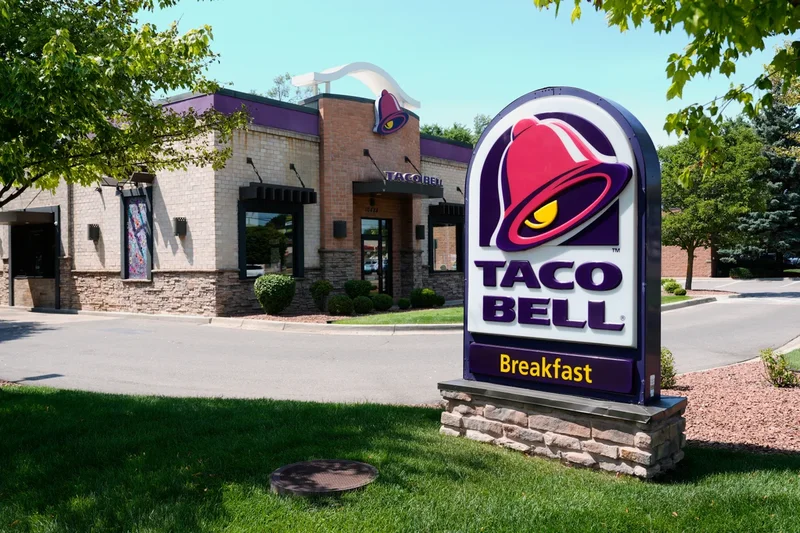
Michigan cases have been tied to contaminated iceberg lettuce, with an investigation leading to a voluntary recall by California salad-maker Taylor Farms and forcing Mexican fast food chain Taco Bell to remove affected products.
“Consumers, restaurants and retailers who purchased or received recalled iceberg lettuce distributed by Taylor Fresh Foods should discard it immediately and not consume it,” the federal Food and Drug Administration advises.
The Taylor Farms outbreak is the largest in the U.S., involving nine states with Taco Bell exposure. Those states are Illinois, Indiana, Kentucky, Kansas, Ohio, Oklahoma, Pennsylvania and West Virginia.
An investigation into that outbreak remains ongoing, as well as inquiries into other outbreaks making up some of the nation’s more than 17,000 cases.
There have been six cyclospora outbreaks since early June, according to the U.S. Food and Drug Administration. Two have since ended, but the agency announced one tied to 72 cases of unknown origin last week. Some cases in North Carolina have been linked to parsley and cilantro, state health officials said.
“The FDA and CDC continue to work together, using every available public health tool to identify additional sources of the outbreak and inform swift public health action,” Health and Human Services spokeswoman Emily Hilliard told The Independent on Wednesday.
Unfortunately, the nature of cyclosporiasis makes it particularly tricky to trace.
Symptoms – including vomiting, nausea and dehydration – can take up to two weeks to appear in people, by which time they may have forgotten what they ate and tainted products may already be out of grocery stores.
The microscopic cyclospora parasite cannot be traced using advanced testing methods, either. Scientists usually grow pathogens in their labs, but they can’t do that with a parasite.
Instead, they have to extract material from the organism and make copies of its DNA, which can sometimes lead to false positive results.
"FDA relies on whole genome sequencing to effectively fingerprint a pathogen to try to isolate a particular pathogen to a particular outbreak to a particular grower. You don't have that in this case,” former FDA Commissioner Scott Gottlieb told Reuters.
Once the human-spread illness is lurking in lettuce and other produce, it’s hard to contain.
The parasite can survive in soil and water for weeks or even months and still cause illness and evades standard food sanitizing treatments, according to the Johns Hopkins Bloomberg School of Public Health.
That is why there’s been a lag in data from the U.S. Centers for Disease Control and Prevention. Since May, the CDC has received reports of 6,707 laboratory-confirmed cases of cyclosporiasis in 45 states. The agency is also aware of more than 11,500 additional cases that are not laboratory confirmed or require further investigation.
In a typical year, the U.S. sees just a few thousand cases, experts told CNN last week.
“We’ve not seen anything like this,” Dr. Kali Kniel, a professor of microbial food safety at the University of Delaware, explained.