I wasn't a mall rat.
Growing up in the 1970s, I didn’t hang out much with my friends at my local mall in New Jersey.
The Livingston Mall, which opened in 1972 with stores including Bamberger’s, Sears and Hahne & Co., may have been a bustling social scene for my peers. But my mother's trips to the mall were mission-driven: to buy me clothes she called “classic” — loafers and plaid dresses. I called them nerdy. So forget about the era’s hottest fads: leather platform wedge sandals, Candie's slide sandals and Puma sneakers.
One hot trend my mom let me have? Straight-leg corduroy pants. As a teen, I had them in an array of colors including burgundy, brown, teal blue and forest green. And I bought them at The Gap, which at the time sold Levi's.`
I thought of these shopping hauls on a recent Saturday as I walked the sprawling parking lot of the Livingston Mall. Practically deserted, it’s the poster child of what retail pundits call a “zombie” mall. Its last department anchor, Macy’s, left in April. The other two big stores, Sears and Lord & Taylor, shuttered during the pandemic. Today, the site features crumbling buildings, overgrown grass, potholes and old tires.
Signs of life came only from a Barnes & Noble, packed with customers taking advantage of its moving-out sale. The store closed earlier this month after being there for more than 18 years. It is relocating.
The fall of the mall, once a symbol of American consumerism, has long been chronicled. But walking around the decaying site where I once spent my youth hit me hard and underscored how dramatically shopping has changed. It also shows how malls are experiencing a K-shaped split — the high end thriving, while malls catering to middle- to lower-income shoppers are struggling.
Like many malls of its era, the Livingston Mall became a casualty of shoppers' migration to online buying, widespread department store closures and eventually the pandemic upheaval. There are now roughly 900 malls in the United States, down from a peak of 1,100 in 2008, according to Green Street, a research firm.
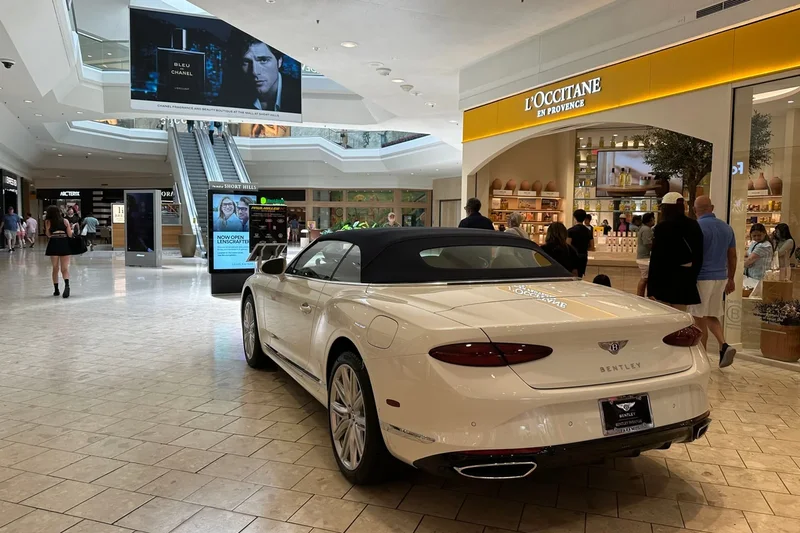
Four miles away is The Mall at Short Hills, which features such high-end stores as Nordstrom and Gucci as well as digital natives like Untuckit. It bustles. I saw groups of teens shopping the racks at stores like Abercrombie & Fitch, taking videos on their cellphones. They're helping to drive a resurgence.
These teen mall rats may make malls cool again. I wasn't one of them.
D'Innocenzio covers retailing, including malls' changing landscapes, at The Associated Press. Part of a recurring series, “American Objects,” marking the 250th anniversary of the United States. For more American objects, click here. For more stories on the anniversary, click here.