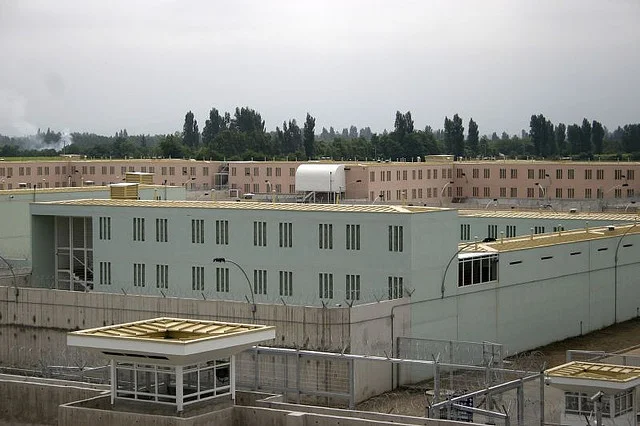
Chile Reworks Prison Concessions to Unlock US$2.65 Billion in Works
Infrastructure & Policy
Chile is overhauling its Chile prison concessions framework, combining legal reforms and a refined public-private model to accelerate an estimated US$2.65 billion in new facilities and ease chronic overcrowding.
A Master Plan Meets a Faster Model
Chile’s Prison Infrastructure Master Plan 2022–2030, approved in 2025, is the backbone of the country’s push to modernise its penitentiary system. It targets around 15,000 new places by the end of the decade, relying heavily on a Build-Operate-Transfer (BOT) concession model.
Under this structure, private firms finance, build, and operate complementary services such as food, health, and maintenance. The state retains full control over security and social reintegration, a division designed to draw private capital while keeping core state functions intact.
To speed things up, the government enacted Law No. 21.783. The reform eliminates the need for an Environmental Qualification Resolution for extensions of existing prisons, a change the Ministry of Justice says will cut project development and construction time by more than 700 days.
The US$2.65 Billion Pipeline in Chile Prison Concessions
While no single document labels a “US$2.65 billion package,” the combined investment signals are clear. Justice Minister Luis Cordero announced that prison infrastructure works between 2024 and 2025 would exceed US$900 million alone.
For the 2026–2027 biennium, InvestChile presented seven new prison centres to European investors with an estimated investment of about US$700 million. The broader security-focused concession portfolio for the same period totals roughly US$3.98 billion, including border control and judicial infrastructure alongside prisons.
Major projects in the pipeline include facilities in Ñuble and Los Ángeles (around US$659 million), plus new builds and expansions in Valparaíso, Antofagasta, and the Metropolitan Region. These figures confirm that billions of dollars in prison PPPs are moving from planning to tender.
Copiapó and Talca: The First Movers
The most advanced project is the Talca-La Laguna prison, awarded to Constructora San José. With an official investment of UF 1.4 million (approximately US$63 million), the facility will house 2,320 inmates and is expected to reach full operation in 2026.
In January 2026, the same company won the concession for the Copiapó “El Arenal” mega-prison. Decree 112 set the official budget at UF 7.12 million, roughly US$300 million, for a 2,160-inmate facility with a 20-to-25-year concession term. Construction is scheduled to begin in 2028, with opening planned for 2031.
These two awards signal that the reworked concession model is functional and attracting bids. They also establish a template for the grouped tenders that will follow.
Santiago 1 and Calama: The Next Wave
An international tender is already open for a new penitentiary complex in Calama, with an official investment estimate of UF 8.69 million. The facility will sit on state-owned land and hold up to 1,850 inmates, serving the mining-heavy Antofagasta region.
In the capital, the Santiago 1 Detention Center expansion is moving toward a Q3 2026 adjudication. The project adds 600 new high- and maximum-security places, a new penal health unit, and administrative buildings, with an estimated cost of UF 4.75 million under a 20-year concession.
Justice Minister Jaime Gajardo has said the government is working to accelerate the construction start to Q3 2026, subject to congressional approval of further legal changes that could shorten building time to 24–36 months.
Grouped Tenders and the 2027 Horizon
The Master Plan groups several expansions into regional packages to attract larger, more experienced concessionaires. The Northern Group bundles Alto Hospicio and La Serena, while the Southern Group combines Rancagua with Valdivia and Puerto Montt.
These tenders are scheduled for Q2 2027 and will add a combined 3,459 places. Together with Calama and Santiago 1, they form the core of the 15,000-place target, translating the Master Plan into concrete, bankable projects.
President Gabriel Boric also announced plans for a new high-security prison near Santiago focused on organised crime, with a projected expense of 95 billion Chilean pesos. The facility would add 500 maximum-security places, expanding national capacity from 600 to 1,100.
What the Rework Means for Investors
Chile’s concession model is well-tested, with nine prison PPPs already operating and providing over 21,000 places. The new legal and regulatory changes are explicitly designed to make the pipeline more attractive to international infrastructure funds and construction firms.
The Ministry of Public Works and the Inter-American Development Bank are conducting an ex-post evaluation of the prison concession system in 2026. The review will propose improvements to economic structure, risk allocation, and private-sector participation, directly shaping the terms for upcoming tenders.
The political climate also supports expansion. The Kast administration, elected in December 2025 and inaugurated in March 2026, has signalled plans to extend the concession system into prisons, hospitals, and social housing, backed by tax incentives and a new national concessions agency with technical autonomy.
Frequently Asked Questions
How does Chile’s prison concession model work?
Chile uses a Build-Operate-Transfer (BOT) model where a private company finances and builds the facility, then operates complementary services like food, health, and maintenance for 20 to 25 years. The state retains full control over security and social reintegration throughout the concession term.
What is the total investment in Chile prison concessions?
While no single official figure exists, combined investment signals point to roughly US$2.65 billion in prison infrastructure works. This includes over US$900 million for 2024–2025, about US$700 million in seven new centres for 2026–2027, and larger security-focused portfolios totalling nearly US$4 billion.
Which prison concession projects are already awarded in Chile?
Two major projects have been awarded to Constructora San José: the Talca-La Laguna prison (US$63 million, full operation in 2026) and the Copiapó El Arenal mega-prison (US$300 million, construction starting in 2028). An international tender for a new Calama complex is also open, and the Santiago 1 expansion is set for adjudication in Q3 2026.
LatAm Markets: Live Signals → — real-time movers, turnover leaders and FX across Latin America.