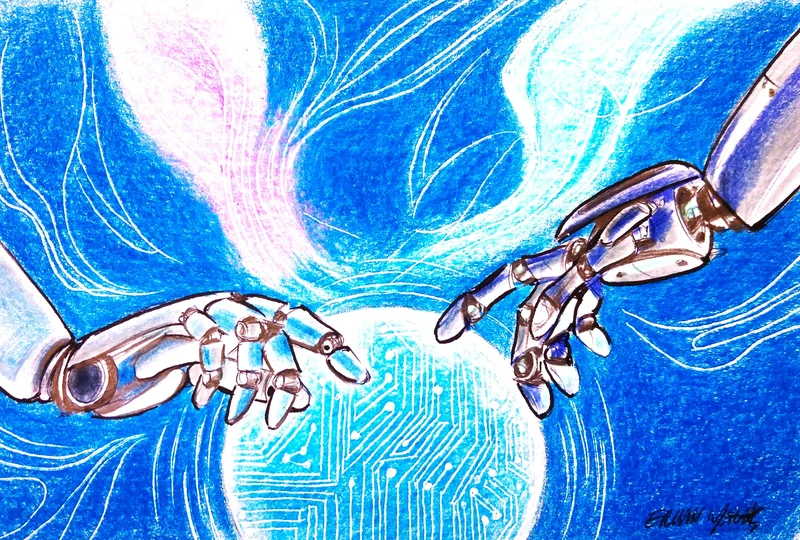
Artificial Intelligence (AI) is no longer merely a matter of technology policy. It has become a question of power that connects states’ mineral resources, energy capacity, access to semiconductors, and authority to make law within a single chain. The question of which rules will govern this chain received a new answer in Shanghai on July 16, 2026.
Twenty-nine states signed the founding agreement of the World Artificial Intelligence Cooperation Organization (WAICO). No G7 country or Western European government was among the founding members.
This placed a second institutional structure alongside the U.S.-led Pax Silica initiative, launched in December 2025. At first glance, the picture suggests that the emerging technopolar order has finally divided into two blocs. Yet these two institutions do not offer competing answers to the same question. One governs material resources, while the other governs norms. This asymmetry does not require states to choose between the two sides. On the contrary, it allows each state to align with different sides across different layers of the technology stack.
This is precisely what distinguishes AI from previous industrial revolutions. Steam power, electricity and computing also created their own supply chains. None of them, however, produced such an extended and divisible sequence of layers, stretching from mineral extraction and energy production to chip manufacturing, model training and ultimately legal regulation. In a structure where different actors control the bottleneck at each link in the chain, alignment is shaped not by a single decision but by a series of separate choices made layer by layer.
The establishment of WAICO, therefore, signals not the formation of opposing camps but the fragmentation of alignment. To understand the order now taking shape, we must look beyond the lists on which states appear and examine whom they depend on at each layer of the technology stack. When signatures are counted, one picture emerges. When agreements are counted, the picture is reversed.
The day after the signing ceremony, Chinese President Xi Jinping personally addressed the opening of the World Artificial Intelligence Conference and emphasized that the development of AI should not be “a solo performance by a single country, but a symphony of international cooperation.” The founding members include Russia, Brazil, Indonesia, Pakistan, Kazakhstan, South Africa and Senegal. 10 African and 12 Asian states make up the broader membership.
A single figure illustrates the gap the organization seeks to fill. According to the 2024 report of the United Nations Secretary-General’s High-level Advisory Body on Artificial Intelligence, 118 countries, primarily in the Global South, participate in none of the seven prominent non-U.N. AI governance initiatives examined in the report. WAICO’s only membership requirement is sovereign statehood. It imposes no test based on regime type, values or political preconditions. The organization promises capacity rather than regulation. At the same time, Xi announced that five thousand training opportunities would be allocated to developing countries over the next five years and that cooperation centers involving the Association of Southeast Asian Nations (ASEAN), the African Union, and BRICS would be established.
Nevertheless, caution is necessary when assessing the organization’s institutional weight. Although its founding document defines WAICO as an independent intergovernmental organization, it does not yet have a budgetary mechanism, a clearly defined project pipeline, or binding standards that members would adopt in place of their national legislation. Parliamentary approval processes for the participation of some members have also not yet been completed. What we have, therefore, is an institution whose legal form has been declared but whose substantive content remains largely undefined. This is also a major reason why the response from Western capitals has so far remained measured.
Understanding the significance of WAICO requires analysis at both the macro and micro levels. At the macro level, the issue must be situated within the context of U.S.-China competition, with particular attention to the relative positions of the two institutions. The other pillar of this framework is Pax Silica, an initiative launched by the U.S. Department of State in December 2025. Following its second summit in June 2026, the number of signatories to the Declaration reached 24, while 35 countries signed the Joint Statement on AI Opportunity at the same summit.
The two institutions govern distinct domains. Pax Silica governs the material foundations of AI: critical minerals, energy inputs, semiconductors and computing capacity. To put it simply, the focus is the “physical AI stack.” WAICO, by contrast, governs norms. Regulations developed by its members are not required to align with the European Union’s AI Act, the Organization for Economic Co-operation and Development (OECD) principles, or the G7 Hiroshima AI Process.
The implications of this distinction are significant. During the Cold War, NATO and the Warsaw Pact offered competing answers to the same question; membership in both was therefore logically impossible. Today, however, a state can sell its minerals to one side while acquiring its digital architecture from the other. This is where technopolarity differs from classical multipolarity: the dividing line runs not between states, but between the layers of the technology stack.
The two strategies also differ in how they operate. The American AI Action Plan of July 2025 combines domestic innovation and infrastructure development with external expansion through the export of the American technology stack. The Pax Silica text states this explicitly, declaring the signatories’ intention to “jointly export AI stacks, including trusted connectivity, to partner countries.” The club is therefore designed as a collective export mechanism directed toward nonmembers, with access made conditional. WAICO’s framework, by contrast, is horizontal.
This difference, however, should not be interpreted as evidence that Beijing attaches greater importance to the Global South. Open-weight models also generate dependencies; they simply do so through ecosystems rather than licensing regimes. The difference lies not in the existence of interests, but in the mechanisms through which influence is exercised: Washington relies on conditionality, whereas Beijing relies on diffusion. Most states, therefore, are unlikely to make a clear-cut choice between the two.
The membership profiles of the two institutions confirm this logic. Pax Silica brings together states that control critical bottlenecks in the supply chain, including Japan, South Korea, the Netherlands, Taiwan, Australia and India. WAICO, by contrast, brings together states that either supply inputs or provide space for the deployment of technological architectures. In other words, the two organizations recruit their members not from rival ideological camps, but from different levels of the same supply chain.
Among the 63 states participating in the three documents, Kazakhstan is the only country represented on both sides. On paper, this produces an almost perfect picture of alignment.
Although the macro-level picture reveals the relative positions of the two institutions, it is insufficient to explain states’ actual choices. Analysis at the micro level requires examining where individual states stand in relation to these two structures and on whom they depend at each layer. The following examples reveal distinct forms of alignment within the same system.
Pakistan is a founding member of WAICO and has deepened its cooperation with China on AI and the digital economy under China Pakistan Economic Corridor (CPEC) 2.0 project, while simultaneously signing a $500 million rare-earth partnership with the United States. This pattern should not be understood simply as geopolitical balancing. Pakistan’s relations with the two powers operate across different layers of the technology stack: it supplies raw-material inputs to the U.S. while obtaining digital architecture from China. What might appear contradictory under Cold War logic is therefore a typical feature of the technopolar order.
Kenya is a founding member of WAICO but also maintains an AI Strategic Dialogue with the U.S., hosts a Microsoft-G42 data center project, and cooperates with Huawei on training public officials. Its position demonstrates how states can simultaneously engage Chinese governance frameworks, American computing infrastructure, and Chinese capacity-building initiatives across different layers of the technology stack.
Kazakhstan is a party to all three documents while maintaining major technology and investment partnerships with both the U.S. and China. Its flexibility derives primarily from its critical minerals and strategic position along major transport corridors, which allow it to resist exclusive alignment.
The micro-level picture therefore reverses the impression created at the macro level. While the lists of signatories appear to delineate two separate camps, the underlying agreements reveal states distributed across different layers of a single system.
All in all, in the coming period, membership figures will not be the most important indicator to watch. Whether WAICO produces, during its first year, a shared computing-access program, a funded capacity-building initiative, or a standards document referenced in national strategies will reveal far more about its durability than the signing ceremony itself. Today, two institutions exist, but in a technopolar order, states’ positions are determined not by the boundaries these institutions draw, but by their own infrastructural realities.