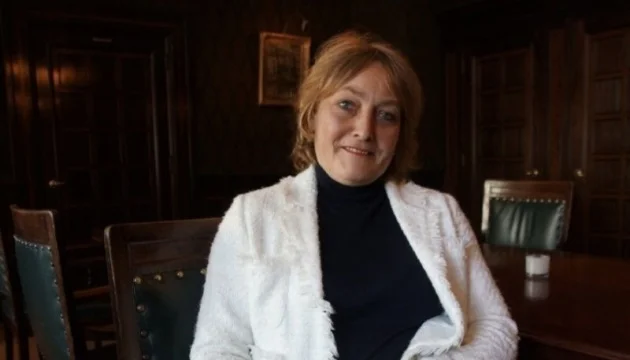
Over de Linden stated this in a comment to Ukrinform.
EU sanctions posed a major challenge for individuals such as Fridman who owned or previously held substantial assets within the European Union.
She noted that the Netherlands was well aware that Fridman had owned Amsterdam Trade Bank, which went bankrupt in April 2022 as a result of the sanctions. According to the expert, the bank had been considered financially sound and had not faced liquidity problems before the sanctions were imposed. She added that, in her view, the case would be highly significant, although a final ruling was likely to take years, and it could ultimately serve as a key test of the EU's sanctions framework.
Over de Linden explained that Fridman was seeking compensation under bilateral investment treaties between the Netherlands, the Benelux countries, and the former Soviet Union, which provided protections for foreign investments. She said that Fridman argued the Netherlands had violated its 1989 investment protection agreement with the Soviet Union by enforcing EU sanctions. As part of the claim, he is seeking compensation for material and non-material damages, reimbursement of legal costs, and interest.
The expert pointed out that Belgium and Luxembourg share one investment treaty with the former Soviet Union, while the Netherlands has a separate agreement. She said Fridman maintained that the sanctions breached the treaty's guarantees regarding investment protection and the right to conduct business.
The claim has been filed with the Permanent Court of Arbitration (PCA) in The Hague, but the arbitration proceedings will take place in Dubai. Over de Linden explained that the PCA had designated the Dubai International Financial Centre as the legal seat of arbitration because of the United Arab Emirates' neutral position on sanctions, adding that this made the case particularly noteworthy.
Read also:NATO chief expects Ukraine's new defense minister to maintain current strategy toward Russia
She said the central legal question would be whether the arbitration tribunal in Dubai would take into account recent amendments to EU sanctions legislation requiring member states to reject claims based on bilateral investment treaties when they are brought by sanctioned individuals.
The lawyer also noted that the European Union had strengthened its sanctions rules in recent years to prevent sanctioned persons from circumventing restrictions through international arbitration. She explained that if the tribunal recognized the primacy of EU sanctions law, Fridman's chances of obtaining compensation would be significantly reduced. However, if the tribunal ruled in favor of the investment treaty, it could establish a difficult legal precedent.
Over de Linden recalled that, since last year, EU sanctions legislation has explicitly required member states to reject compensation claims filed by sanctioned persons under bilateral investment agreements and not to recognize relevant judgments issued by courts in third countries.
She also noted that Fridman had repeatedly challenged EU sanctions and was represented by a large legal team. In her view, the choice of Dubai as the venue for arbitration was motivated less by his travel restrictions than by a desire to have the case heard outside the jurisdiction of the European Union.
According to the expert, Fridman likely believes it would be considerably more difficult to win such a case within the EU. She added that many Russian oligarchs have sought to challenge sanctions and secure their removal from the EU sanctions list, but such efforts have rarely been successful. She noted that the General Court of the European Union has consistently found legal grounds to uphold the sanctions.
As previously reported, Tatyana Navka, the wife of Kremlin spokesman Dmitry Peskov, has also filed a case before the Court of Justice of the European Union seeking to overturn the individual sanctions imposed on her by the European Union.
Photo: Iryna Drabok / Ukrinform