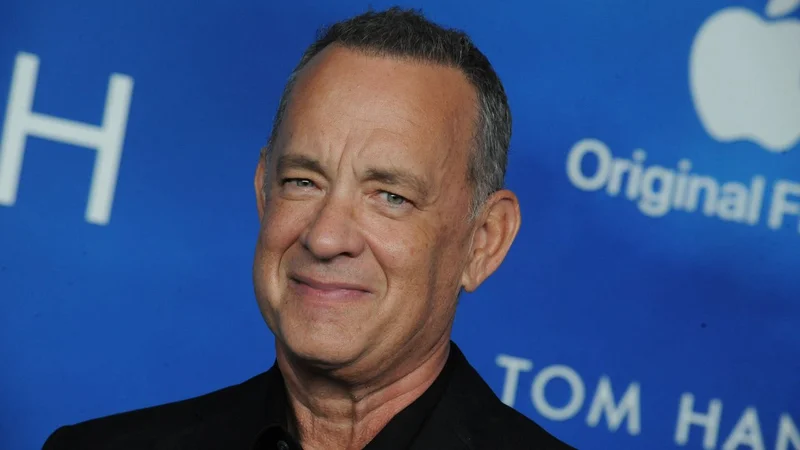
Tom Hanks is one of the most celebrated actors in the world, having starred in several iconic films throughout his career and winning two Academy Awards in the process. Like all actors, however, he's been no stranger to the rise of AI and its potential to upend the film industry.
Life after death
Hanks raised the prospect of his image being used to bring films to life far beyond his death in an episode of The Adam Buxton Podcast.
This article is part of TechRadar Pro's QOTD project to provide an insight into the minds of the brightest and most recognized figures in the technology industry today and in years gone by. Read the full series here.
The notion of using AI in film to either recreate actors that have died, or to generate performances by using the images of living actors, is highly controversial and led to industrial action at the time. Hanks said that he had first anticipated such a future during his work on 2004's 'The Polar Express', which pioneered live-action motion capture CGI.
Using technology to bring actors back from the dead, however, wasn't a new phenomenon. 'Rogue One' used technology to digitally resurrect Peter Cushing as Grand Moff Tarkin, while the 'Irishman' used AI to de-age Robert De Niro, Al Pacino and Joe Pesci so they could portray their characters over a period of decades.
The future of cinema
What's clear now is that AI in film is here to stay, with the technology being utilized in several film and television productions today.
The 2025 Oscars saw films that used AI, including 'Emilia Perez' and 'The Brutalist', win big. Netflix, meanwhile, revealed that 300 titles used generative AI in one form or another this year. Usage spanned every stage, from concepting and visualization to post-production and eventual release.
As far as audiences go, most people may not notice these subtle uses of AI in the production process, and may not object to this kind of AI usage either. But, generally, research consistently shows they reject the idea of AI-generated content.
Keumars Afifi-Sabet is a freelance contributor for Tech Radar and the Technology Editor for Live Science. He has written for a variety of publications including ITPro, The Week Digital and ComputerActive. He has worked as a technology journalist for more than five years, having previously held the role of features editor with ITPro. In his previous role, he oversaw the commissioning and publishing of long form in areas including AI, cyber security, cloud computing and digital transformation.