South Africa has declared gender-based violence (GBV) a national disaster. The statistics are not merely alarming — they are a national indictment. We have one of the highest rates of femicide in the world. Shelters overflow. Courts are clogged. Awareness campaigns multiply. Yet the violence persists, generation after generation, with stubborn, devastating consistency.
We have, as a country, become better at responding to GBV. We are considerably less good at preventing it because the response, however necessary, is always too late. The real question — the one corporate South Africa and policymakers sidestep — is this: Where does the violence come from?
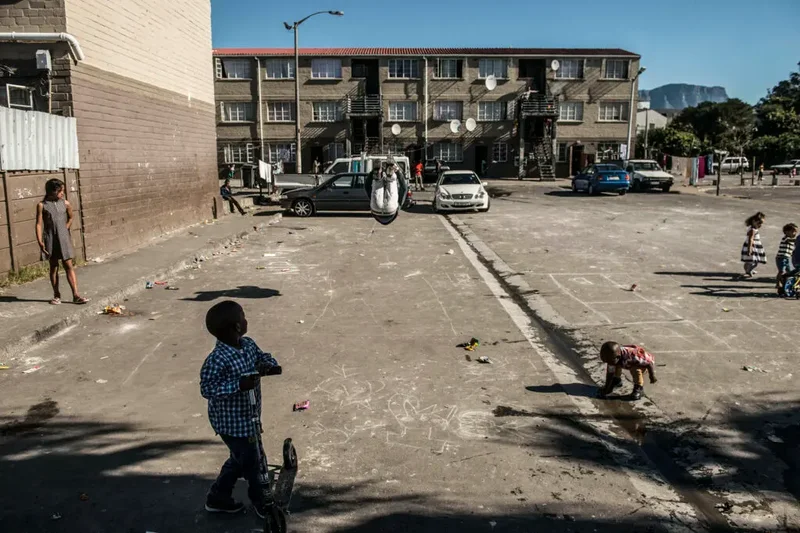
The answer begins with boys. Not bad boys. Not inherently broken boys. But boys growing up where fathers are absent, gangs fill the vacuum and hypermasculinity is not a posture but a survival strategy. These are the boys who become the men in the statistics. Until we intervene in their formation early, deliberately and at scale, we will keep funding ambulances at the bottom of the cliff while ignoring the wall at the top.
To understand the scale of what is at stake, we need to be honest about the data. South Africa does not have one crisis of violence. It has two overlapping ones and conflating them has cost us decades of effective intervention.
The first is a severe GBV problem: women are disproportionately targeted by men in domestic, intimate-partner and sexual violence contexts. This is scientifically well established and demands urgent attention. The second is a vast general interpersonal violence epidemic that is, in sheer numbers, overwhelmingly male on both sides. A major South African Medical Research Council study found that about 90% of homicide victims and 93% of identified perpetrators were men, most of them killed by acquaintances in social settings involving alcohol, knives or firearms. This is peer-reviewed forensic data, not ideology.
Both crises share a common origin: boys who are not taught to manage anger, resolve conflict without dominance or construct an identity that does not depend on the threat of force. Address that and you address both epidemics.
In Cape Town's townships, Heroes Academy, an NGO approaching its fifth year, is doing precisely this — and building evidence that it works.
Founded and funded by businesswoman Warawadee (Eed) Sukonpongpao-Harbich, Heroes Academy runs weekly, conversation-based workshops in township schools from grades 8 to 12, creating safe spaces where boys can challenge the harmful norms their environments relentlessly reinforce. The curriculum covers identity, relationships, consent, anger management and decision-making. The programme reaches 480 young men across its cohort and is gaining traction, attracting media attention, donor interest and ecosystem recognition.
Kolping Mbumba, the organisation's director of operations, is its most compelling proof of concept. He was nine when his father died, pitching him from the Eastern Cape into the shacks of Cape Town. As a teenager he entered gang structures — not because of an appetite for violence but because refusing protection in Nyanga carried its own risks. A mother's intervention broke the cycle.
"What needs to be told more boldly," Mbumba says, "is the story of these young men's transformation, not as passive recipients of support but as agents in their own lives."
The results are visible. In Philippi, boys are reporting GBV incidents to adults when they witness them. In Nyanga, participants have independently created peer mental health safe spaces. In Dunoon, older boys are mentoring younger ones. The programme is replicating itself organically, which is the gold standard of any social intervention.
There is a structural challenge Heroes Academy is working to solve and it represents an opportunity for corporate South Africa. When graduates leave school and enter the real world, maintaining mentorship contact becomes significantly harder, precisely when young men are most vulnerable. The organisation is developing an app to sustain the connection post-graduation: career guidance, life skills and support into early adulthood.
The obstacle is device access. Not every graduate will have a smartphone of sufficient quality. This is a direct call to cellphone operators and hardware providers: here is a programme producing exactly the outcomes your CSI mandates exist to support. A device, data contract and connectivity as part of a graduation pack is not charity; it is infrastructure for an intervention that pays societal dividends for decades.
More broadly, corporate South Africa should be paying attention, not out of obligation but rational self-interest. GBV costs the economy an estimated R28.4 billion annually in lost productivity, healthcare and policing. The figure does not capture the drag of a workforce shaped by trauma or talent consumed by violence before it reaches the labour market.
The boys in Dunoon, Nyanga, Langa and Philippi are your future employees, customers and community members. Investing upstream in their development is not philanthropy. It is risk management. It is the kind of social licence that no marketing campaign can manufacture but that sustained structural investment over years can.
Warawadee Sukonpongpao-Harbich built something worth building. Kolping Mbumba and his team are proving it works. But 480 young men in a country of millions is a proof of concept, not a solution. The model deserves to be replicated in every township in every major city and that requires corporate South Africa to stop treating this as someone else's problem.
We know, with devastating clarity, what happens when we don't.
Heroes Academy operates in township schools across Cape Town. For more information, visit heroesacademy.org.za
Chris Loker is a member of the Heroes Academy Advisory Board. He holds a Business Science (Hons) degree from UCT and as well as several other financial qualifications. Formerly head of Investec’s European Banking Operations in the UK, he leads Moksha Enterprises and Water Financial and serves as a non-executive director on some company boards. He has expertise in leadership, strategy and consulting. He is also a passionate marathon runner.