How Israeli settler terrorism threatens the basics of Palestinian survival
In less than 24 hours last week, four Palestinians were killed and several were injured across the occupied West Bank, as settler attacks spread to multiple villages, leaving homes, vehicles and other property damaged and burned.
In the village of Tell, southwest of Nablus, the four Palestinians were killed on Friday in a settler attack, which also resulted in the deaths of two settlers. Hours later, Israeli forces raided a Nablus hospital to arrest two Palestinians, one of whom was being treated for a gunshot wound, while military closures and checkpoints sealed off large parts of the city and surrounding villages.
Such deaths and injuries are only the most visible manifestations of a much broader process that has been unfolding since October 2023, with consequences extending across the occupied Palestinian territories.
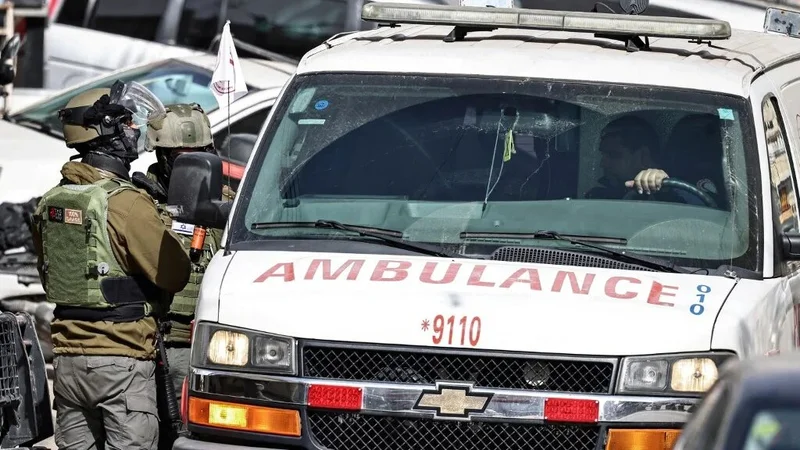
Over the past few days, Palestinians requiring life-saving dialysis have been unable to reach treatment. Women in labour have been prevented from crossing military checkpoints to access hospitals, while ambulances have been blocked from reaching patients due to road closures.
The restrictions have thus disrupted access to emergency care, further undermining the necessary conditions for Palestinian survival.
Since the Gaza war began nearly three years ago, the occupied West Bank has witnessed an unprecedented acceleration of settlement expansion and Israel’s de facto annexation, with thousands of new settler housing units approved.
Swaths of Palestinian territory have been declared “state land”, while settler violence has reached record levels, driving the displacement of at least 45 Palestinian communities since 2023, and reshaping the West Bank’s geography. Hundreds of Palestinians have been killed.
Detours and checkpoints
These developments are rarely understood in the context of public health. But settlement expansion, displacement, military closures and settler violence do more than reshape the political geography of the occupied West Bank; they also reshape the conditions that determine who can live safely, move freely, access healthcare, and ultimately survive.
The reorganisation of Palestinian space is simultaneously a reordering of the conditions necessary for life and survival.
The death of three-month-old Ahmad Zaid earlier this month was among the clearest illustrations. The infant was being rushed to hospital when his family’s passage was blocked at an Israeli military gate near Deir Ammar refugee camp, northwest of Ramallah.
An ambulance waited on the other side as Israeli forces kept the gate closed, despite being informed of the medical emergency. Ahmad was eventually transported to the ambulance via a longer route, but he was later pronounced dead.
In the West Bank, access to care is conditional on whether a checkpoint is open, settlers are blocking a road, or soldiers permit an ambulance to pass
According to the United Nations Office for the Coordination of Humanitarian Affairs (OCHA), as of this month, around 12,000 Palestinians in communities west of Ramallah were effectively isolated by the cumulative closures of access routes.
They rely on lengthy detours, dirt roads and back-to-back ambulance transfers to reach workplaces, schools and health services, while patients requiring regular treatment, such as dialysis, depend on ambulances waiting on opposite sides of military gates. Checkpoints, gates and road closures thereby determine whether patients are able to receive timely care.
But movement restrictions are only one dimension through which settlement expansion is becoming a public health hazard. As settler attacks intensify and new outposts expand across the occupied West Bank, entire Palestinian communities are being uprooted, with the consequences extending far beyond the loss of a home.
Families have been separated from the social networks that provide care and support. Farmers have lost access to the agricultural lands that once sustained their livelihoods and food security. Bedouin communities have been cut off from grazing routes, water sources and essential services.
What was once concentrated largely in Area C is increasingly extending into the heart of the occupied West Bank, reshaping Areas A and B, designated by the Oslo Accords as falling under Palestinian administration.
Growing vulnerability
In the area where Ahmad died this month, OCHA has documented more than 60 settler attacks since early 2024, compared with just nine incidents in the preceding four years. The nearby Ein Ayoub Bedouin community was entirely displaced in August 2025, following recurrent settler attacks and access restrictions.
In addition to causing injuries and deaths, Israeli settler violence and military operations produce chronic fear, psychological distress and persistent insecurity.
Children exposed to repeated violence carry its effects long after an attack has ended. Elderly people and those living with chronic illnesses become increasingly vulnerable when movement is unpredictable and access to care unreliable.
Healthcare workers themselves must navigate checkpoints, road closures and military incursions to reach hospitals and clinics. Public health, in other words, is shaped by whether people can move safely, remain connected to their communities, sustain their businesses, and live without the constant threat of violence.
This is particularly important in the Palestinian context, both in Gaza and the occupied West Bank. In Gaza, Palestinians must navigate a permit regime that renders access to healthcare contingent upon Israeli approval. Patients wait months for responses, often missing appointments; some have died before permits were issued.
In the West Bank, access to care is conditional on whether a checkpoint is open, settlers are blocking a road, or soldiers permit an ambulance to pass. Beyond access to hospitals, the wider conditions through which health is produced and sustained are being reorganised.
Too often, discussions of settlement expansion, annexation and settler violence focus exclusively on territory and international law. These dimensions are crucial, but they overlook the systematic erosion of the conditions that make it possible to live a healthy life.
As the occupied West Bank continues to fragment under the combined weight of settlement expansion, military violence and settler attacks, so too does the infrastructure of care upon which Palestinian communities depend.
The views expressed in this article belong to the author and do not necessarily reflect the editorial policy of Middle East Eye.