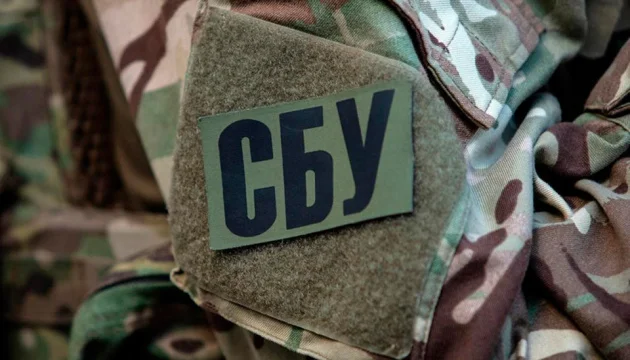
According to Ukrinform, the Security Service of Ukraine reported this.
The suspects operated separately in Kramatorsk and Lyman.
According to the SSU, using intelligence gathered by their agents, the Russians hoped to strike reserve command posts, staging bases, and logistics depots of the Ukrainian Defense Forces fighting on the front lines in the eastern sector.
In Kramatorsk, a driver of a municipal aerial work platform was detained for coordinating airstrikes on the city.
According to the investigation, the suspect was remotely recruited by Russian special services due to his pro-Russian views. To direct enemy fire, he collected coordinates of the Defense Forces’ artillery positions on the outskirts of Kramatorsk. He passed them on to the Russians to carry out missile and drone strikes.
The man stored the information he had collected on his smartphone to report it later to his Russian handler.
To conceal his contacts with the enemy, the agent regularly deleted his correspondence, and to confirm his identity at the start of each communication session, he used a password-greeting.
However, the SSU noted that this did not help him. SSU officers documented every step of the suspect’s espionage activities and caught him red-handed while he was conducting reconnaissance near a military facility.
In Lyman, a former employee of the local branch of Ukrainian Railways (Ukrzaliznytsia) was exposed; he had been recruited by the Russians through an acquaintance, a “deputy” from the temporarily occupied part of the Donetsk region.
Following his instructions, the agent patrolled the frontline town to record and transmit the geolocations of Defense Forces positions and defensive structures to the enemy.
After each reconnaissance mission, the man marked the identified objects on Google Maps for transmission to a “liaison officer,” who then reported them to Russian intelligence officers.
The SSU’s counterintelligence unit detained the suspect in Sloviansk, where Ukrainian defenders had evacuated him from the frontline city.
During searches, smartphones containing evidence of collaboration with the enemy were seized from the detainees.
Read also:SSU detains student who, acting on orders from Russian intelligence services, attempted to cause blackout
SSU investigators notified both suspects of their charges in accordance with the crimes committed under two articles of the Criminal Code of Ukraine:
- Part 2 of Article 111 (treason committed under martial law);
- Part 3 of Article 114-2 (unauthorized dissemination of information regarding the movement, deployment, or location of the Armed Forces of Ukraine under martial law).
The detainees are being held in custody. They face sentences ranging from 12 years in prison to life imprisonment with confiscation of property.
As reported by Ukrinform, the SSU and the National Police detained two more underage agents of the Russian Federation who, on orders from the Russian FSB, set fire to military vehicles and specialized transport serving critical infrastructure in Odesa and the Vinnytsia region.
Photo: SSU