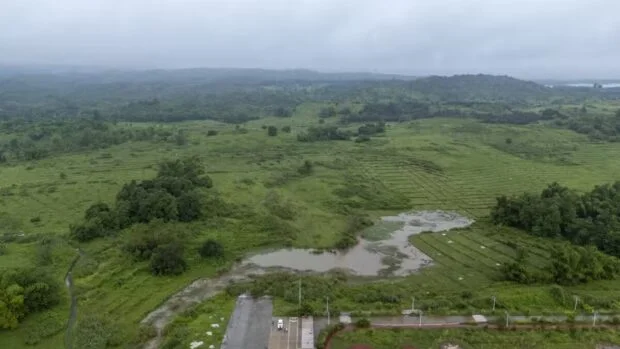
The price of a promise: What Pax Silica would bring and take away
Envisioned as a cutting-edge ecosystem for artificial intelligence and chip manufacturing, the proposed Pax Silica hub is anchored in New Clark City, Tarlac, within the Luzon Economic Corridor.
The project is projected to consume 130 million liters of water daily — matching the needs of 600,000 households — and 3 gigawatts of power, equal to 16% of Luzon’s grid capacity or the output of three coal plants or a nuclear reactor.
Without strict safeguards, Pax Silica could strain Central Luzon’s water and energy systems, with consequences for agriculture, surrounding communities and national sustainability.
Water security is the most immediate concern. Pax Silica’s projected demand exceeds the proposed reservoir capacity of 65 million to 120 million liters a day, creating potential seasonal deficits of 10 million to 65 million liters during El Niño.
Under a best-case scenario, reservoirs supplemented by recycled wastewater would minimize disruption and maintain irrigation. A middle-ground scenario, combining reservoir water with partial groundwater extraction, could reduce household water availability and lower crop yields. In the worst case, reliance on groundwater alone could cause severe shortages, irrigation failures, aquifer depletion and land subsidence.
Wastewater discharge presents additional risks. Semiconductor effluent may contain fluorides, ammonia, nitrates, heavy metals, complex organic compounds and pathogens. Fluorides, heavy metals and complex organics such as tetramethylammonium hydroxide, or TMAH, solvents and photoresists are particularly hazardous because of their toxicity and environmental persistence.
Annual treatment costs range from $14 million to $33 million for chemical precipitation and from $119 million to $190 million for zero liquid discharge, or ZLD, systems.
The report proposes a phased treatment program: chemical and biological processes from 2026 to 2030, ion exchange and membrane filtration from 2030 to 2035, and full ZLD adoption after 2035.
Energy requirements are similarly substantial. Meeting the projected 3-GW demand would require a carefully phased mix of generation and storage.
The pledged 500 megawatts of solar capacity would have to be expanded to at least 1 GW. With Luzon receiving estimated solar irradiance of 4.5 to 5.5 kilowatt-hours per square meter a day, that expansion is considered technically feasible. However, it would require 750 to 1,250 hectares, raising concerns about possible overlap with agricultural areas.
About 500 MW of battery storage would be needed to stabilize intermittent solar generation, at an estimated cost of $234 million to $250 million.
Liquefied natural gas plants providing 1.5 GW of baseload capacity are presented as the most practical short- to medium-term option, with estimated capital costs of $1.5 billion to $2.5 billion. However, LNG would prolong dependence on fossil fuels and expose the project to global price volatility.
A 1-GW nuclear plant is also considered technically feasible but would cost an estimated $6 billion to $10 billion, excluding $500 million to $2 billion in lifetime waste-management costs. The Philippines has no permanent nuclear-waste repository, meaning spent fuel would have to be stored at the plant or handled through an international agreement.
The report recommends treating nuclear power as a last-resort option if renewable-energy expansion cannot meet demand.
Governance and equity are equally important. Economist Cielo Magno argues that Pax Silica should be treated not merely as an investment project but as a national development issue involving land, minerals, water, electricity, taxation and community rights.
The identified risks include replacing dependence on China with dependence on U.S., Japanese and Korean investors; allowing benefits to accrue mainly to elites while farmers and households bear the costs; and failing to disclose contracts and resource-allocation agreements.
Pax Silica offers potential benefits, including economic modernization, geopolitical leverage, accelerated infrastructure development and regional growth. It also presents risks involving water scarcity, energy strain, toxic waste, foreign dependence and social inequality.
The Philippines should therefore adopt a conditional-participation policy. Water security for households and farmers should be guaranteed, renewable energy should be prioritized, Filipino engineers and cooperatives should be integrated into the project, contracts and resource allocations should be transparent, and scenario planning should be institutionalized.
With these safeguards, Pax Silica could contribute to inclusive, resilient and sustainable development. Without them, it could become a costly high-technology liability.
Pax Silica background
Pax Silica is envisioned as a 1,619-hectare semiconductor and AI hub in New Clark City. It is backed by the Bases Conversion and Development Authority, or BCDA, and prospective investors from the United States, Japan and Korea.
The United States has secured approval to convert about 1,600 hectares of BCDA land into a site for advanced AI microchip production.
The chips use materials that include erbium, cerium, dysprosium, carbon and cobalt, underscoring Clark’s potential importance in global supply chains. The Philippines was selected because of its location within the Luzon Economic Corridor and its geopolitical position in the competition between the United States and China over advanced-chip manufacturing.
Protests against the expansion of AI data centers have taken place in 46 U.S. states, including Texas, Washington, Utah, Virginia and California. Objections have focused on the facilities’ water consumption and effects on electrical grids.
Data-center operators, particularly in the Western Hemisphere, are studying ways to reduce water use and dependence on conventional grids, including through solar and wind power.
The development of data centers in the Philippines, including facilities associated with businessman Dennis Uy, is intended to improve connectivity across the archipelago. The infrastructure is complemented by ground-based facilities linked to Elon Musk’s Starlink low-Earth-orbit satellite system, which is intended to extend high-speed internet service to remote communities.
Concerns have also been raised about Indigenous land use. BCDA has said no Aeta ancestral-domain land covered by certificates of ancestral domain title is being used for Pax Silica. The designated area is reserved for industrial, manufacturing and tourism purposes.
Some Indigenous individuals and retired military personnel have been accused of illegally selling rights to BCDA and ancestral-domain land. Formal complaints have been filed over the alleged transactions.
BCDA’s position is that the project will not directly displace Aeta farmers. Governance challenges nevertheless remain in protecting land rights and preventing illegal settlements and transactions.
The project is also linked to broader geopolitical considerations.
The Enhanced Defense Cooperation Agreement, or EDCA, allows the United States rotational access to nine Philippine locations for defense and humanitarian purposes. The arrangement reinforces the country’s strategic alignment with the United States amid intensifying economic and technological competition with China.
China accounts for a large share of legacy and mature-node chip production used in vehicles, phones and trains. The United States, meanwhile, seeks to limit Chinese advances in next-generation AI chips.
The report states that the United States produced 40% of the world’s chips in 2023, generating $35 billion in sales, while Nvidia, led by Jensen Huang, remained a leader in advanced AI processors.
By locating Pax Silica in Clark, the United States and its allies seek to strengthen supply chains for advanced chips and the minerals used in their production. Many of those minerals are mined in Australia and supplied to technology facilities worldwide.
Pax Silica is therefore both an industrial project and a geopolitical initiative. It could make the Philippines a strategic partner in U.S.-led supply-chain diversification while raising urgent questions about resource allocation, environmental protection and governance.
Comparative geopolitical roles in AI chip production
| Country | Current role in the semiconductor industry | Strategic assets | Constraints and risks | Geopolitical objective |
|---|---|---|---|---|
| Philippines | Emerging hub through Pax Silica in Clark and part of the Luzon Economic Corridor | About 1,600 hectares of BCDA land; strategic location near the South China Sea; access to U.S., Japanese and Korean investment; links to Starlink and domestic data centers | Projected demand of 130 million liters of water a day and 3 GW of electricity; possible effects on farmers and communities; limited domestic intellectual property and research capacity; transparency concerns | Participate in diversified technology supply chains; use geopolitical ties to attract infrastructure and investment; modernize the economy while managing resource risks |
| United States | Leader in advanced-node AI chips; the report attributes 40% of global chip production and $35 billion in sales to the country in 2023 | Nvidia’s position in AI chips; access to rare-earth supply chains; military-industrial integration; strategic access through EDCA | Domestic opposition to data-center water and energy use; high costs of nuclear and renewable-energy development; dependence on imported rare-earth materials | Limit China’s advances in sophisticated AI chips; secure supply chains through allies; maintain technological leadership |
| China | Major producer of legacy and mature-node chips, with a reported 30% global share | Large manufacturing base; state-supported research and subsidies; control of substantial rare-earth mining and refining capacity; access to Belt and Road markets | U.S. restrictions on advanced technologies; limited access to cutting-edge lithography; exposure to supply-chain bottlenecks | Maintain its position in legacy chips; expand into advanced AI processors; use technology as leverage in trade and security |
Why Clark, Angeles City, was selected
Clark was chosen for Pax Silica because of its existing infrastructure and strategic location.
As a former U.S. military base, Clark has runways, roads and utilities. Its Central Luzon location provides access to Metro Manila without the capital’s congestion.
Clark is also near Subic Bay and other ports, supporting the movement of semiconductor products and industrial materials.
The area has been designated for development since the 1990s, with New Clark City planned as a modern industrial and residential center. Pax Silica builds on that planning and on Clark’s historical role as a logistics and defense hub (INQUIRER.net, 2026).
Pros and cons of Pax Silica
The project’s potential benefits include economic modernization, geopolitical leverage, accelerated infrastructure investment and regional development. Its risks include pressure on water and energy systems, environmental contamination, foreign dependence and unequal distribution of costs and benefits.
Economic modernization
Pax Silica could contribute to the modernization of the Philippine economy by hosting semiconductor fabrication plants, AI data centers and advanced logistics facilities.
The project could create high-value jobs for engineers, technicians and data scientists. Competitive salaries and domestic career opportunities could also help retain Filipino professionals who might otherwise seek work abroad.
Pax Silica could encourage the development of local suppliers, university programs and technical-training institutions, helping build domestic technological capacity (Magno, 2026).
READ: Pax Silica could bring 200,000 jobs to PH
Geopolitical leverage
As part of the Luzon Economic Corridor, Pax Silica aligns the Philippines with U.S. and Japanese efforts to diversify semiconductor supply chains away from China.
That role could give the Philippines additional leverage in negotiations involving trade, security and investment. Participation in critical-technology supply chains could also strengthen the country’s diplomatic position and reduce its exposure to economic coercion (ABS-CBN News, 2026).
Infrastructure acceleration
Pax Silica’s projected need for 130 million liters of water a day and 3 GW of electricity would require rapid development of reservoirs, solar farms, LNG plants, battery-storage facilities and possibly nuclear-generation capacity.
Although the requirements present major challenges, they could encourage long-delayed investments in Central Luzon’s energy and water infrastructure.
If properly planned, such investments could improve the reliability of water and electricity services for nearby communities and reduce their vulnerability to droughts and brownouts (GMA News Online, 2026).
Regional uplift
Pax Silica could establish Tarlac and the broader Clark-New Clark corridor as a technology and industrial center.
That development could diversify Central Luzon’s economy beyond agriculture and logistics and create opportunities for local businesses, cooperatives and universities.
Clark’s land area, proximity to Metro Manila and access to international airports and seaports make it suitable for large industrial projects. Its conversion from a former military base into an industrial estate also reflects the area’s changing role in national development (INQUIRER.net, 2026).
The drawbacks of Pax Silica
Pax Silica’s projected water consumption is comparable to that of a medium-sized city or about 600,000 households, based on household use of 200 liters a day.
The project would require reservoirs capable of supplying 65 million to 120 million liters a day. Its 3-GW electricity requirement is comparable to the output of three large coal plants or one nuclear facility and represents about 16% of Luzon’s grid capacity.
These figures raise questions about resource allocation, energy security, dependence on foreign investors, social equity, environmental protection, governance and long-term sustainability.
Water requirements pose severe risks
Pax Silica’s projected demand of 130 million liters a day could reduce the water available for irrigation in Angeles, Capas and Tarlac, affecting rice and vegetable production.
Excessive groundwater extraction could cause aquifer depletion and land subsidence. Wastewater from semiconductor fabrication plants could also contaminate rivers with heavy metals and toxic chemicals.
Without strong safeguards, the project could worsen water shortages and environmental degradation in vulnerable communities (Magno, 2026).
Energy strain
A demand of 3 GW could place substantial pressure on Luzon’s power grid and potentially contribute to brownouts or higher electricity costs for households and industries.
Solar power and LNG are among the proposed sources. The project’s scale has also prompted discussion of nuclear energy.
Nuclear generation could supply stable baseload power but faces political, regulatory, financial and safety challenges in the Philippines. Poorly coordinated energy planning could weaken rather than improve grid stability (ABS-CBN News, 2026).
Dependency shift
Although Pax Silica may reduce dependence on China, it could replace that dependence with reliance on U.S., Japanese and Korean investors.
If Philippine firms remain peripheral suppliers and foreign companies retain control of intellectual property, the country may not achieve substantial technological autonomy.
The arrangement could repeat patterns in which raw materials and labor are supplied locally while most of the economic value is captured elsewhere (Magno, 2026).
Social inequity
Large projects can concentrate benefits among foreign investors, domestic conglomerates and political interests while transferring costs to less powerful communities.
Farmers could lose access to irrigation, households could face higher utility costs, and Indigenous communities could face land-related pressures.
Without transparent decision-making and equitable benefit-sharing, Pax Silica could widen inequality rather than support inclusive development (Magno, 2026).
Health hazards from semiconductor waste
Complex organic compounds in semiconductor wastewater, including TMAH, solvents and photoresists, are identified in the report as potentially carcinogenic, endocrine-disrupting and environmentally persistent.
Their risks are examined in detail in later sections.
Environmental footprint
Semiconductor fabrication plants generate hazardous waste, while AI data centers require large volumes of cooling water and electricity.
Emissions from LNG plants and any continued reliance on coal could conflict with the Philippines’ climate commitments.
Unless renewable energy and strict environmental safeguards are prioritized, Pax Silica could become a major source of pollution rather than a sustainable industrial hub (GMA News Online, 2026).
Pax Silica risk assessment
Water requirements and sources
The principal water-related risks include the diversion of irrigation supplies from rice and vegetable farms in Angeles, Capas and Tarlac; overextraction of groundwater; land subsidence; aquifer damage; and wastewater containing fluorides, heavy metals and other toxic substances.
Water-balance scenarios
The effects on communities and agriculture will depend on how Pax Silica obtains its water.
In a best-case scenario, the project would draw primarily from reservoirs and supplement that supply with recycled wastewater. This approach would reduce pressure on household supplies and help maintain irrigation for rice and vegetable farms.
Because recycled water would offset freshwater withdrawals, the risk to communities would be relatively low.
A middle-ground scenario would combine reservoir water with limited groundwater extraction. Although this could provide an immediate industrial supply, it would reduce the water available to households and place additional pressure on irrigation systems.
Farmers could experience lower crop yields, particularly during dry seasons and El Niño. The risks would remain manageable only if groundwater withdrawals were strictly monitored and limited.
A worst-case scenario would rely almost entirely on groundwater. This could cause household shortages, aquifer depletion and land subsidence.
Irrigation systems could fail, threatening food production in Angeles, Capas and Tarlac. Communities could face rationing, and farmers could lose harvests.
The scenarios demonstrate the importance of reservoir development, wastewater recycling and strict groundwater regulation.
Policymakers should prioritize impounding reservoirs and require industrial water recycling to prevent the worst outcomes. Water-security guarantees would help ensure that industrial development does not come at the expense of food production and household welfare (Chen and Lo, 2020; Magno, 2026; GMA News Online, 2026).
Pax Silica electricity requirements and sources
Pax Silica is projected to require 3 GW of electricity, equivalent to about 16% of Luzon’s current grid capacity.
Only 500 MW of solar capacity has been pledged, leaving a 2.5-GW gap that would have to be filled through a combination of renewable and conventional sources.
One option is a solar-and-LNG system. Solar farms would supply renewable power during daylight hours, while LNG plants would provide dispatchable generation and support continuous industrial operations.
Luzon receives estimated solar irradiance of 4.5 to 5.5 kilowatt-hours per square meter a day, making large-scale solar development technically feasible.
Solar power is intermittent, however, and cannot meet continuous industrial demand without storage or backup generation.
LNG plants located within or near the hub could supply baseload and flexible power. They would need to comply with strict emissions standards to remain consistent with Philippine commitments under the Paris climate agreement (GMA News Online, 2026).
Battery-storage systems would be needed to stabilize solar generation. A 500-MW storage system could absorb excess solar energy and release it at night or during cloudy periods.
Storage could reduce fossil-fuel use and strengthen grid resilience, but large-scale systems remain expensive. Policymakers may have to consider incentives or other measures to attract investment (Chen and Lo, 2020).
Cost breakdown for 500 MW of battery capacity
A utility-scale battery system is generally measured by both power capacity and storage duration.
A 500-MW system designed to operate for four hours would provide 2,000 megawatt-hours, or 2 million kilowatt-hours, of storage.
At an estimated 2026 turnkey cost of $117 to $125 per kilowatt-hour, including cells, power-conversion systems, transformers, civil works, grid interconnection and labor, the total cost would be:
- Low estimate:2 million kilowatt-hours multiplied by $117, or $234 million.
- High estimate:2 million kilowatt-hours multiplied by $125, or $250 million.
The report also cites regional costs ranging from $90 per kilowatt-hour in China to $380 per kilowatt-hour in the United States. Under those estimates, the same project could cost from $180 million to $760 million, depending on location, supply chains and regulation.
Key considerations
Balance-of-system costs: Transformers, switchgear, cooling systems and other electrical infrastructure can account for an additional 15% to 25% of total costs.
Grid interconnection: Interconnection expenses may represent 8% to 12% of the project cost and are often underestimated.
Labor and tariffs: Projects in the United States and Europe generally face higher labor and import costs, while Asian projects may benefit from less expensive supply chains.
Storage duration: A two-hour system would cost substantially less than a four-hour installation, while an eight-hour system would cost more.
Payback period: The report estimates a typical payback period of five to eight years without incentives, with a shorter period possible when subsidies or tax credits are available.
Risks and trade-offs
Even at the lower estimate of $234 million, the battery system would require substantial upfront investment.
Lithium iron phosphate cells dominate many utility-scale projects, although emerging technologies such as sodium-ion batteries could reduce costs.
Government incentives, carbon pricing and renewable-energy requirements would influence the system’s financial viability.
Annual operations and maintenance expenses are estimated at 2% to 3% of capital expenditure and would have to be included in long-term budgets.
For Pax Silica, a 500-MW battery system is presented as necessary to stabilize solar generation and reduce reliance on LNG.
Policymakers would have to weigh its initial cost against potential benefits, including stronger grid resilience, lower emissions and closer alignment with the Philippines’ climate commitments.
Nuclear power
Nuclear power is the most controversial energy option considered in the report.
A 1-GW plant could provide stable baseload generation, but nuclear development in the Philippines faces political, regulatory, financial and safety barriers.
Public opposition, waste-disposal concerns and high capital costs make the option less practical in the short term.
Any nuclear proposal would require a comprehensive feasibility study, compliance with international safety standards and broad public consultation (ABS-CBN News, 2026).
A 1-GW nuclear plant in the Philippines is estimated to cost $6 billion to $10 billion. Nuclear-waste management could add $500 million to $2 billion over the plant’s operating life.
The Philippines has no licensed permanent repository for nuclear waste, so spent fuel would have to remain at the plant or be handled under an international arrangement.
Cost components of a 1-GW nuclear plant
| Major cost category | Estimated range | Notes |
|---|---|---|
| Construction and capital investment | $6 billion to $10 billion | Based on an estimated $6,000 to $10,000 per kilowatt for large reactors. Includes site preparation, reactor systems, cooling infrastructure, safety compliance and labor. The estimated construction period is eight to 12 years. |
| Waste management and disposal | $500 million to $2 billion over the plant’s life | Includes interim storage, transportation and eventual disposal. Because the Philippines has no permanent repository, options would include dry-cask storage at the plant or arrangements with international facilities. |
Nuclear-waste disposal options
On-site interim storage: Spent fuel would be stored in pools or dry casks at the plant. This is the default arrangement in countries without permanent repositories, but it presents long-term safety and security issues.
Regional repository: No such facility is currently available in Southeast Asia. Establishing one would require multinational agreements and substantial investment.
International arrangements: The report identifies facilities or programs in France, Finland and Russia as possible reference points. Any arrangement involving foreign facilities would be expensive, politically sensitive and subject to strict contracts and safeguards.
Policy implications for the Philippines
High capital cost: At $6 billion to $10 billion, nuclear power would be more capital-intensive than LNG or solar generation. Financing would probably require sovereign guarantees, foreign partnerships or both.
Waste management: Without a domestic repository, the Philippines would have to store waste at the plant or negotiate an international agreement, adding an estimated $500 million to $2 billion in lifetime costs.
Regulatory readiness: Executive Order No. 164, issued in 2022, established a policy foundation for nuclear power. The country, however, still lacks a fully operational independent nuclear regulatory authority.
Public acceptance: Concerns associated with the Bataan Nuclear Power Plant make broad public consultation essential before any nuclear project proceeds.
Pax Silica’s electricity demand requires a phased strategy.
In the short term, solar generation should be expanded and supported by battery storage, while LNG plants provide transitional baseload capacity.
In the medium term, renewable energy should account for at least 60% of the hub’s power mix by 2035.
Nuclear power should remain a fallback option, considered only if renewable development cannot meet demand.
Embedded power plants should be regulated to prevent monopolistic practices. Any surplus electricity should be available to surrounding communities to reduce the risk of brownouts.
Energy-mix projections and implementation
Pax Silica’s projected requirement of 3 GW calls for a carefully phased energy plan.
The pledged 500 MW of solar capacity should be expanded to 1 GW, taking advantage of Central Luzon’s solar resources.
Solar installations should be paired with 500 MW of battery storage to stabilize the intermittent supply.
LNG plants capable of providing 1.5 GW should be developed as transitional baseload and flexible generation. Strict emissions standards should apply.
A 1-GW nuclear facility should remain a last-resort option and should proceed only after feasibility studies, public consultations and compliance with international safety standards.
The Department of Energy, or DOE, should require renewable sources to provide at least 60% of Pax Silica’s electricity by 2035 and should report annually to Congress.
Regulators should also prevent anticompetitive practices by embedded power suppliers and require surplus electricity to be shared with surrounding communities when possible.
Comparative energy-mix options for Pax Silica
| Source | Capacity contribution | Estimated cost | Features | Implementability in the Philippines | Risks and constraints |
|---|---|---|---|---|---|
| Solar photovoltaic farms | Expansion from the pledged 500 MW to 1 GW | $800 million to $1.2 billion | Renewable, scalable and supported by irradiance of 4.5 to 5.5 kilowatt-hours per square meter a day | High potential in Central Luzon, subject to land allocation and grid integration | Intermittent output; requires storage; possible land-use conflicts |
| Battery storage | 500 MW with four-hour duration | $234 million to $250 million | Stores excess solar energy and releases it at night or during low-output periods | Technology is commercially available but may require incentives | High upfront cost; limited duration; annual operations and maintenance costs of 2% to 3% |
| LNG plants | 1.5 GW of baseload and flexible generation | $1.5 billion to $2.5 billion | Dispatchable and generally less carbon-intensive than coal | Feasible because of existing and planned LNG-import infrastructure | Dependence on fossil fuels; global price volatility; emissions |
| Nuclear power | 1 GW of baseload generation | $6 billion to $10 billion, plus $500 million to $2 billion for waste management | Stable, low-operating-carbon generation with a possible 40- to 60-year lifespan | Technically feasible but politically sensitive; requires a stronger regulatory framework | Safety concerns; unresolved waste disposal; construction period of eight to 12 years |
Solar generation paired with battery storage would provide cleaner energy and improve grid stability but would require substantial capital and land.
Expanding solar capacity to 1 GW and installing 500 MW of storage could supply about one-third of Pax Silica’s demand.
LNG plants are presented as the most practical short- to medium-term option for supplying 1.5 GW of reliable capacity. However, they would extend fossil-fuel dependence and expose the country to global LNG prices.
Nuclear power could supply stable generation but would be far more expensive. A 1-GW plant would cost an estimated $6 billion to $10 billion, excluding $500 million to $2 billion in waste-management expenses.
Because the Philippines has no permanent nuclear-waste repository, spent fuel would have to be stored at the plant or managed through an international agreement.
Nuclear power should therefore remain a last-resort option.
How large is a 500-MW solar farm?
A 500-MW solar farm would require an estimated 750 to 1,250 hectares.
BCDA has earmarked a 500-hectare site in New Clark City for a utility-scale solar and battery-storage project with a capacity of up to 500 MW.
Although the site uses land designated for development, it borders agricultural areas in Capas and Bamban. Measures such as agrivoltaics or the use of degraded land could reduce the potential displacement of farmers.
Recent geospatial studies and government announcements identify several possible locations:
New Clark City, Tarlac: BCDA and Acwa Power signed a lease covering a 500-hectare site for a solar and battery-storage facility with a capacity of up to 500 MW. The location is part of a planned industrial expansion but is near agricultural areas in Capas and Bamban.
Clark Plains and Pampanga flatlands: These areas have high solar irradiance and access to transmission lines. Some sites are idle or degraded, although others overlap with rice and vegetable farms.
Idle grasslands and degraded soils: Geographic-information-system studies identify nonarable areas with low agricultural productivity or abandoned pastureland as potentially suitable for solar installations.
Agrivoltaic sites: A national study found that 81.8% of Philippine cropland could potentially support elevated solar panels above shade-tolerant crops. This arrangement would allow land to be used for both agriculture and energy production.
Conversion of productive farmland, however, could reduce crop output and threaten small farmers’ livelihoods.
Without cooperative arrangements and equitable benefit-sharing, investors could receive most of the gains while local communities bear the costs.
Cost scenarios and environmental effectiveness of wastewater-treatment technologies
Pax Silica’s wastewater-treatment options involve trade-offs among cost, pollutant-removal efficiency and long-term sustainability.
Each technology has advantages and limitations. A phased program would allow the project to address immediate industrial needs while gradually strengthening environmental protection.
Chemical precipitation
Chemical precipitation using lime or alum is the most accessible initial treatment.
At 30 cents to 70 cents per cubic meter, annual costs for Pax Silica are estimated at $14 million to $33 million.
The process removes about 60% to 70% of pollutants and is particularly useful for fluorides and some metals. It generates large volumes of sludge that must be safely handled and disposed of.
Chemical precipitation is considered suitable as a primary treatment from 2026 to 2030, but it would not independently meet stringent semiconductor-effluent standards (Chen and Lo, 2020).
Biological treatment
Anaerobic, oxic and anoxic biological processes are estimated to cost 20 cents to 60 cents per cubic meter, or $9 million to $28 million annually.
They can remove 70% to 80% of ammonia and nitrates but are less effective against heavy metals and fluorides.
Biological processes should therefore be combined with chemical or physical treatment (Chen and Lo, 2020).
Ion exchange
Ion-exchange systems are a midrange option costing an estimated 50 cents to $1.20 per cubic meter, or $24 million to $57 million a year.
They can remove 85% to 90% of pollutants, particularly fluorides and heavy metals.
The process produces brine waste, which requires careful management. Ion exchange should be incorporated from 2030 to 2035, with strict rules for brine disposal (Chen and Lo, 2020).
Membrane filtration
Reverse osmosis, nanofiltration and ultrafiltration are estimated to cost 80 cents to $1.50 per cubic meter, equivalent to $38 million to $71 million annually.
These processes can remove 90% to 95% of fluorides, metals and dissolved solids but consume substantial amounts of energy.
Membrane filtration is considered important for semiconductor-grade wastewater and should be adopted in the medium term. Renewable-energy support could help offset operating costs (Chen and Lo, 2020; GMA News Online, 2026).
Advanced oxidation
Advanced oxidation processes, or AOPs, are estimated to cost $1 to $2 per cubic meter, or $47 million to $95 million annually.
They achieve removal rates of 90% to 95% and are particularly effective against complex organic compounds and pathogens.
AOPs are most useful as polishing treatments following biological or membrane processes. Their chemical and energy requirements make them more suitable for selective applications (Chen and Lo, 2020).
Zero liquid discharge
ZLD is the most comprehensive option.
At $2.50 to $4 per cubic meter, annual costs are estimated at $119 million to $190 million.
The system can remove nearly all pollutants and enable the reuse of treated water. However, it requires substantial capital and energy.
The report recommends full ZLD adoption after 2035, supported by tax incentives, technology transfer and phased subsidies (Chen and Lo, 2020; Magno, 2026).
Comparative cost and environmental effectiveness
| Technology | Cost per cubic meter | Estimated annual cost | Pollutant-removal efficiency | Principal pollutants targeted | Policy considerations |
|---|---|---|---|---|---|
| Chemical precipitation using lime or alum | 30 cents to 70 cents | $14.24 million to $33.22 million | 60% to 70% | Fluorides and some metals | Low cost but produces sludge requiring safe disposal |
| Biological treatment | 20 cents to 60 cents | $9.49 million to $28.47 million | 70% to 80% | Ammonia and nitrates | Cost-effective but weak against metals and fluorides |
| Ion exchange | 50 cents to $1.20 | $23.73 million to $56.94 million | 85% to 90% | Fluorides and heavy metals | Effective but produces brine waste |
| Membrane filtration | 80 cents to $1.50 | $37.96 million to $71.18 million | 90% to 95% | Fluorides, metals and dissolved solids | Highly effective but energy-intensive |
| Advanced oxidation | $1 to $2 | $47.45 million to $94.90 million | 90% to 95% | Complex organics and pathogens | Effective as a polishing step but costly |
| Zero liquid discharge | $2.50 to $4 | $118.63 million to $189.80 million | Nearly 100% | All identified pollutants | Eliminates liquid discharge but has very high capital and energy costs |
From 2026 to 2030, chemical and biological treatment would provide the most affordable initial approach.
From 2030 to 2035, ion exchange and membrane filtration should be added to improve pollutant removal.
After 2035, the system should transition toward ZLD.
Governance rules should require companies to bear at least 70% of treatment costs. Operators should disclose wastewater data and protect irrigation and household water allocations, particularly during El Niño.
Cielo Magno’s take on Pax Silica
Cielo Magno presents a governance-focused critique of the semiconductor and AI hub.
She argues that Pax Silica should not be treated solely as an investment-promotion or technology project. It is also a national development issue involving land, mineral resources, water, electricity, taxation and community rights.
Magno says the Philippines should learn from Indonesia’s nickel-processing policies, which attracted substantial investment but also produced environmental and social costs.
Her central question is: “Who captures value, who bears risk, and who governs the bargain?”
The question underscores the need for transparency in decisions involving public resources.
Magno warns that if Pax Silica merely reorganizes mineral extraction for a different geopolitical bloc, the Philippines could exchange one form of dependence for another.
She also identifies resource valuation and regulatory capacity as neglected concerns.
The Philippines often exports raw minerals without comprehensive assays or fiscal oversight, creating a risk that resources will be undervalued.
Magno says the government should disclose detailed project information, including assumptions about water and electricity use, environmental safeguards, tax incentives and plans to develop Filipino capabilities.
She criticizes BCDA for presenting Pax Silica primarily to investors rather than treating it as a whole-of-government undertaking involving the Department of Environment and Natural Resources, DOE, Department of Agriculture, Department of Science and Technology and local governments.
Characterization of pollutants in Pax Silica’s semiconductor wastewater
Semiconductor wastewater may contain inorganic, organic and biological pollutants, including fluorides, ammonia, nitrates, heavy metals, complex organic compounds and pathogens.
Each type presents different risks to agriculture, water supplies and ecosystems and requires specialized treatment.
Fluorides
Fluorides are produced by semiconductor etching and cleaning.
They are corrosive and toxic and may accumulate in crops and aquatic systems.
The report rates their potential impact as high and their likelihood of occurrence as very high, placing them in the critical-risk category.
Treatment options include chemical precipitation through calcium fluoride formation, ion-exchange resins and reverse-osmosis or nanofiltration membranes (Chen and Lo, 2020).
Ammonia and nitrates
Ammonia and nitrates can contribute to eutrophication, algal blooms and oxygen depletion in rivers.
Ammonia is considered very likely to occur because of cleaning and neutralization processes. Nitrates are likely to appear as byproducts of chemical or biological reactions.
Their severity is rated as moderate, but their potential distribution places them in the high-risk category.
Treatment should include biological nitrification and denitrification, with advanced oxidation used for residual nitrogen compounds (Noman and others, 2024).
Heavy metals
Heavy metals such as copper, nickel, lead and chromium can be released during metallization, plating and etching.
They are persistent, toxic and capable of accumulating in organisms.
Their severity and likelihood are rated very high, placing them in the critical-risk category.
Removal methods include chemical precipitation, ion exchange, membrane filtration and electrochemical recovery of valuable metals (Chen and Lo, 2020).
Complex organic compounds
Complex organics include TMAH, acetone, isopropanol and photoresist residue.
Some are identified as carcinogenic, endocrine-disrupting or otherwise highly toxic.
Although they may occur less frequently than fluorides or metals, their severity and environmental persistence make them critical risks.
Treatment may require ozone, ultraviolet light combined with hydrogen peroxide, activated-carbon adsorption and membrane bioreactors (Noman and others, 2024).
Pathogens
Pathogens may enter wastewater through cooling systems or cross-contamination.
Their severity and likelihood are lower than those of chemical pollutants, placing them in the medium-risk category.
Ultraviolet disinfection, ozonation and membrane filtration can be used to control them (Chen and Lo, 2020).
Risk matrix for Pax Silica wastewater pollutants
| Pollutant | Severity if uncontrolled | Likelihood in semiconductor wastewater | Risk priority |
|---|---|---|---|
| Fluorides | High: corrosive, toxic and capable of bioaccumulation | Very likely: common in etching and cleaning | Critical |
| Ammonia | Moderate: eutrophication and aquatic toxicity | Very likely: associated with cleaning and neutralization | High |
| Nitrates | Moderate: eutrophication and oxygen depletion | Likely: produced by chemical or biological processes | High |
| Heavy metals, including copper, nickel, lead and chromium | Very high: persistent, toxic and bioaccumulative | Very likely: associated with metallization and plating | Critical |
| Complex organics, including TMAH, solvents and photoresists | Very high: potentially carcinogenic, endocrine-disrupting and persistent | Likely: associated with solvents and resist residue | Critical |
| Pathogens | Moderate: infection and public-health risks | Possible: associated with cooling-water contamination | Medium |
Requirements
Critical pollutants — fluorides, heavy metals and complex organics — should be treated using multistage systems that combine precipitation, ion exchange, membrane filtration and advanced oxidation.
High-risk pollutants such as ammonia and nitrates require biological treatment to prevent eutrophication.
Medium-risk pathogens can be controlled through ultraviolet disinfection and membrane barriers.
Policymakers should enforce the following phased compliance program:
- 2026 to 2030:Low-cost primary treatment.
- 2030 to 2035:Midrange polishing technologies.
- After 2035:Full ZLD.
Health hazards of Pax Silica wastewater
Complex organic compounds in semiconductor wastewater, including TMAH, solvents and photoresists, may present serious health and environmental hazards.
The report cites cases from Taiwan and Europe to illustrate the potential effects of exposure and the importance of strict discharge controls.
Tetramethylammonium hydroxide
TMAH is used as a photoresist developer in semiconductor lithography, commonly in solutions with a concentration of 2.38%.
It resists natural degradation and can remain in water systems.
The report cites a semiconductor plant in Taiwan that was fined $2.3 million for exceeding TMAH discharge limits (Zhongsheng Environmental, 2026).
TMAH is highly toxic. The report gives an aquatic median lethal concentration, or LC50, of 10 to 50 milligrams per liter.
Human exposure can cause neurotoxicity, respiratory failure and cardiac arrest. The report also cites a 2023 incident in Taiwan in which workers died after accidental exposure.
Chronic exposure to some solvents and photoresists has been linked to cancer, endocrine disruption and reproductive harm. Ecologically, the compounds may be toxic to aquatic organisms and disrupt hormonal systems in wildlife (Zhongsheng Environmental, 2026; ScienceDirect, 2026).
Solvents
Acetone, isopropanol and ethylene glycol are commonly used in cleaning and stripping.
Many solvents are volatile organic compounds. Exposure may cause respiratory irritation and liver damage, while long-term exposure to some compounds is associated with cancer.
Solvents can enter groundwater and persist when they are not adequately treated.
The report cites studies of U.S. semiconductor centers that found elevated solvent residues in groundwater near fabrication plants and an association with increased cancer incidence in nearby communities (Noman and others, 2024).
Photoresists and byproducts
Photoresists are light-sensitive polymers used in lithography. Some contain aromatic hydrocarbons and halogenated compounds.
The report identifies some of these substances as endocrine-disrupting and carcinogenic and associates chronic exposure with reproductive and hormonal effects.
Because some compounds resist conventional wastewater treatment, advanced oxidation or incineration may be required (ScienceDirect, 2026).
Fluorides
Acute exposure to fluorides can cause skin and eye irritation. Long-term exposure can contribute to skeletal fluorosis and neurological effects.
In ecosystems, fluorides can harm fish and crops and may accumulate in plants and aquatic organisms (Chen and Lo, 2020).
Ammonia
Acute ammonia exposure can cause respiratory irritation and nausea. Chronic exposure may affect the liver, kidneys and respiratory system.
Ammonia is also immediately toxic to fish because it damages their gills. Over time, it contributes to eutrophication and oxygen depletion (Noman and others, 2024).
Nitrates
High nitrate exposure can cause methemoglobinemia, also known as blue-baby syndrome, in infants.
The report also associates prolonged exposure with cancer risk and thyroid dysfunction.
In aquatic systems, nitrates can trigger algal blooms, reduce oxygen levels and contribute to biodiversity loss (Noman and others, 2024).
Heavy metals
Copper, nickel, lead and chromium can cause acute poisoning and neurological symptoms.
Chronic exposure can contribute to cancer, kidney or liver failure, and developmental disorders.
Heavy metals are toxic to aquatic organisms and can accumulate through food chains, affecting reproduction in fish and mammals (Chen and Lo, 2020).
Pathogens
Pathogens can cause gastrointestinal infections, fever and diarrhea. Prolonged exposure can result in chronic parasitic or bacterial disease.
In aquatic environments, pathogens may contaminate water and contribute to disease or mortality among organisms.
Their lower expected likelihood places them in the medium-risk category (Chen and Lo, 2020).
Comparative health-risk table
| Pollutant | Acute human effects | Chronic human effects | Acute ecological effects | Chronic ecological effects | Risk priority |
|---|---|---|---|---|---|
| Fluorides | Skin and eye irritation; gastrointestinal distress | Skeletal fluorosis, dental damage and neurological effects | Fish kills and plant toxicity | Accumulation in crops and reduced fertility in aquatic organisms | Critical |
| Ammonia | Respiratory irritation, nausea and headaches | Kidney or liver damage and chronic respiratory problems | Gill damage and fish mortality | Eutrophication and long-term oxygen depletion | High |
| Nitrates | Methemoglobinemia in infants | Possible cancer risk and thyroid dysfunction | Algal blooms and oxygen depletion | Persistent eutrophication and biodiversity loss | High |
| Heavy metals | Neurological symptoms and acute poisoning | Cancer, kidney or liver failure and developmental disorders | Acute aquatic toxicity | Persistent bioaccumulation and reproductive toxicity | Critical |
| Complex organics | Neurotoxicity, respiratory failure and acute solvent poisoning | Cancer risk, endocrine disruption and reproductive toxicity | Acute aquatic toxicity | Persistent contamination and hormonal disruption in wildlife | Critical |
| Pathogens | Gastrointestinal infection, fever and diarrhea | Chronic bacterial or parasitic infection | Disease and contamination in aquatic ecosystems | Long-term persistence in water systems | Medium |
Treatment strategies
Semiconductor fabrication plants would need multistage systems to reduce complex organic compounds to safer levels.
Advanced oxidation: Ozone, ultraviolet light combined with hydrogen peroxide, or Fenton reactions can break down resistant organic compounds.
Membrane bioreactors: These systems combine biological degradation with filtration and can treat solvents and photoresist residue.
Activated-carbon adsorption: Activated carbon can remove volatile and residual organic compounds.
Zero liquid discharge: ZLD combines multiple processes to treat and reuse wastewater while eliminating liquid discharge.
Policy requirements
Strict discharge limits: The report states that the European Union Industrial Emissions Directive limits TMAH to less than 0.1 milligram per liter, while China’s GB 31570-2015 standard sets a limit of less than 0.5 milligram per liter. It recommends comparable Philippine standards.
Occupational safeguards: Workers handling TMAH and solvents should receive protective equipment, emergency-response training and continuous exposure monitoring.
Community protection: Independent effluent monitoring should be disclosed to local governments and farmer cooperatives.
Treatment of critical pollutants: Fluorides, heavy metals and complex organic compounds should be managed through precipitation, ion exchange, membrane filtration and advanced oxidation.
Treatment of high-risk pollutants: Ammonia and nitrates require biological treatment to prevent eutrophication.
Treatment of pathogens: Ultraviolet disinfection and membrane barriers can be used for pathogen control.
Phased compliance: Primary treatment should be required from 2026 to 2030, midrange polishing technologies from 2030 to 2035, and full ZLD after 2035.
Integrated economic costs and health risks of Pax Silica wastewater
Pax Silica’s wastewater may contain fluorides, ammonia, nitrates, heavy metals, complex organics and pathogens.
Each pollutant presents different economic, health and ecological risks.
Critical pollutants — fluorides, heavy metals and complex organics — generally require more expensive treatment. Failure to control them, however, could cause severe and lasting damage.
The report cites worker deaths associated with TMAH exposure in Taiwan and skeletal fluorosis associated with prolonged fluoride exposure (Chen and Lo, 2020; Zhongsheng Environmental, 2026).
Ammonia and nitrates may be less expensive to treat, but they can create widespread ecological harm through eutrophication, affecting irrigation canals and fisheries.
Pathogens can be managed through relatively inexpensive disinfection, but inadequate treatment could expose surrounding communities to gastrointestinal disease (Noman and others, 2024).
Chemical precipitation and biological treatment are comparatively affordable but cannot independently meet the requirements of semiconductor-grade effluent.
Ion exchange and membrane filtration provide a balance between cost and pollutant removal, while advanced oxidation and ZLD are longer-term options.
Comparative table of costs and health risks
| Pollutant | Estimated annual treatment cost | Removal efficiency | Acute human effects | Chronic human effects | Acute ecological effects | Chronic ecological effects | Risk priority |
|---|---|---|---|---|---|---|---|
| Fluorides | $14 million to $33 million through precipitation; $38 million to $71 million through membrane treatment | 60% to 95% | Skin or eye irritation and gastrointestinal distress | Skeletal fluorosis and neurological effects | Fish kills and crop toxicity | Accumulation in plants and reduced fertility in aquatic organisms | Critical |
| Ammonia | $9 million to $28 million through biological treatment | 70% to 80% | Respiratory irritation and nausea | Kidney or liver damage and chronic respiratory effects | Gill damage and fish mortality | Eutrophication and oxygen depletion | High |
| Nitrates | $9 million to $28 million through biological treatment | 70% to 80% | Methemoglobinemia | Cancer risk and thyroid dysfunction | Algal blooms and oxygen depletion | Persistent eutrophication and biodiversity loss | High |
| Heavy metals | $24 million to $57 million through ion exchange; $38 million to $71 million through membrane treatment | 85% to 95% | Acute poisoning and neurological symptoms | Cancer, kidney or liver failure and developmental disorders | Acute aquatic toxicity | Persistent bioaccumulation and reproductive toxicity | Critical |
| Complex organics | $47 million to $95 million through advanced oxidation | 90% to 95% | Neurotoxicity, respiratory failure and solvent poisoning | Cancer risk, endocrine disruption and reproductive toxicity | Acute aquatic toxicity | Persistent contamination and hormonal disruption | Critical |
| Pathogens | $10 million to $20 million through ultraviolet light or ozone | 90% to 99% | Gastrointestinal infection, fever and diarrhea | Chronic bacterial or parasitic infection | Contamination of aquatic ecosystems | Long-term persistence | Medium |
Policy implications
Investment decisions should consider both affordability and safety.
Prioritize critical risks
Fluorides, heavy metals and complex organics should be treated using multistage systems that combine precipitation, ion exchange, membrane filtration and advanced oxidation.
Balance cost and safety
Biological treatment is affordable but should be combined with polishing technologies to prevent eutrophication and meet stricter effluent standards.
Adopt a phased road map
- 2026 to 2030:Chemical and biological treatment, at a combined annual cost of $23 million to $62 million.
- 2030 to 2035:Ion exchange and membrane filtration, at a combined annual cost of $61 million to $128 million.
- After 2035:ZLD, at an annual cost of $119 million to $190 million.
Mandate transparency
Operators should disclose annual treatment costs, pollutant concentrations and removal efficiency to local governments and farmer cooperatives.
Protect communities
Water for households and irrigation should be prioritized. Industrial operations should be reduced during severe El Niño-related shortages when necessary.
What is our stand on Pax Silica?
The Philippines should adopt a conditional-participation policy for Pax Silica.
The principal conditions should be water-security guarantees, a renewable-first energy strategy, development of Filipino capabilities, transparent governance and institutionalized scenario planning.
1. Water-security guarantees
Pax Silica’s projected water demand of 130 million liters a day is comparable to the consumption of more than 600,000 households.
Withdrawals at that scale could reduce irrigation supplies in Angeles, Capas and Tarlac, which are already vulnerable to El Niño.
BCDA’s proposed reservoirs would supply 65 million to 120 million liters a day but may not cover seasonal shortages.
Household and agricultural use should therefore receive priority over industrial consumption.
Binding agreements should reserve a fixed share of reservoir capacity — the report proposes 40% — for households and farmers.
Wastewater recycling and rainwater harvesting should also be required to reduce freshwater withdrawals (Magno, 2026; GMA News Online, 2026).
Potential dry-season deficits of 10 million to 65 million liters a day should be addressed through recycling and rainwater collection.
Semiconductor plants should use closed-loop cooling systems, while local cooperatives could participate in reservoir management.
Groundwater withdrawals should be monitored in real time to prevent aquifer depletion and subsidence.
2. Renewable-first energy mix
Pax Silica’s projected demand of 3 GW represents about 16% of Luzon’s cited grid capacity of 18.75 GW.
Meeting that demand without careful planning could destabilize the system.
The energy strategy should prioritize solar power, battery storage and LNG before nuclear generation.
Central Luzon receives estimated solar irradiance of 4.5 to 5.5 kilowatt-hours per square meter a day.
BCDA’s pledged 500 MW of solar capacity should be increased to at least 1 GW. The system should be supported by 500 MW of battery storage and 1.5 GW of LNG generation.
Nuclear energy should remain a last-resort option and should proceed only after feasibility studies, public consultation and compliance with international safety standards.
DOE should require renewable sources to provide at least 60% of Pax Silica’s electricity by 2035 and should submit annual reports to Congress.
Embedded generators should be regulated to prevent anticompetitive behavior. Surplus electricity should be made available to nearby communities when possible.
The proposed mix would reduce emissions and nuclear-related risks while supporting Philippine commitments under the Paris climate agreement (ABS-CBN News, 2026; INQUIRER.net, 2026).
3. Local capability-building
Pax Silica should not become an isolated industrial enclave dominated by foreign investors and expatriate workers.
The government should require the integration of Filipino engineers, technicians, businesses and cooperatives.
Universities, including the University of the Philippines, Ateneo de Manila University and Mapúa University, could establish semiconductor-related training programs.
Local suppliers should be given opportunities in water management, energy services and logistics.
Farmer cooperatives could participate in reservoir management, while Philippine startups could provide renewable-energy services.
Without local participation and technology transfer, Pax Silica could reproduce a system in which most value is captured abroad.
Developing domestic capability would support employment, knowledge transfer and long-term technological autonomy (Magno, 2026).
4. Transparent governance
Pax Silica’s scale and resource requirements make the project vulnerable to political favoritism and concentration of benefits.
Independent monitoring bodies should be established, contracts should be disclosed, and local governments and civil-society organizations should participate in major decisions.
Water-allocation agreements should be published and reviewed by affected communities.
Energy contracts should be audited.
Wastewater discharges, emissions and land-use changes should be continuously monitored and publicly reported.
Transparent governance would help distribute benefits more fairly and hold project operators and public officials accountable (INQUIRER.net, 2026).
5. Scenario planning
The Philippines should institutionalize scenario planning for water, energy and geopolitical risks.
A resilience index could track resource allocation under normal conditions, drought, power shortages and external disruptions.
Water models should identify the points at which industrial use must be reduced to protect households and agriculture during El Niño.
Energy simulations should test grid stability under different combinations of solar, LNG, battery storage and nuclear generation.
The Philippines should also compare its resilience with that of regional economies such as Vietnam and Thailand, which have more diversified energy systems and stronger irrigation infrastructure.
Institutionalized scenario planning would allow the government to identify problems earlier, adjust policies and reduce the likelihood of crises (Magno, 2026; GMA News Online, 2026).
Policy requirements for water
Pax Silica’s demand of 130 million liters a day exceeds the proposed reservoir capacity of 65 million to 120 million liters a day.
During El Niño, rainfall in Central Luzon may decline by 30% to 50%, reducing reservoir inflows and groundwater recharge.
The following measures should be required:
- Recycle at least 30 million liters of industrial wastewater a day.
- Install rainwater-harvesting systems capable of supplying 10 million to 15 million liters a day.
- Reserve 40% of reservoir capacity for households and agriculture.
- Monitor groundwater extraction in real time to prevent depletion and land subsidence.
Policy requirements for the energy mix
Pax Silica’s 3-GW electricity requirement represents about 16% of Luzon’s grid capacity.
The following measures should be required:
- DOE should mandate a renewable-energy share of at least 60% by 2035.
- Embedded LNG plants may provide baseload and flexible generation but should comply with strict emissions standards.
- Battery-storage capacity should equal at least 15% of installed solar capacity.
- Nuclear power should be considered only after feasibility studies, public consultations and compliance with international safety standards.
- The government should report annually to Congress on Pax Silica’s energy mix and emissions.
- Surplus electricity from embedded plants should be shared with surrounding communities when possible to reduce the risk of brownouts. /dm
[Teodoro C. Mendoza, Ph.D., is a retired professor and UP scientist at the Institute of Crop Sciences, College of Agriculture and Food Science, University of the Philippines Los Baños.]
Disclaimer: The comments uploaded on this site do not necessarily represent or reflect the views of management and owner of Cebudailynews. We reserve the right to exclude comments that we deem to be inconsistent with our editorial standards.