Bernardo Paz Builds R$1 Billion Museum Next to Inhotim in Minas Gerais
LIFE: Belo Horizonte
Bernardo Paz, the visionary founder of Instituto Inhotim, is creating a second monumental open-air contemporary art museum right next door, backed by R$1 billion in private capital and set to open its first phase in September 2027.
A Second Cultural Giant Rises in Brumadinho
Bernardo Paz is doubling down on his legacy in the hills of Minas Gerais. The mining magnate turned art patron is building a brand-new museum complex on land directly adjacent to Inhotim, the world-renowned institution he founded and later donated to the public.
The new project does not yet have an official name. But its scale is already clear: up to 40 pavilions scattered through native forest, 15,000 newly planted trees, and a private collection of roughly 3,000 works by major international contemporary artists.
Paz has already poured R$1 billion (approximately US$195 million) into the venture. The investment signals a long-term bet on Brumadinho, a municipality about 60 kilometres from Belo Horizonte, as one of Latin America’s most important cultural destinations.
What the Bernardo Paz New Museum Will Look Like
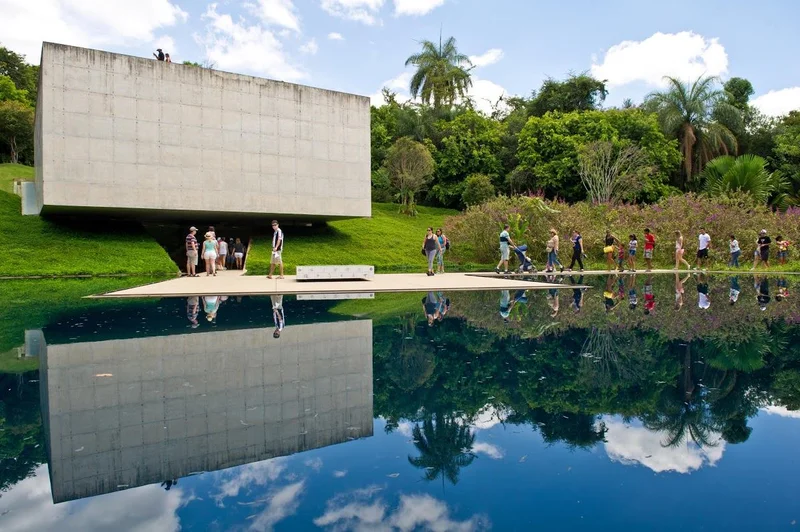
Like Inhotim, the new museum follows the park-museum model that made its neighbour famous. Pavilions will be embedded in the landscape, with art and nature in constant dialogue.
Paz has ordered the planting of 15,000 trees on the site, reinforcing the botanical dimension that defines the Inhotim experience. The master plan envisions up to 40 individual pavilions, though the initial phase will be more contained.
The first stage, slated for September 2027, will open with three dedicated pavilions. Each honours a distinct voice in contemporary art: Anna Maria Maiolino, Michael Heizer, and Sônia Gomes.
The Artists Leading the First Phase
Anna Maria Maiolino’s pavilion will recreate her installation De Vita Migrare, originally shown at the São Paulo Biennial in the 1990s. The work is a landmark of Brazilian contemporary art, exploring migration, memory, and materiality.
Michael Heizer, a towering figure in American land art, will receive his own dedicated space. His large-scale earthworks have redefined the relationship between sculpture and landscape over five decades.
Sônia Gomes, the Brazilian artist known for twisting textiles and reclaimed fabrics into sculptural forms, completes the inaugural trio. Her work bridges Afro-Brazilian traditions and contemporary abstraction, and her international profile has risen sharply in recent years.
A Clean Break from Inhotim
The new museum is a private project entirely separate from Instituto Inhotim. In 2022, Paz donated the entire Inhotim estate, its galleries, and a large group of artworks to the independent institute, cementing its public-interest character.
Inhotim issued a public note stressing that it operates autonomously. There is no plan for integration or shared management with Paz’s new ventures, the institute stated.
Curator Paulo Miyada has been announced as artistic director of the new institution, according to Brazilian press reports. Miyada, artistic director of São Pauloâs Instituto Tomie Ohtake and with ties to the Centre Pompidou in Paris, brings serious international curatorial credentials to the project.
What This Means for Minas Gerais and Investors
The Brumadinho-Belo Horizonte cultural corridor is already anchored by Inhotim, which draws visitors from across Brazil and abroad. A second institution of comparable ambition effectively doubles the region’s cultural gravity.
For investors and expats, the project signals confidence in Minas Gerais as a long-term destination for high-end cultural tourism. Real estate, hospitality, and service sectors around Brumadinho stand to benefit from increased visitor flows once the new museum opens.
The R$1 billion commitment is entirely private, with no reported reliance on public incentives. That makes it a pure play on Paz’s conviction that contemporary art and nature can drive sustainable visitor economies far from Brazil’s coastal hubs.
The Broader Latin America Read-Through
Latin America’s cultural infrastructure is expanding beyond the traditional centres of Mexico City, Buenos Aires, and São Paulo. Paz’s new museum places Minas Gerais firmly on that map, alongside projects like the Museo de Arte Contemporáneo de Lima and the expanding Fundación Malba in Buenos Aires.
The project also reflects a global trend: private collectors building their own institutions rather than donating to existing ones. Paz is following a path blazed by figures like Eli Broad in Los Angeles and Patrizia Sandretto Re Rebaudengo in Turin, but doing so in a distinctly Brazilian landscape.
For the international art market, the new museum means 3,000 works moving from private storage into public view. That visibility can shift artist markets, especially for the Brazilian and Latin American names in Paz’s collection.
Frequently Asked Questions
When will Bernardo Paz’s new museum open?
The first phase is planned to open in September 2027. This initial stage will feature three dedicated pavilions for artists Anna Maria Maiolino, Michael Heizer, and Sônia Gomes.
The full complex may eventually include up to 40 pavilions.
Is the new museum part of Instituto Inhotim?
No. The new museum is a private project entirely separate from Inhotim.
Inhotim has publicly stated it operates autonomously and has no plan for integration or shared management with Bernardo Paz’s new ventures. Paz donated the Inhotim estate to the independent institute in 2022.
How much has Bernardo Paz invested in the new museum?
Bernardo Paz has invested R$1 billion, equivalent to approximately US$195 million, in the new museum complex. The funding is entirely private and covers land, pavilion construction, landscaping including 15,000 new trees, and the housing of his 3,000-work private collection.