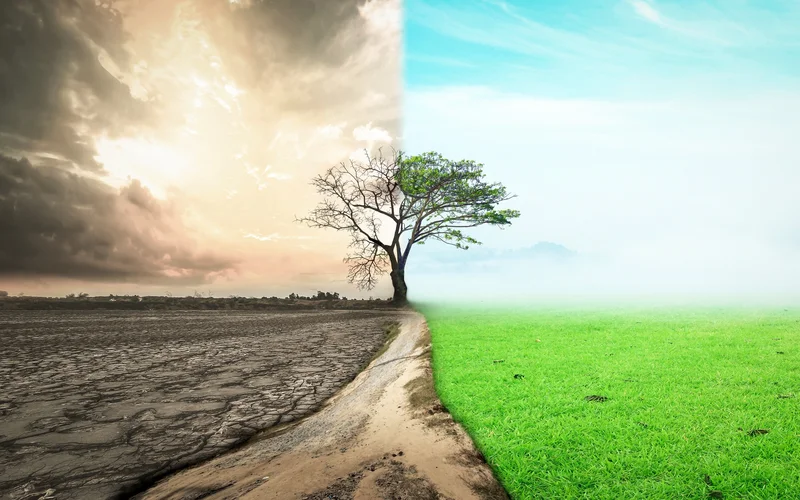
South Africa is currently navigating a polycrisis. We are squeezed between a worsening climate emergency, characterised by erratic water stress and biodiversity loss, and a socioeconomic crisis that leaves millions food-insecure in a land of plenty. At the heart of this intersection lies our food system, which is simultaneously a primary victim of environmental decay and a leading contributor to it.
Conventional industrial agriculture has long been viewed as a triumph of efficiency and of feeding the nation. Yet, beneath the surface, the cost has been catastrophic. Our soils are depleting, our biodiversity is collapsing, and our water systems are under unprecedented strain. In South Africa, this is not just an ecological failure; it is a historical one.
Our food history shows that our current system was built on a foundation of colonial and apartheid-era exclusion, designed to serve a minority while marginalising the majority. Today, that legacy manifests in a âgatedâ food system: while we are nationally food secure, more than 25% of households struggle to put a meal on the table, and child stunting remains a national tragedy.
The ecological and food crises are therefore not separate emergencies. They are deeply connected. The degradation of nature weakens the systems that produce food, while an unjust and extractive food system places further pressure on land, water and biodiversity. To restore one, we must begin by restoring the relationships among all of them.
If we continue with âbusiness as usualâ, we are not just farming ourselves into a corner; we are farming ourselves into an inevitability where the land will simply no longer respond.
The emerging movement of regenerative agriculture offers a way out. Unlike âsustainableâ agriculture, which aims merely to do less harm, regenerative practices seek to restore. It is a shift from viewing the farm as a factory to viewing it as a living ecosystem.
The impacts of regenerative agriculture are tangible, including improved biodiversity, increased pollinator populations, higher soil organic matter and the practice of holistic grazing. It is not just a matter of carbon sequestration; it is creating a thriving soil food web that improves the soil ecosystem, improves nutrient cycling and soil structure, and acts like a living sponge that retains water during droughts and prevents erosion during floods.
This relationship between soil and water is central to the future of food. Healthy soils can hold more water, support greater biodiversity and help landscapes withstand both drought and intense rainfall. In this way, restoring the soil is also an act of water conservation. It is a reminder that the resilience of our food system depends not on a single resource or intervention, but on the health of the living systems that connect them.
Successful, profitable models already exist in regenerative agriculture. From the pioneering work of Farmer Angus, to the Woolworthsâ Farming for the Future initiative and other successful farms â proving that restorative farming is not just a moral choice, but a viable economic one.
However, we must be cautious about regenerative agriculture being accessible only to the high-end market. If regenerative practices remain confined to premium supply chains and high-income consumers, they will be unable to address the systemic fragility of our food system. True restoration is impossible without democratising access to both the methods of production and the resulting produce. Any transition that does not address our deep-seated inequalities is meaningless.
We cannot talk about healing the soil without talking about healing the society that walks upon it. We have to look at regenerative agriculture through the lens of a just transition. A just transition represents a strategic shift from resource-intensive, purely commercial models towards a framework of collaborative stewardship. This approach views our land and natural resources as shared assets to be managed for the broader public benefit. Achieving this requires an evolution in governance, where the state and private sector move beyond traditional top-down oversight towards inclusive models that empower civil society and local communities in the decision-making process.
This conversation is particularly important as the world observes World Nature Conservation Day this week. The day highlights the critical need to preserve Earthâs natural resources and promote sustainable practices in the face of climate change, pollution and biodiversity loss. But conservation cannot be separated from the question of how we produce, distribute and access food. The protection of nature must also be understood as a foundation for food security.
In this context, a transition is truly just when the social and economic dividends of environmental restoration are accessible to all, particularly those in vulnerable positions. This means moving from a model of dependency towards one of self-reliance, ensuring that producers have the agency to shape their own food systems and that historical barriers to entry are replaced with pathways for growth. Ultimately, this approach ensures that those who work the land are recognised as vital partners in a resilient food future, rather than simply participants in a global supply chain.
Regenerative agriculture is the future, but only if that future is inclusive. We have a choice: we can farm ourselves to the point of collapse, or we can proactively lead the forefront of restoration. We can build a food system that is as resilient as the soil it grows in. We are not just planting seeds for crops; we are planting seeds for a more just, restorative and food-sovereign South Africa.
The question is whether we will recognise that the future of food depends on the future of nature, and that the future of nature depends, in part, on the choices we make about food. Water, soil, biodiversity and food are not separate conversations. They are parts of the same system.
As we mark World Nature Conservation Day, we should remember that conservation is not only about protecting what remains of the natural world. It is also about restoring the systems we have degraded and rethinking the ways in which we live, produce and consume. DM
Rirhandzu Marivate, programmes manager at the SA Urban Food and Farming Trust, BSc (Hons) in ecology, environment and conservation, postgraduate diploma in sustainable development and planning (food systems), MPhil candidate in sustainable development (food systems).
This article forms part of the Food Indaba 2026 thought leadership series, exploring the ideas and conversations shaping more resilient, equitable and regenerative food systems in South Africa and beyond.