For years, residential solar power in the UK has focused primarily on larger installations, comprising photovoltaic (PV) panels on the roof and an inverter for converting DC (direct current) power into AC (alternating current) for use in the home. Indeed, according to government data, the UK now has approximately 1.7 million residential rooftop installations with 2025 the strongest year on record with around 269,000 installations completed.
It’s remarkable progress. Yet for many in the UK, this type of installation remains out of reach for several reasons, including cost, or lack of roof access if they live in a block of flats. If they’re renting, their landlord/landlady might not allow them to install solar panels permanently on the roof.
That’s all set to change with new government legislation. Under Statutory Instrument 2026/848, which formally comes into force on August 27, 2026, legal and regulatory hurdles that previously blocked self-installed, ‘plug-in’ solar systems are set to be cleared.
By officially creating a legal category for what are officially called 'plug-in microgenerators', this landmark legislation allows standard UK BS 1363 three-pin plugs to be approved for feeding electricity into a home socket. As a result, for the first time, millions of people living in flats with balconies will have a viable, low-cost option to generate their own clean electricity.
Looking to Europe: the rise of Balkonkraftwerk
Of course, while plug-in solar is new to the UK, it is already well-established across the rest of Europe. In Germany, for example, where these installations are known as Balkonkraftwerk (or balcony power plants), there are officially 1.2 million registered balcony installations — though the actual figure is probably nearer 1.5 million when you take into account unofficial installations.
Balcony installations are proving particularly popular with renters – those who were historically excluded from rooftop solar power until reform to German tenancy law in 2024 gave them the explicit right to install balcony panels without needing landlord approval. As a result, reports German news site Denkstrom, waiting lists emerged in big cities such as Munich and Berlin for equipment in the months following the reform.
Nor is Germany the only European country to have embraced balcony installations. In Spain, where two thirds of people live in apartments, balcony solar power is also taking off, saving up to 30% on a household’s typical electricity bill. “The beauty of the solar balconies is they are flexible, cheap and plug straight into the domestic network via a converter, so you don’t have to pay for the installation,” Santiago Vernetta, CEO of Tornasol Energy, one of Spain’s main suppliers, told The Guardian.
Sign up for breaking news, reviews, opinion, top tech deals, and more.
Gaining UK industry support
Whether balcony solar power technology proves as popular in the UK as other European countries remains to be seen. However, with millions of flats across the UK, including an estimated 380,000 homes in England with a balcony, plug-in solar power certainly has the potential to expand renewable generation beyond rooftop installations.
Driving the rollout of plug-in solar within the UK government is Martin McCluskey, Minister for Energy Consumers within the Department for Energy Security and Net Zero (DESNZ). In June he met up with high street retailers and supermarkets including B&Q, Currys, Amazon, Lidl, Asda, Screwfix and Wickes to prepare market-compliant kits for the official August launch. "We’re delighted to be working with DESNZ to bring plug-in solar panels to the UK market. With energy bills continuing to rise, enabling the safe roll-out of these products will mark an important step for consumers across the UK,” said Michelle Gorringe-Smith, Director of New Categories at Currys in a recent press statement.
“This is a fantastic opportunity to make renewable energy more accessible to people around the UK," Added John Boumphrey, Amazon’s UK and Ireland Country Manager. "Amazon is the largest corporate buyer of carbon-free energy in the UK.. Enabling households to generate their own power with self-install plug-in solar panels is a practical step that supports household budgets and delivering against net zero goals.”
Major energy providers have also welcomed the regulatory change. Chris Norbury, Chief Executive of E.ON UK, describes the removal of regulatory red tape as an “encouraging step toward giving consumers more control over their energy use”.
Similarly, Greg Jackson, Founder and CEO of Octopus Energy said in a UK government statement: “Every solar panel, heat pump and battery cuts bills and boosts Britain’s energy independence.” Furthermore, these industry perspectives align with the wider objectives set out in the UK Government's Solar Roadmap, which details plans to expand solar capacity across domestic, commercial and ground-mount sectors to meet national clean power targets.
Payback time
Under the Department for Energy Security and Net Zero's (DESNZ) interim product specification, compliant solar power consumer kits must meet very strict criteria. This includes a microinverter (which converts direct current electricity into alternating current electricity) which can’t feed more than 800 VA (Volt-Amperes), roughly 800W, into the home at any one time.
Systems must connect via a standard BS 1363 three-pin UK socket using a manufacturer-supplied, non-rewireable moulded plug with a fuse rated at no more than 5A. Typically, most kits will comprise two 400W panels, each measuring around 1.7m x 1m in size and weighing around 20Kg. However, the regulations allow up to four panels with a combined rating of 2,000W. The inverter still limits the output to around 800W, but the extra panels can help the system generate more power during weaker sunlight.
While working out exactly how long it will take to get a return on a solar panel investment is far from an exact science, most of the commentators I spoke to for this article thought it would take under five years for a system costing between £300 and £600.
“Our modelling suggests that three to five years is a realistic payback period for many sensibly priced, well-positioned systems,” Ben Bowyer, creator of PluginSolarCalculator.com told TechRadar. “The government’s own estimate is around £70 to £110 a year in savings, but I think that’s actually quite cautious. Our figures suggest many suitable 800W installations could save closer to £95 to £155 a year,” he added.
Andreas Pierrie, founder of bespoke solar installation price comparison site Go Solar Today, was even more optimistic about ROI when asked. “For someone with a south facing balcony, you're looking at a payback of roughly two to three years, which is genuinely good for a solar product,” he asserted.
Lack of battery storage
However, it’s not all good news. While the new legislation will help consumers save some money by turning their systems into ‘plug-in microgenerators’, one key limitation is that batteries are excluded from the initial plug-in framework. Instead, the product specification covers generation-only systems and does not permit integrated battery storage.
The government likely adopted this cautious approach to prioritize safety, as lithium batteries store chemical energy and require strict compliance to prevent hazards such as thermal runaway. Including battery storage would also inevitably have slowed down the roll out of the initial phase of the technology. Go Solar Today’s Andreas Pierrie explains the reasoning behind the phased rollout by noting that the UK is simply following the German approach.
“The UK is copying the German playbook by starting narrow, getting the simple version working and trusted, then widening the rules over time,” he said. “Walking before you run is reasonable when you're opening up self-generation to millions of homes for the first time... The instinct to be careful with batteries is completely understandable.”
How long the lack of battery storage in the solar panel specifications will last is open to debate. Just a few weeks before the final specification was revealed, Octopus Energy announced the Nook Cube — a 2KW battery that plugs into a standard socket - which perhaps indicates a future opening up of the legislation to include battery storage.
Exporting energy for free?
For now at least, one of the main limitations is that any solar energy generated during the day that isn't used immediately by household appliances flows back out into the local grid. Because these small microgenerators do not automatically qualify for the Smart Export Guarantee at launch (unlike solar-powered rooftop installations), this means you are potentially exporting daytime energy to utility companies for free.
“That battery storage can’t form part of a compliant plug-in solar system during this first stage of the rollout is probably my biggest disappointment with the rules announced by the government so far,” admits PluginSolarCalculator’s Ben Bowyer. “A battery would let households store spare solar power generated during the day and use it later in the evening, when electricity use is often higher."
"The biggest limitation is the lack of integrated battery storage, meaning any electricity you don't use immediately is typically exported rather than stored for later," adds Robin Edwards, Property Buying Agent at property-finding company Curetons. "That reduces the financial benefit significantly, particularly for people who are out at work during the day when panels generate the most power.”
However, while disappointed by the lack of battery storage, PlugIn Solar Calculator’s Ben Bowyer admits people often underestimate how much power their home uses even when nobody is actively switching anything on. “Fridges, freezers, routers, and standby devices, create a constant background demand known as the household baseload that a well-positioned plug-in solar system can frequently cover during brighter parts of the day.”
To maximize savings without a battery, consumers can shift flexible energy use, such as running washing machines or dishwashers in daytime hours when the sun is shining.
Simon Turek, Chief Executive of graphene nanomaterials company Haydale, also explained how households can pair plug-in solar with heating solutions. “By moving to efficient forms of electric heating, it’s possible to achieve savings within your overall energy cost, because generation during the day could be used for heating purposes in winter months,” he told TechRadar.
Cladding exclusion
Unfortunately, lack of battery storage isn’t the only limitation of the new legislation. Before purchasing a plug-in solar kit, consumers must consider several practical and regulatory rules. For example, users cannot mix and match panels, cables and inverters from different suppliers. Systems must be purchased as complete tested, manufacturer-certified packages listed on the Energy Networks Association Type Test Register. This requirement ensures that all connected hardware meets rigorous domestic electrical standards.
Kits must also plug directly into a wall socket using the manufacturer-provided cable. The use of extension leads, multi-way block adapters, travel adapters, or plug-in RCDs (Residual Current Drives) is strictly prohibited to avoid electrical overloads. Furthermore, installation is prohibited on timber balconies, timber cladding, aluminium composite cladding, high-pressure laminate cladding, or buildings undergoing fire safety remediation. Understandably, these restrictions are designed to mitigate fire and safety risks across high-density residential properties.
Renters and leaseholders must also obtain permission from their landlord or freeholder before installing panels on shared or exterior structures. Users are also legally required to notify their local Distribution Network Operator via a G98 notification form when connecting a system. This notification process ensures that regional network operators maintain accurate records of micro-generation capacity across local distribution grids. Compliance with these administrative steps is mandatory for all system owners.
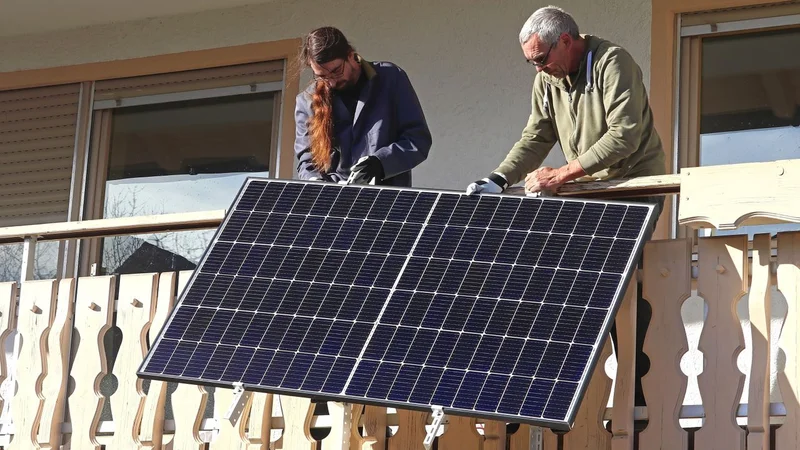
Beyond administrative rules, there are also practical considerations around installing heavy solar panels. Because individual panels weigh around 20kg each, experts strongly recommend treating the setup as a two-person job, advising consumers to get professional help if there's any uncertainty regarding structural anchoring, working safely at height, or load-bearing capacity. Makeshift fasteners like cable ties, string, or tape are strictly banned and approved mounting hardware rated for UK wind and snow loads must be used.
As Ben Bowyer candidly admits: "Balcony installations still give me the shivers, especially the thought of someone lifting one of these panels over a railing 10 floors above the ground."
Power to the people
With the cost-of-living crisis showing no signs of ending any time soon, the push to legalise plug-in solar technology is welcome news to millions of flat dwellers and renters wanting to reclaim some control over their mounting utility bills. Importantly, by enabling households to create their own microgenerators by connecting small-scale panels straight into standard wall sockets, the framework provides an accessible route to lower electricity costs. With solar power in place, users could save up to 30% on their electricity bills with typical kits paying for themselves within three to five years
.However, the legislation is far from perfect. Because the initial rollout focuses purely on daytime generation without integrated battery storage, users must adapt their daily routines to make the most of the power while the sun is shining. What’s more, by establishing an 800W AC output limit and capping panel capacity at 2,000W, the framework really only covers continuous household baseload demand from refrigeration and standby appliances, rather than being able to power your entire home with solar.
Still, it’s a decent start and it’s likely the legislation will be expanded to include battery storage over time. As Christopher Burd, Managing Director of solar installation company SPS PowerBuild told TechRadar: "The energy transition is ultimately about people taking control of their own power. Enabling households to generate clean electricity directly from their living spaces represents a fundamental shift in how we think about urban resilience and domestic independence." Literally, power to the people.
Over 25 years experience as a staff and freelance journalist. Currently working freelance for The Daily Telegraph, writing technology content for the newspaper as well as working with their clients (Vodafone Microsoft, Nokia, SAP, DXC, BAE Systems) on branded content.