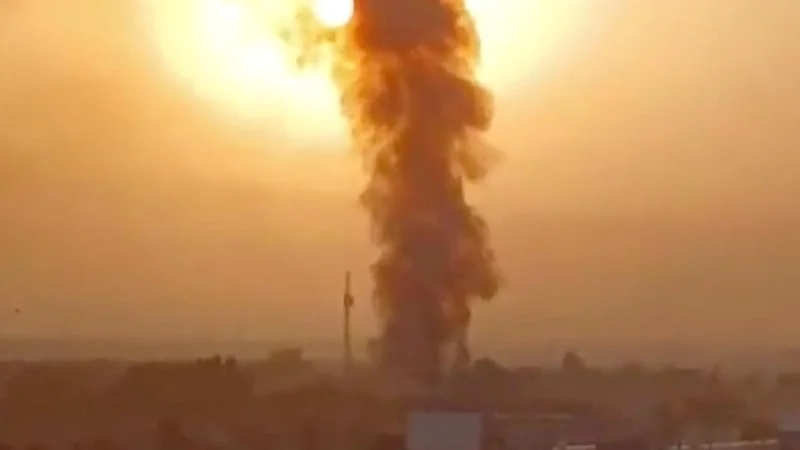
Pakistan on Thursday (July 30, 2026) said it was "doing its utmost" to bring the US and Iran back to the negotiating table under the Islamabad memorandum of understanding (MoU) signed last month, amid escalating tensions in the region.
"We support dialogue and diplomacy as they are the only viable path forward," Foreign Office spokesperson Tahir Andrabi said at his weekly press briefing in Islamabad.
Mr. Andrabi said Pakistan was "doing its utmost" to revive negotiations between Washington and Tehran and resolve outstanding issues in the spirit of the Islamabad MoU and the Pakistan-Qatar joint statement of June 22.
West Asia war: Follow LIVE updates on July 30, 2026
He said Pakistan remained concerned over the precarious security situation in West Asia despite a relative lull in hostilities over the past few days. He said the pause had raised hopes that the positive development would lead to a durable and fully respected ceasefire and ultimately pave the way for the resumption of dialogue.
“We welcome all efforts aimed at sustaining cessation of hostilities and resumption of dialogue between the U.S. and Iran,” the spokesperson said, adding that negotiations were continuing to normalise the situation, particularly around the Strait of Hormuz, and to achieve de-escalation.
Mr. Andrabi urged both Washington and Tehran to exercise maximum restraint and honour their commitment to resume technical-level talks in accordance with the Islamabad MoU and the Pakistan-Qatar joint statement.
The MoU between the U.S. and Iran was signed on June 18 following weeks of intensive diplomacy. It envisaged reopening the Strait of Hormuz and ending the conflict in West Asia, which began with U.S.-Israeli strikes on Iran in February, after a further 60 days of negotiations.
The understanding, however, came under strain after hostilities resumed on July 7, when Iran attacked commercial shipping in the Strait of Hormuz, including a Qatari liquefied natural gas tanker, accusing the United States of violating the agreement. The attack was followed by several waves of U.S. strikes on Iranian military targets.
The conflict subsequently widened, with Yemen's Houthi rebels imposing a naval blockade on Saudi Arabia and effectively extending the confrontation to another major maritime chokepoint.
On Wednesday (July 29, 2026), the conflict spread to new fronts with explosions reported at a natural gas loading port in Egypt and a U.S.-owned floating storage tanker reportedly targeted by a drone.
The United States and Saudi Arabia also carried out joint strikes on Iran-backed paramilitary groups in Iraq in retaliation for attacks on U.S. troops and Saudi oil targets.
On Thursday (July 30, 2026), after a pause of nearly a week, the U.S. again struck Iran in retaliation for Tehran’s targeting of American bases in Jordan. Hours later, Kuwait's Ministry of Defence said that an Iranian attack targeted a building belonging to a Chinese company north of the country, killing one worker and causing extensive material damage to the facility.
Published - July 30, 2026 06:51 pm IST