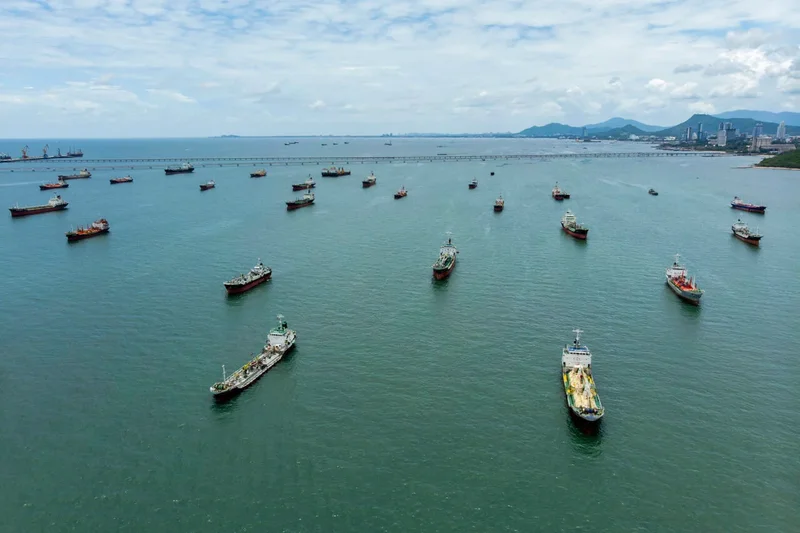
The Strait of Hormuz has been closed since February 28, stranding more than 1,500 vessels in the narrow waterway. Aside from the impact on the global supply chain, the idle ships could also have a devastating effect on marine ecosystems worldwide.
An international team of marine scientists is warning that the thousands of stranded vessels in the Strait of Hormuz could trigger an invasive superspreader event across the world’s oceans. In a new study published in the journal Biological Invasions, the scientists describe how the anchored ships are accumulating dense communities of marine organisms, which they would then carry with them once they begin sailing again.
“This disruption to global shipping has many repercussions and has also more quietly created ideal conditions to spread warm-water species to new ports,” Carolyn Tepolt, a biologist at the Woods Hole Oceanographic Institution and co-author of the recent study, said in a statement.
Idle ships
The waterway between the Persian Gulf and the Gulf of Oman is one of the busiest oil shipping channels in the world. Ships typically spend one to three days in the port before departing, limiting their exposure to marine life below.
Since the closure of the Strait of Hormuz began, ships have remained idle there for at least 40 times longer than the average stay, according to the study. This allows dense communities of marine organisms, like algae, barnacles, mussels, and other invertebrates, to accumulate on the submerged surfaces.
Once those vessels set sail again, they will inadvertently carry those living organisms with them to ports around the world. In doing so, the ships could introduce invasive species to a new environment, disrupting local ecosystems.
“Marine invasive species have profound ecological and economic impacts on coastlines across the globe and are extremely difficult, if not impossible, to eradicate once they become established,” Tepolt said.
Unwelcome guests
Marine invasive species have made their way to different waters via major maritime trade routes primarily through biofouling, whereby plants, algae, and animals accumulate on underwater surfaces like hulls.
The Suez Canal in Egypt acts as a major transit route for invasive species moving from the Red Sea to the Mediterranean. In recent years, scientists have recorded more than 700 non-native species in Mediterranean Sea, most of which entered through the Suez Canal, according to a 2019 report from the network of Mediterranean Experts on Climate and Environmental Change (MedECC).
The researchers behind the new study note that while modern shipping is recognized as one of the primary pathways for marine invasive species, the scale and duration of the vessel lay-up at the Strait of Hormuz are unprecedented and therefore could have major consequences worldwide.
While not all alien species have a disruptive impact on their new environment, some pose a major risk of destroying native wildlife and spreading unfamiliar diseases. That’s why the researchers are urging ship operators and port authorities to try and mitigate the situation by better monitoring ship biofouling while keeping an eye on high-risk ports. They are also encouraging rapid international response efforts to the potential ecological impacts.
“Whether it becomes a global bioinvasion super-spreader event will now depend less on the biofouling communities already present on vessels than on the speed, coordination, and effectiveness of the responses that follow,” the researchers wrote.