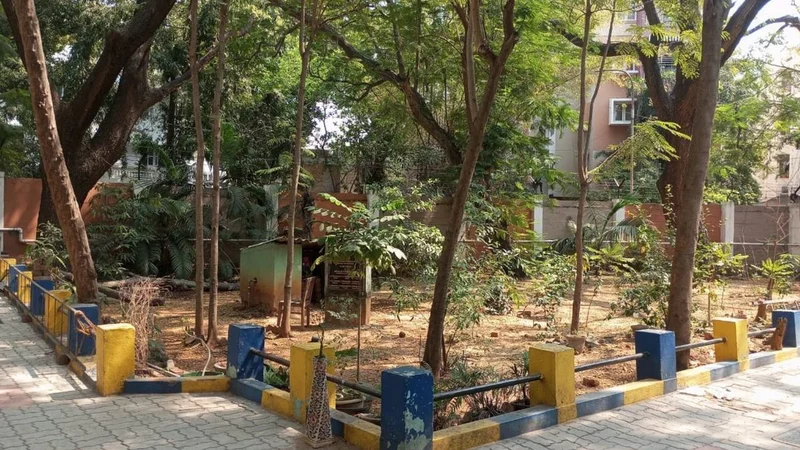
In a bid to promote a circular water economy and demonstrate a model of sustainable water management, various organisations have come together to implement nature-based wastewater treatment systems in government schools in and around the city.
Work is under way to establish nature-based wastewater treatment systems in five government schools in Egmore, Ambattur, Ashok Nagar, Porur, and Villivakkam in the first phase.
The modular sewage treatment plants would treat wastewater using nature-based solutions and demonstrate circular water management through use of recycled water.
The ‘Government Schools Water Stewardship Programme’ is being implemented as part of the concerted efforts of BlueGreen Enviro Foundation, the Chennai Resilience Centre (CRC) and SIV Impact, with the support of School Education Department and Tamil Nadu Green Climate Company.
While the treated wastewater can be reused, the systems are also expected to help groundwater recharge and reduce the burden on sewerage infrastructure. CRC’s Krishnamohan said this was a significant step to demonstrate how nature-based solutions can improve water security and create greener campuses.
Inspired by the water balance project in Little Flower Convent, T. Nagar, the initiative aims to create a model that blends water conservation with experiential learning for students and could be replicated across the State, he said.
While the first phase is expected to be completed by October, there are plans to expand the programme to 10 more government schools in and around the city. On an average, about 25,000 litres of sewage is expected to be treated daily and reduce freshwater demand. The changes in groundwater table would also be tracked.
Shilesh Hariharan, urban designer, Madras Terrace Architects, which is technically supporting the project said the wastewater would undergo anaerobic treatment and the secondary treated wastewater would be sent to constructed wetland with plants like canna indica and colacasia for further treatment.
Treated wastewater would pass through photo oxidation tank and UV treatment to destroy pathogens. “We are planning to create small, shallow lily ponds in schools to demonstrate the freshwater ecosystem. Treated wastewater would be either collected for gardening or used for groundwater recharge. Constructed wetlands and green cover could bring down temperatures by 4 degree Celsius,” he said.
The initiative would also build rainwater harvesting units to improve rainwater harnessing capacity in the schools.
Published - July 30, 2026 08:06 pm IST