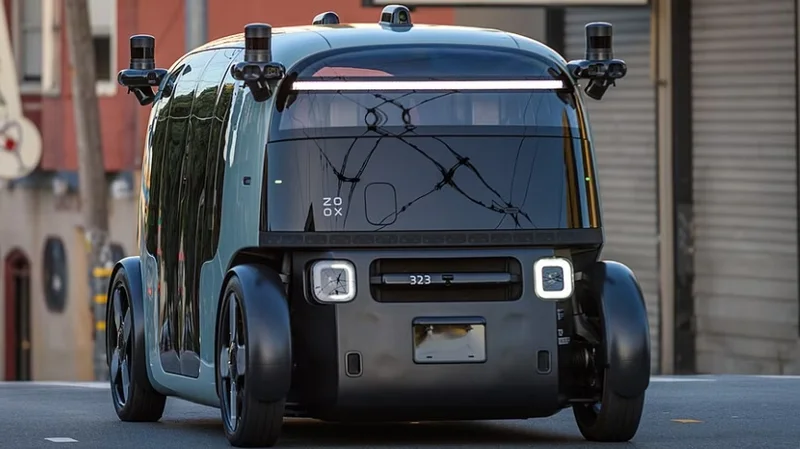
Amazon’s Zoox has become the first company allowed to charge for rides in a robotaxi that has no steering wheel and no pedals. US regulators granted the exemption on Wednesday. It is a first for the driverless-car industry.
The clearance came from the National Highway Traffic Safety Administration, and was first reported by Reuters. It lets Zoox run a paid service in vehicles built from scratch as robotaxis, rather than modified cars. Its electric, carriage-style pod seats four facing inward and tops out at 75mph.
What the exemption actually does
Federal rules assume a human driver, with a steering wheel, pedals and mirrors. Zoox’s vehicle has none of them. NHTSA waived eight of those rules written for human drivers to let the pod on the road.
Until now, Zoox could carry passengers for free in parts of Las Vegas and San Francisco. The new exemption lets it charge, subject to state and local sign-off, and it told TechCrunch it will start in Las Vegas.
There are limits. Zoox still cannot sell the vehicles to the public, and it is capped at 2,500 cars a year for two years. Its chief executive, Aicha Evans, called it “the first-ever commercial exemption for a purpose-built robotaxi.”
A leash attached
The approval comes with strings. NHTSA is adding reporting requirements for crashes and for stopping inappropriately on roads. Remote operators must be based in the US. Zoox must publish maps of where its cars run.
The regulator kept a way out. “We have the ability to pull the exemption if we see major safety issues,” said its administrator, Jonathan Morrison.
The caution is not abstract. This month the agency told the industry to fix a “clear pattern” of driverless cars interfering with police and first responders. Robotaxis have been misbehaving on public roads, driving around stopped school buses and freezing at flooded intersections. Zoox itself recalled its fleet of 105 cars in July over software that might miss heavy smoke.
Ahead of Tesla, behind Waymo
The milestone matters most against rivals. Alphabet’s Waymo leads US robotaxis, but it retrofits conventional cars. Tesla is building a Cybercab with no controls too, yet has not set out a path to approval.
Zoox is first to clear the federal hurdle for a purpose-built vehicle. NHTSA says it wants the first federal safety standards for self-driving by the end of the Trump administration, and is funding a $5m, three-year effort toward a single national rulebook. For now, Zoox gets to charge, on a short leash.
Get the TNW newsletter
Get the most important tech news in your inbox each week.