Topline
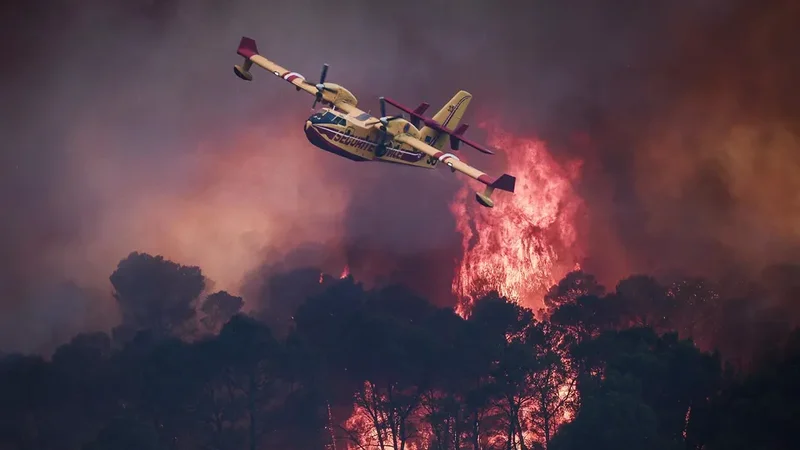
New data on deadly wildfires sweeping across Europe shows this year's blazes have burned more than 1 million acres so far this year—triple the recent historical average—and wildfires in the American Pacific Northwest are quickly approaching modern records.
Key Facts
European Forest Fire Information Service figures released Thursday show 1,400 fires, more than double the average, have burned in the EU this summer, fueled by carbon pollution and drought conditions combined with hot and windy weather.
Three firefighters died in Greece this week battling two separate fires, and firefighters in France and Spain are working to prevent a flare-up from blazes that have only just been brought under control as a fourth summer heatwave begins.
More than 300,000 residents and tourists have been displaced across France and Spain. In the United States, fires in the Pacific Northwest, largely sparked by lightning and dry conditions, are blazing toward modern records.
The number of acres burned by Oregon wildfires this summer—1.78 million—so far is just shy of the 1.93 million acre record set in 2024 and the cost to fight the fires has reached $242 million, according to the Statesman Journal.
The National Weather Service on Thursday issued a fire weather watch for Washington, Oregon, Idaho and Montana.
BIG NUMBER
2.6 million. That’s how many acres have burned in the United States so far this year, according to the National Interagency Fire Center.
Key background
Wildfires have scorched vast areas of Europe and parts of the United States this summer, forcing hundreds of thousands of evacuations and straining firefighting resources. Scientists say this year’s European fires have been worsened by a "weather whiplash" pattern in which a wet winter and spring fueled abundant vegetation that later dried out under intense summer heat, leaving large amounts of highly flammable fuel for the fires to devour. In the U.S., extreme heat, persistent drought in some regions, dry vegetation and expanding development have increased wildfire risk and made protecting homes more difficult. Experts are warning that climate change is increasing the frequency and intensity of extreme heat and drying conditions, lengthening fire seasons and creating weather that allows fires to spread faster and burn more intensely on both sides of the Atlantic. Officials say the wildfire threat remains elevated through the rest of the summer.
TANGENT
The eastern and northern U.S. were under dense smog earlier this month as smoke from hundreds of Canadian wildfires poured over the border. Residents in more than a dozen states were living under air quality alerts and the smoke dipped as low as Virginia before dissipating. There were roughly 820 wildfires burning in Canada at the time—156 of which were designated “out of control.” In Minnesota, one of the states with the worst concentration of smoke, emergency room visits related to respiratory problems surged 28% in a 10-day period.
further reading