Everything about blisters is inconvenient. They’re unsightly, often painful and can prevent you from wearing your favorite pair of shoes or comfortably holding a dumbbell. But resist the temptation to pop or pick: Proper care prevents infection and speeds up recovery. I spoke to dermatologists and podiatrists about how to treat blisters and prevent them in the first place. Using their expert guidance, I rounded up over-the-counter products to help you do both from brands like Neosporin, Band-Aid, Vaseline and more.
How to treat blisters
First things first: If you have a blister, stop doing whatever initially caused it, says Dr. Stephanie Saxton-Daniels, a board-certified dermatologist at Westlake Dermatology in Dallas, Texas. That may mean not wearing a certain pair of shoes or taking a break from lifting weights. If you continue applying friction to the affected area, the blister will likely get worse or even pop, which is painful and can lead to an infection.
There are three main steps you should follow to treat a blister. Each one requires different over-the-counter products.
- Gently wash the affected area: Use warm water and a mild, fragrance-free soap, and then pat dry. Don’t press or rub too hard while washing the affected area, and clean your hands before you begin.
- Apply a topical antibacterial or occlusive ointment: Regardless of what over-the-counter product you use, choose something made without irritants like fragrances, artificial scents or alcohols, experts say. Antibacterial ointments have ingredients that the skin absorbs to slow down or stop bacteria growth, which helps prevent infections. Occlusive ointments create a physical barrier on top of skin, keeping it moist and hydrated.
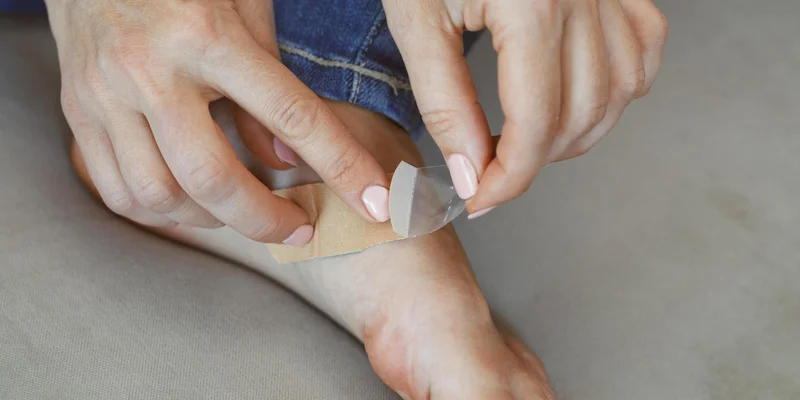
- Cover the blister with a bandage: Place a fabric or hydrocolloid bandage over the blister to reduce discomfort, swelling and irritation, says Saxton-Daniels. Try to buy a box that comes with at least 14 bandages since blisters can take a week or two to heal, and you’ll need to change the bandage at least once a day, says Dr. Maryann Hartzell, the medical director of the Foot and Ankle Institute at Temple University’s School of Podiatric Medicine.
The best blister treatments
Best bandage
You don’t have to cover a closed blister, but doing so may feel more comfortable, especially if it’s somewhere that experiences consistent friction, like the feet when they’re in shoes, says Saxton-Daniels. Covering a popped blister, however, is a must, and doing so prevents dirt and germs from getting inside the open wound. Bandages like these have adhesive on both sides to stick to skin and a piece of gauze in the middle to cushion and protect the blister. Band-Aids are flexible so they move with you and stay on for up to 24 hours, according to the brand. This pack comes with Band-Aids in different sizes, so you can choose the one that best fits your blister.
Best body wash for blisters
Aveeno makes some of our favorite body washes for sensitive skin, and this one is great to cleanse the area around your blister because it’s fragrance- and dye-free. It has moisturizing ingredients like oat flour, extract and oil. The liquid body wash turns into a rich, creamy lather as you use it.
Best gel bandage
Dr. Mary Stevenson, a dermatologic surgeon and an associate professor of dermatology at NYU Langone Health, recommends using bandages made from hydrocolloid, an occlusive dressing, to cover blisters. Hydrocolloid bandages turn into a gel when it absorbs fluids, creating a moist environment that encourages healing, according to the brand. The bandages also form a seal, keeping dirt, germs and water out. Since these bandages are soft, they won’t stick to or pull on your blister. They stay on for up to seven days, but experts recommend replacing your bandage daily. For best results, the brand recommends applying them on totally dry skin. So if you use an ointment beforehand, wait a bit before placing the hydrocolloid bandage on top.
Best occlusive ointment
Applying an occlusive ointment to blisters can help reduce friction when the area rubs up against clothing or shoes, says Stevenson. Vaseline, which is made from 100% petroleum jelly, is one option that’s beloved by many NBC Selected staffers. You can use it on blisters, sunburns, dry skin and chapped lips, so it’s worth keeping a jar at home. Vaseline earned the National Eczema Association’s Seal of Acceptance, and it’s fragrance-free, hypoallergenic and won’t clog pores, according to the brand.
Best antibiotic ointment
While you should not purposely pop a blister, they can pop on their own. In these cases, applying an antibiotic ointment is important to prevent bacteria from getting inside the open wound, experts say. Neosporin is a topical antibiotic ointment many NBC Selected staffers have used for years, and it’s made with bacitracin zinc, neomycin sulfate and polymyxin B, ingredients that help prevent skin infections, according to the brand. You can apply a small amount to your blister up to three times a day until the wound closes.
Best liquid bandage
If your blister pops and you don’t want to deal with regularly changing your bandages, a liquid bandage can be a longer-lasting solution. New Skin forms a hard protective layer over raw skin, cuts or cracks. It’s antiseptic, water-resistant and lasts for days. The thin brush makes it easy to control the amount you apply, too. NBC Selected intern Lily Stern has used it on a variety of cuts, open bug bites, blisters and more since childhood. However, “depending on the severity of the wound, it can sting pretty badly when it first touches your skin,” she says. “But as soon as it’s dry, the result is worth a few seconds of pain.”
How to prevent blisters
Preventing most blisters involves eliminating friction between a surface, like the heel of your sneaker or the handle of a gardening tool, and your skin. You can do so by padding an area on your body with a bandage or lubricating the skin with something like an anti-chafing stick.
Wearing protective clothing like socks and gloves can also prevent blisters, says Saxton-Daniels. And as far as the feet are concerned, avoid walking barefoot on hot surfaces, like pavement in the warmer months, and be sure to wear properly fitting shoes at all times, says Dr. Jacob Wynes, a podiatric surgeon and an associate professor of foot and ankle surgery for the University of Maryland Medical System. Shoes shouldn’t feel so tight that they’re restrictive or like your feet are sliding around in them, he says.
The best products to prevent blisters
Best padding bandage
Moleskin is a woven cotton fabric, and Saxton-Daniels recommends using bandages made from the material to pad areas that may experience frequent friction, like certain parts of the feet depending on what shoes you’re wearing. The bandage prevents skin from making direct contact with whatever is rubbing up against it, reducing potential irritation and discomfort, she says. Dr. Scholl’s moleskin padding comes in a roll, allowing you to customize the size of each piece you cut, and it has a skin-safe adhesive on the back. The bandage is thin enough that it won’t impact how your shoes fit, according to the brand.
Best blister tape
Nexcare’s Blister Prevention Tape is made from flexible, cushioned foam that has water-resistant, skin-safe adhesive on the back, helping it stay on your body even while you’re sweating, according to the brand. The tape, which is one inch wide, comes in a roll, so you can customize the size of each piece you cut or wrap it around your hands, fingers, feet or ankles. It has a 4.5-star average rating from more than 2,500 reviews on Amazon.
Best customizable shoe cushions
I always keep these little cushions at home because they’re quick fixes for shoes that are irritating my feet. They have an adhesive back, so I stick them inside my shoes in areas that are rubbing against my skin and could lead to a blister. They don’t start to lose their stickiness over time, in my experience; I put a few cushions in a pair of winter boots and they’ve stayed put for over two years. I also sometimes cut the cushions in half so they fit smaller areas in my shoes, like a thick strap on a sandal.
Best anti-blister balm
Before wearing shoes without socks, like sandals, slides or flip flops, you can apply this clear balm to your feet to prevent straps and buckles from rubbing on your skin. It’s made from plant wax, which is water-resistant, sweat-resistant and fragrance-free, plus it doesn’t have a greasy or oily feel. It has a 4.6-star average rating from 14,214 reviews on Amazon.
Best shoe stretcher
In addition to wearing socks when it makes sense, it’s important that your shoes fit well and are broken-in before wearing them for extended periods of time, says Hartzell. If you try shoes on and are worried that they’re a bit too tight, consider stretching them out with a shoe stretcher like this one. You can use it to make shoes wider and longer, as well as add space above the top of the foot. The shoe stretcher, which has a 4.5-star average rating from more than 5,950 reviews on Amazon, comes with eight bunion plugs, allowing you to stretch whatever specific area your bunion rubs up against.
Frequently asked questions
Blisters are fluid-filled sacs that form underneath the skin’s surface, says Hartzell. They’re usually caused by something repeatedly rubbing against and creating friction with your skin, like a pair of shoes. You can get blisters anywhere on the body, but they most commonly occur on the feet and hands, she says.
There are three main types of blisters: friction blisters, blood blisters and heat blisters. Blisters can also form due to allergic reactions or certain skin conditions, which you’d need to see a doctor about.
Friction blisters are the most common type. They’re caused by repeated rubbing or friction, and they form when clear liquid builds up under the upper layers of the skin, says Hartzell. Many people get friction blisters on their feet if they wear ill-fitting shoes for extended periods of time or if they don’t wear socks. But you can also get friction blisters on your hands from holding tools or gym equipment. Speaking from personal experience, kids are prone to friction blisters on their hands if they frequently use the monkey bars on the playground.
Blood blisters usually form after something pinches your skin — for example, if part of your hands or fingers gets caught between the heads of pliers or gardening pruners. Instead of clear liquid, blood from broken vessels builds up under the skin to form a blister, says Hartzell.
Burns and sunburns can blister, and if they do, they’re classified as second-degree burns, says Hartzell. Blisters may also form as someone warms up while recovering from frostbite.
Blisters can last days or weeks, depending on how large the blister is and where it’s located, says Stevenson. Eventually, your body reabsorbs the fluid that’s inside the blister and it goes away. But if it feels like your blister isn’t getting better despite consistent treatment, experts recommend consulting your doctor.
No, you should not pop a blister or remove the roof of a blister (meaning the skin that covers it), says Saxton-Daniels. The fluid inside a blister serves as protective dressing over healing skin and prevents the deeper layers of skin from developing an infection.
Most people don’t need to see a doctor about a blister, but if you experience any of the following symptoms, experts say it’s a good idea to consult a medical professional.
- If you frequently develop blisters in areas where there is no friction, and cannot identify the cause of them.
- If your blister does not resolve within a week or two, or is getting worse despite consistent treatment.
- If your blister is larger than two to three inches in size.
- If your blister appears infected. Signs of infection include red, swollen, hot, painful skin surrounding the blister; a blister filled with a white or yellow-ish liquid rather than clear fluid or blood; yellow-ish or green-ish discharge; and red streaks around the blister.
Meet our medical experts
At NBC Selected, we work with experts who have specialized knowledge and authority based on relevant training and/or experience. We also take steps to ensure that all expert advice and recommendations are made independently and with no undisclosed financial conflicts of interest.
- Dr. Stephanie Saxton-Danielsis a board-certified dermatologist at Westlake Dermatology in Dallas, Texas.
- Dr. Mary Stevensonis a dermatologic surgeon and an associate professor of dermatology at NYU Langone Health.
- Dr. Maryann Hartzellis the medical director of the Foot and Ankle Institute at Temple University’s School of Podiatric Medicine.
- Dr. Jacob Wynesis a podiatric surgeon and an associate professor of foot and ankle surgery for the University of Maryland Medical System.
Why trust NBC Selected?
I’m a reporter at NBC Selected who regularly writes about skin care, including stories on how to treat ingrown hairs, sunburns and razor burn. For this article, I interviewed three experts about how to treat blisters and rounded up the best products to do so with their guidance in mind.
Catch up on NBC Selected’s in-depth coverage of personal finance, tech and tools, wellness and more, and follow us on Facebook, Instagram, Twitter and TikTok to stay up to date.