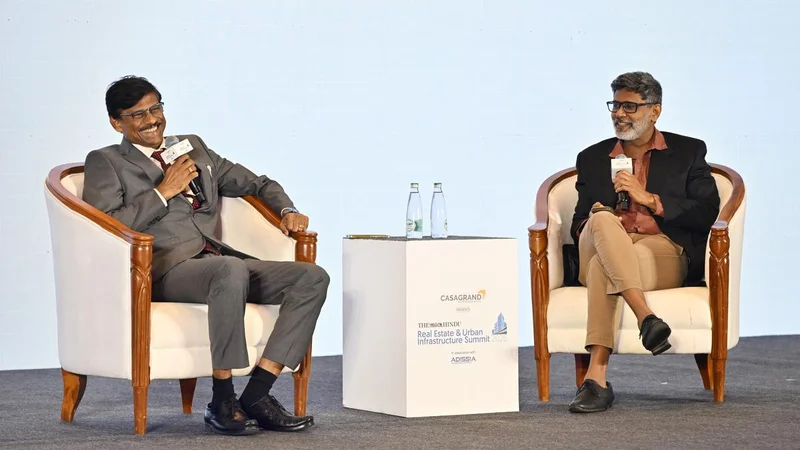
Insurance penetration in India remains low despite the rapid growth of the real estate sector, with non-life insurance penetration at less than 1%, V.N. Sandeep, Deputy General Manager, United India Insurance Company Limited, said here on Thursday (July 30, 2026).
Speaking at a session moderated by Kunal Shankar, Deputy Business Editor, The Hindu, Mr. Sandeep said, “General insurance penetration is only 1%. And life insurance is hardly 2.7%.” He added that while insurance had “penetrated into the urban areas, especially when we talk about projects, big projects, infrastructure projects, or factories and plants”, awareness of home insurance remained low.
Over 200 products
Mr. Sandeep said United India Insurance, headquartered in Chennai, offered more than 200 retail and commercial insurance products, including home, cyber, health, event and wedding insurance. “The main challenge is how to create awareness among the general public,” he said, adding that the company was expanding its reach through micro-offices, insurance agents and brokers. He also referred to the Insurance Regulatory and Development Authority of India’s “Insurance for All by 2047” programme.
Drawing a distinction between insurance and e-commerce purchases, Mr. Sandeep said insurance “should not be purchased” like products on Amazon or Flipkart. “Insurance is based on trust,” he said, adding that buyers should consider a company’s experience, claim settlement capacity and claim settlement ratio. United India Insurance published a claim settlement ratio of 95% every year, he added.
On climate risks, Mr. Sandeep said, “Climate has become totally unpredictable,” with weather events becoming increasingly uncertain.
He said conventional property insurance covered “Act of God” perils such as earthquakes, floods, landslides, inundation and lightning, with claims settled after assessment of damage.
He said United India Insurance had also introduced parametric insurance, under which payouts were linked to predefined weather parameters rather than physical damage.
“The damages are not mandatory. What is important is the event, the parameter,” he said. “If the parameter is breached, you will get the money,” he added.
‘Premium calculations’
Referring to premium calculations, Mr. Sandeep said construction materials, building design and risk mitigation measures such as fire protection systems influenced premiums. He advised developers to assess risks before commencing projects and obtain adequate insurance cover.
For construction projects, he recommended Contractors All Risk (CAR) policies, while Erection All Risk (EAR) policies were suited for industrial projects involving plant and machinery. He described insurance as “one of the options or best options for risk management”, calling it “financial risk transfer”.
Published - July 30, 2026 11:22 pm IST