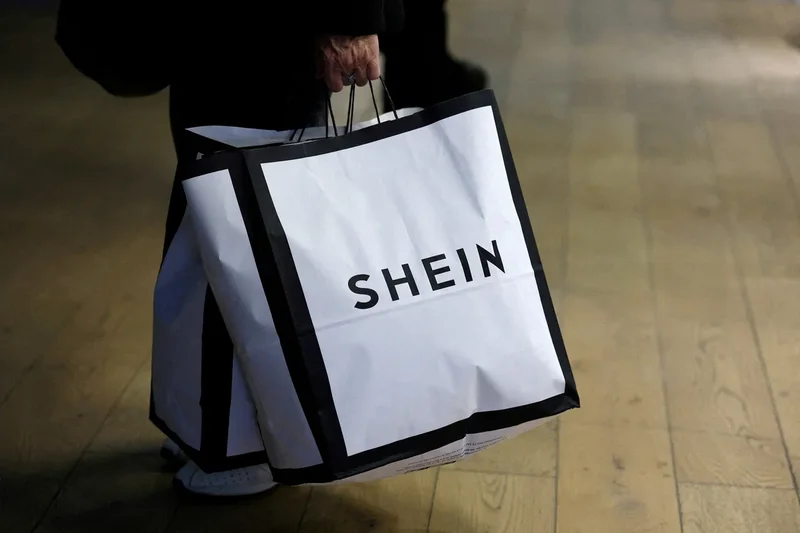
Shein, the fast-fashion giant, has disclosed that it is under investigation by the Federal Trade Commission, warning potential investors that the probe could lead to “significant” penalties.
The company, which originated in China and now has global headquarters in Singapore, revealed the investigation in documents related to its planned initial public offering on the Hong Kong stock exchange.
“The FTC has been conducting an investigation into our U.S. business operations, and we are actively cooperating with the FTC in connection with such investigation,” the company wrote in a section on consumer protection risks in the financial documents.
Shein, which has seen sales weaken in recent months, said the U.S. probe could potentially end in a settlement, though the timing and likelihood remain unclear.
“The outcome of the investigation, whether in settlement or otherwise, may require us to make significant monetary payments that could have a material adverse effect on our financial condition and results of operations,” the company said.
When reached by The Independent, an FTC spokesperson said: “While we can confirm there is an investigation, we cannot comment beyond that.”
The FTC is an independent federal agency created in 1914 and charged with protecting consumers by policing unfair, anticompetitive and deceptive business practices. Last year, President Donald Trump appointed Andrew Ferguson, a Republican, to chair the agency.
Shein, which is seeking an IPO valuation of up to $50 billion, has grown rapidly in just a few years, powered by its low-priced, trendy clothing popular with younger consumers.
The company previously tried and failed to go public in New York amid scrutiny over its business practices.
“We are concerned that American consumers may be inadvertently purchasing apparel made in-part with cotton grown, picked and processed using forced labor,” a group of three senators wrote to the company in 2023. Lawmakers were concerned that the cotton involved forced labor programs in the Xinjiang Uygur Autonomous Region. Shein has consistently said there is no forced labor in its supply chain.
In 2025, a bipartisan group of U.S. lawmakers wrote to Shein expressing concern that its website had been used to sell childlike sex dolls. The company later said the dolls were sold by third-party businesses and it had instituted a complete ban on all sex dolls.
Shein has also attracted negative attention overseas, including in Italy, where, in 2024, antitrust regulators opened an investigation over allegations that it made misleading claims about its sustainability practices. The company said it would cooperate with the probe.
Ahead of its Hong Kong IPO, the company reported a net loss of $99 million in the first quarter of 2026, compared with a net profit of $395 million in the same period a year earlier.
The company said the loss was driven in part by the removal of a tariff exemption on low-value goods entering the U.S.
The Independent has contacted Shein for comment.