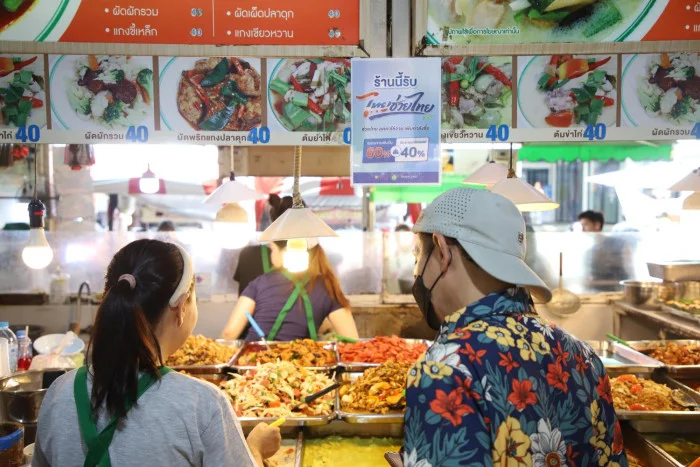
As the government's "Thai Chuay Thai Plus" co-payment scheme approaches its halfway point, industry associations view its impact as minimal.
Somchai Pornrattanacharoen, honorary advisor to the Thai Wholesale and Retail Trade Association, said small retailers participating in the scheme could see sales rise by up to 50% during the programme.
However, non-participating small operators may see sales decline by around 50%, while VAT-registered businesses could also see sales fall from normal levels.
This means the sales increase among participating retailers largely reflects a redistribution of spending rather than an increase in overall consumption.
"The Thai economy remains deeply sluggish. The scheme is unlikely to encourage consumers to spend more than they normally would," he said.
Instead of offering cash handouts, the government should use its borrowing to support small retailers by providing free selling channels and strengthening the business environment so smaller retailers can compete with e-commerce platforms that are disrupting the market, said Mr Somchai.
Chanon Koetcharoen, president of the Restaurant Association, said smaller vendors participating in the scheme told him their sales increased by 10% on average compared with periods without the subsidy.
Most consumers tend to spend more heavily in the first half of the month after receiving the subsidy, he said.
Typically, May to September is the low season for the restaurant industry, as rain discourages dining out, especially in the evening.
This co-payment scheme allows customers to order via food delivery platforms, helping to increase delivery sales during this low season, said Mr Chanon.
Many restaurants that typically operate only during the daytime have extended their hours into the evening, hoping to capture additional sales from delivery customers who are discouraged from dining out by rain, especially those using the co-payment subsidy, he noted.
Thanavath Phonvichai, president of the University of the Thai Chamber of Commerce, said Thailand is facing high energy costs and the effects of ongoing geopolitical uncertainty in the Middle East.
He said he anticipates consumers will spend a larger share of their income on higher energy bills, adding the co-pay scheme has not yet shown a significant impact.
Mr Thanavath said he viewed the scheme as a relief measure rather than a booster given the economic landscape.