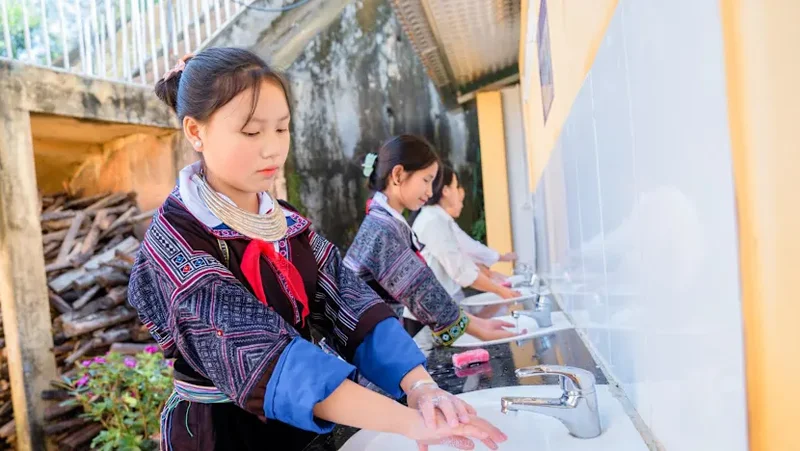
Rethinking healthcare in Southeast Asia: Vietnam puts self-care in focus
A new study ranks Vietnam among the world’s leaders in self-care readiness, highlighting its potential to ease pressure on overstretched health services.
In most parts of Asia, healthcare is traditionally centred around doctors and hospitals, with most people seeking treatment only after illness strikes. That model is beginning to shift.
For nearly 700 million people in ASEAN, a greater emphasis on self-care could reshape how care is accessed and experienced, said Ms Maria Valentina Sposito, zone general manager for Southeast Asia, South Korea, Hong Kong and Taiwan at Opella. Opella is a global consumer healthcare company focused on over-the-counter (OTC) products and self-care.
The World Health Organization (WHO) defines self-care as the ability of individuals, families and communities to promote and maintain health, prevent disease and cope with illness – with or without the support of healthcare professionals. In practical terms, this can mean managing common ailments with OTC remedies or using digital tools to monitor chronic health conditions at home.
SELF-CARE READINESS IN VIETNAM
Vietnam’s Self-Care Readiness Study, conducted by the Health Strategy and Policy Institute (HSPI) under the Ministry of Health, in collaboration with Opella Vietnam, offers insight into how the country is adapting to support responsible self-care.
It evaluated Vietnam’s health system, regulatory environment and population readiness, while also examining factors such as health literacy, access to digital tools and availability of quality-assured OTC medicines.
The findings place Vietnam fourth globally in self-care readiness, behind Singapore, Australia and Germany. Beyond the ranking, the report signals that self-care is moving from theory to strategy in Southeast Asia, said Ms Sposito.
“This study marks an important milestone, offering for the first time in Vietnam a systematic view of the needs and barriers people face on their self-care journey,” added Dr Valentina Belcheva, country head for Vietnam and Cambodia at Opella.
CONFRONTING THE STRAIN ON ASIA’S HEALTHCARE SYSTEMS
The study’s findings come at a time of increasing pressure on healthcare systems across the region. In many developing Asia Pacific countries and territories, there are only 1.1 to 1.6 doctors for every 1,000 people, said Ms Sposito. At the same time, populations are ageing rapidly – one in four people in Asia Pacific will be aged over 60 by 2050. Non-communicable diseases also account for 55 per cent of all deaths in the WHO South-East Asia Region, a grouping that includes parts of Southeast and South Asia.
“Against this backdrop, the study does not treat self-care as a consumer trend,” said Dr Belcheva. “It frames it as a pillar of system resilience.”
In Vietnam, healthcare providers already show relatively strong support for self-care, with about 73 per cent incorporating it into patient counselling, according to the study.
The study also highlighted growing consumer and patient empowerment, reflected in rising consumer health literacy and greater use of self-testing tools. This suggests patients are becoming more confident in recognising and managing common conditions.
However, some gaps remain. Public trust in self-care varies, misinformation circulates on social media and frontline healthcare workers are often overstretched.
“The findings highlight that Vietnam has established solid foundations to advance self-care, while also pointing to clear opportunities to further strengthen mainstream communication, healthcare counselling and safe access to reliable information,” said Dr Nguyen Khanh Phuong, director of HSPI. “This provides a strong basis for shaping practical models and national directions for self-care in Vietnam.”
Self-care is not about shifting responsibility away from governments, but about recognising that healthcare systems cannot function sustainably without informed and empowered citizens, said Dr Belcheva.
The COVID-19 pandemic offered a preview of this shift. Practices such as home-based care, symptom monitoring and telemedicine became widespread, helping to reduce the strain on healthcare facilities.
ADVANCING SELF-CARE THROUGH POLICY AND PRACTICE
Across the region, policymakers are beginning to formalise the role of self-care. The Bangkok Joint Initiative on Self-Care of Medical Products for Health and Well-being, launched at a 2024 joint congress in Bangkok involving public- and private-sector stakeholders, calls for self-care to be integrated into health systems, supported by stronger health literacy, regulatory frameworks and public-private collaboration.
Vietnam’s study provides data to support this direction. By assessing system and population readiness, it provides policymakers with a practical roadmap for reforms, said Ms Sposito.
Key priorities identified include strengthening public awareness of safe self-care practices, equipping healthcare workers to better guide patients and improving access to reliable healthcare information.
Other focus areas include accelerating the rollout of electronic health records, promoting electronic labelling for medicines – particularly OTC products – and piloting community-based self-care models.
“In many ASEAN countries, outpatient visits for minor, self-limiting conditions crowd already overstretched clinics,” said Ms Sposito. “Enabling safe self-medication for appropriate conditions reduces unnecessary consultations, freeing up resources for more complex care.”
Experts caution that expanding self-care without safeguards could lead to misuse. That is why strong regulation, clear guidance and trusted information sources remain essential.
Ms Sposito described Vietnam’s Self-Care Readiness Study as a “measurable step forward” for Southeast Asia’s healthcare future. Hospitals and doctors will remain central, but outcomes will increasingly depend on how well people manage their own health with support from qualified professionals.
Learn more about the Health Strategy and Policy Institute’s work in strengthening healthcare systems in Vietnam.