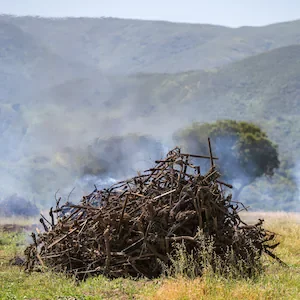
In California, a place famous around the world for its viticulture, winemakers produced less wine last year than at any point in the last quarter-century. It’s often cheaper to let grapes rot on the vine than to harvest them because so many unsold bottles clog the shelves of storerooms and
In California, which produces about 80% of the nation’s wines, pinot noir perhaps best illustrates the industry’s recent boom-and-bust history.
The light-bodied wine originally from France’s Burgundy region was once less popular among average wine drinkers here than reds such as cabernet sauvignon and merlot. Then came the 2004 movie “Sideways,” which starred Paul Giamatti as an aspiring novelist and wine snob who extolled pinot noir’s “thrilling and subtle” flavours.
The indie film set off a pinot noir boom in California. Sleepy tasting rooms in Central California, where the movie took place, filled with customers. Those already producing pinot sold out their inventories in record time. Across the state, growers planted it anywhere they could.
“You could almost feel it,” said Mark McWilliams, who recently closed his pinot noir-focused winery in Sonoma County and recalled the frenzy of the 2000s. “All people wanted was pinot noir.”
In the early 1970s, Smith’s family moved to coastal Monterey County because his father, who had a degree in agriculture and had been working in a lab, saw promise in the nascent wine business here. The region, about 100 miles south of San Francisco, is an agricultural hub with hot sunny days and foggy nights, the perfect climate for cultivating the delicate grapes needed for pinot noir and chardonnay.
At first, Smith’s family helped other vineyard owners grow grapes. Then they bought their own land. Over time, his company, Valley Farm Management, acquired 3000 acres and sold fruit to some of the largest wineries in the state.
Smith was already growing pinot noir when “Sideways” premiered. Afterward, he replaced some of his merlot grapes with more pinot. (The film also dealt a blow to merlot sales after Giamatti’s character dismissed it as swill.)
His winery had its highest profits in the few years after the movie came out.
But demand for wine grapes, particularly pinot noir, began to dry up a few years ago as wine sales plummeted, Smith said. He tried to give discounts to other vintners, but he still couldn’t make the math work.
The slump in California has in particular hit red wines, which tend to have a bolder taste and higher alcohol content. In 2025, for the first time in decades, winemakers in the state produced less red wine than white wine.
Pinot noir remains the second most popular red wine made in California, and experts say that some of the vines that growers are ripping out were planted after “Sideways” in places less suitable for delicate pinot grapes.
Still, production of pinot has dropped 30% in California since 2021. Across the state, growers have also been replacing the grapes with lesser-known white wine varieties that customers increasingly prefer, such as fiano and gruner veltliner.
“We were so pinot noir-centric,” Smith said. “And then there just wasn’t the demand.”
Smith said he felt tremendous grief about the decision to sell his land and company, and he felt ashamed that he was letting down his father, who died in 2015.
But it had become increasingly clear in recent months that closing down the business was the smartest path, he said. On the day he burned his pinot vineyard, he drove past a neighbouring one that was also tearing out all its grapes.
In 2025, roughly 38,000 acres of wine grapes were pulled out across California, about 7% of all grapes planted statewide, according to data from the California Association of Winegrape Growers. More than 500,000 tonnes of grapes also went unpicked, according to industry estimates.
To pay off debts and avoid bankruptcy, Smith sold his trophy vineyard to Jackson Family Wines, which owns more than two dozen California wine labels, and other parcels to private equity companies. He is selling equipment for cash.
“This is all I’ve done my whole life,” Smith said. “I’m going to have to find a new career.”
The fall grape harvest began in California this month, and thousands of tonnes of grapes are expected to be left on the vine again. Hundreds more wineries are expected to close in the next two years, by which point the industry is expected to bottom out, experts say.
“In our 54 years in the grape and wine business, we’ve never seen the amount of change and turmoil and chaos that’s going on right now,” said Steve Lohr, president of J. Lohr Vineyards & Wines, one of the largest wine producers in Paso Robles and Monterey County.
Au Bon Climat, a winery in Santa Barbara, has been making pinot noir for more than 40 years. Before shooting “Sideways,” the actors in the film visited the winery to get a behind-the-scenes look at how the wine is made.
The winery plans to reduce production this year as sales are down, said Michael Meluskey, the general manager. Some provinces in Canada, long the top wine export market for the United States, have banned American alcohol sales in response to tariffs imposed by the Trump administration. On top of the years-long downturn, the recent trade war has hurt Au Bon Climat sales in particular, Meluskey said.
But the financial pressures were worse during the Great Recession, he said, and he feels confident his winery will make it, even if others don’t survive the industry tightening.
“People love wine, they love wine with food,” he said. “It’s like any business that goes through cycles.”
“Luckily we won’t have AI taking our jobs,” joked his winemaker, Marc Piro.
Smith is hoping to completely close his business in the next few months. And he doesn’t know what will come after that. The grapes and the vineyards had been his retirement plan.
Even after he is no longer in the wine industry, Smith plans to still drink pinot noir.
But what’s actually his favourite type of wine?
“Beer and whiskey,” he said.
Written by: Soumya Karlamangla
Photographs by: Nic Coury / The New York Times
© 2026 THE NEW YORK TIMES