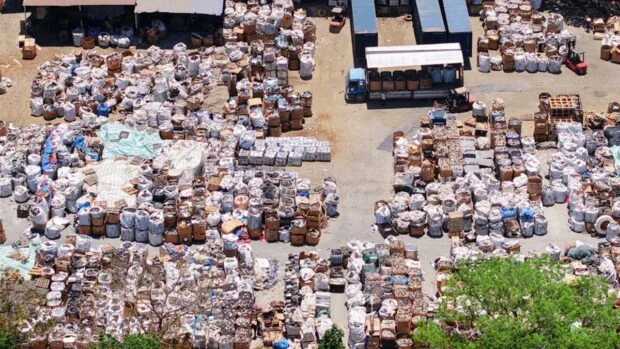
184 more US e-waste containers flagged for Subic
SUBIC BAY FREEPORT — Environmental groups on Friday said they have alerted Philippine authorities to another 184 shipping containers suspected of carrying illegal electronic waste (e-waste) from the United States.
The Basel Action Network (BAN), together with the Environmental Task Force Against Illegal E-Waste Imports to the Philippines (END E-Waste Imports), said it issued an Operation Can Opener alert on Wednesday (July 29) identifying the containers, which are scheduled to arrive in this freeport between August 6 and September 30.
The coalition said it had sent the alert to the Bureau of Customs (BOC) Commissioner Ariel Nepomuceno and Environmental Management Bureau Director Michael Drake Matias, urging authorities to intercept, inspect and prevent any shipments found to contain Basel-controlled electronic waste from entering the country.
Article continues after this advertisement
Responding to the latest alert, SBMA Communications Department head Armie Llamas told the Inquirer that the agency would take the same position it announced earlier this week: denying the entry of the newly flagged shipments.
“The SBMA, in collaboration with the Bureau of Customs Port of Subic Bay, has denied the entry of suspected e-waste shipments originating from the US, a country that is not a party to the Basel Convention,” Llamas said.
“As a signatory to this international treaty, the Philippines, through the SBMA, is committed to upholding its provisions,” she added.
SBMA said it will seek appropriate guidance and clarification on the acceptance and regulation of such US shipments to ensure full compliance with the treaty’s mandates.
Article continues after this advertisement
The latest development comes after the BOC prevented the unloading of three containers aboard the MV Tokyo Express that had been declared as scrap copper.
Article continues after this advertisement
Subic District Collector Geniefelle Lagmay ordered the containers to remain on board on July 22, citing the Philippines’ obligations under the Basel Convention and Republic Act No. 6969.
The containers later departed aboard the vessel without being unloaded at Subic.
The move marked the first time authorities blocked a suspected US e-waste shipment after environmental groups raised concerns over its entry into the country.
Days later, the SBMA also shifted its position on the issue.
While the agency had earlier defended the operation of e-waste recycling facilities inside the freeport, saying they supported the circular economy through “urban mining” by recovering valuable metals from discarded electronics, it later announced that it would deny the entry of future suspected e-waste shipments from the US because it is not a party to the Basel Convention.
The controversy began after END E-Waste Imports—a coalition that includes BAN, BAN Toxics, Greenpeace Philippines, Kalikasan People’s Network for the Environment and other environmental groups—alleged that 234 containers of suspected e-waste and one container of plastic waste from the US entered this freeport between March 2025 and June 2026.
The groups argued that the shipments may have violated the Basel Convention because the US is not a party to the treaty and the imports allegedly lacked the required Prior Informed Consent procedure.
The allegations prompted the BOC to convene an inter-agency meeting with the SBMA, the Department of Environment and Natural Resources, the Department of Justice, the Department of Foreign Affairs, the Office of the Solicitor General and environmental groups to examine the legality of the shipments.
The latest alert follows that review.
“We commend the Bureau of Customs for promptly acting on the prior alert and preventing suspected illegal waste trafficking from the US to the Philippines,” said Jam Lorenzo, deputy executive director of BAN Toxics and one of the task force’s conveners.
“But that was three containers. BAN has now identified 184 more suspected containers, and the government must respond with the same urgency and resolve,” he said.
The coalition said the shipments would constitute illegal traffic under the Basel Convention if they are confirmed to contain electronic waste because there is no Article 11 agreement allowing such trade between the Philippines and the US.
It urged Philippine authorities to detain and inspect the shipments, require any illegal waste be returned to the US through existing legal mechanisms, and prevent rejected cargo from being rerouted to another developing country./coa