Expert-approved hacks for tackling jet-lag: From packing essentials to 45-minute naps
- SHOP: Is your home burglar-proof? The security hacks proven to deter robbers every homeowner should have before they travel
- READ MORE: How to beat Ryanair's hand luggage rules by packing just NINE garments
- See more Daily Mail on Google - save us as a Preferred Source
Daily Mail journalists select and curate the products that feature on our site. If you make a purchase via links on this page we will earn commission - learn more
We all know the feeling. You've spent weeks, even months, waiting for that well-earned holiday, carefully curating an itinerary and booking restaurants and hotels.
But when you do finally arrive at your destination, you can barely see straight because you're so tired. You drag yourself around landmarks with bleary eyes, feeling barely human, and spend nights desperately awake when the evening does eventually fall.
Jet-lag is one of the most frustrating side effects of long-haul flights, and is thought to affect 60 to 70 per cent of all passengers crossing multiple time zones.
But the good news is that there are things you can do to stop jet-lag ruining your trip – even before you've scanned your boarding pass.
To help you make the most of your holiday – and to avoid delirious days and sleepless nights roaming hotel corridors – we've compiled a list of the top tips to avoid jet-lag, with the help of experts.
Jet-lag is thought to affect around 60 to 70 per cent of all passengers crossing multiple time zones
1. The 45-minute rule
For Ashley Hainsworth, sleep expert and founder of furniture retailer Bed Kingdom, there's a golden number you should stick to when you want to catch up on sleep: 45.
According to Mr Hainsworth, instead of sleeping for as long as possible once you arrive at your destination, you should nap for just 45 minutes at a time.
While you might feel exhausted, these short naps are the best way to give you the energy boost you need to survive the day without severely affecting your sleep in the evening.
Timing matters too. Mr Hainsworth advises avoiding taking these naps within eight hours of your intended bedtime, as doing so could leave you lying awake long after everyone has fallen asleep.
2. Don’t wait to adjust your sleep schedule
One of the biggest mistakes travellers make is assuming they can adapt once they arrive. In reality, your body will cope much better if you prepare yourself before you leave.
If you’re flying east, to destinations like Dubai, Thailand or Australia, Mr Hainsworth recommends gradually moving both your bedtime and wake-up time earlier in the build-up to your trip.
Even shifting your routine by just one or two hours each night will make it easier for your body to adjust once you land.
For flights heading west, such as the US or the Caribbean, take the opposite approach: go to bed and wake up slightly later than usual before your trip to help your internal clock begin adapting to your new time zone well in advance.
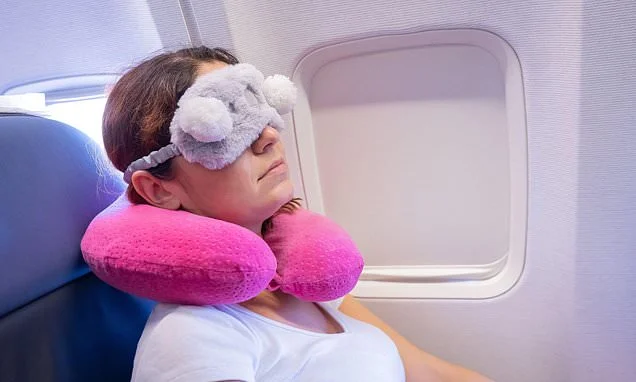
3. Bring accessories to help you fall asleep during the flight
If your flight coincides with night-time at your destination, it's a good idea to get as much sleep as you can during the journey – rather than stay awake enjoying the in-flight entertainment.
That's often easier said than done, though – particularly as plenty of us struggle to get comfortable onboard, or struggle with the dry cabin air.
There are a few things you can take on the flight to help. Earplugs and a travel pillow should be top of your list. To avoid a sore neck, opt for a memory foam pillow or even better, one that straps to your seat.
If you haven’t tried a blackout sleep mask, now is the time to start. This one from Amazon is a game-changer.
Listening to ambient sounds, white noise or simply your own playlists can also help for a peaceful flight.
Designed to prevent pressure on your eyes, this 3D sleep mask is perfect for sensitive eyes or those with lash extensions.
Made from premium memory foam and soft, breathable material, it offers superior comfort and light-blocking ability.
The flexible nose design ensures a snug fit, making it ideal for light-sensitive travellers, night-shift workers, or anyone who needs to block out light while sleeping on a plane or in a hotel.
Was £12.99
For those who enjoy listening to a podcast or audiobook to get to sleep – this eye mask with built-in headphones is the gadget for you.
A genius buy – at a low price.
Was £25.99
4. Don’t spend the whole flight sitting still
While catching up on sleep during an overnight flight is usually a good idea, experts do also warn against remaining seated for hours on end, especially if you are flying during the daytime.
Getting up regularly to stretch your legs not only helps you stay awake, but can also prevent digestion issues and muscle stiffness, which many travellers experience after long periods of sitting.
Walking up and down the aisle every hour or so may also lower the risk of developing blood clots. To improve your circulation even more, having a pair of compression socks easily available in your carry-on luggage is always a good idea.
Coming in a variety of fun and funky colours, these compression socks work under trousers, skirts and dresses and help manage and reduce swelling for both men and women in flight.
5. Time your light exposure appropriately
One of the fastest ways to help your body adapt to a new time zone is by controlling your exposure to light.
Jet-lag occurs when your body’s natural 24-hour internal clock (also known as your circadian rhythm) is disrupted, and this process is heavily influenced by exposure to light.
Spending time outdoors after arriving can help reset your internal clock more quickly. If you land during daylight hours, resist the temptation to head straight inside. Instead, it is a good idea to stay outside and soak up the sun.
And when it gets to nighttime, avoid bright indoor lighting and electronic devices, which all send signals to the brain that it’s still daytime. Dimming lights and switching off screens is your best bet for falling asleep quickly and easily after a long journey.
6. Skip the alcohol and caffeine – instead opt for water
Many passengers will begin their holiday with a drink at the airport but in reality, alcohol may end up worsening the effects of jet-lag. Drinking heavily during your flight or on your first evening abroad is a huge sleep disruptor, leaving you feeling even more tired the next day.
Caffeine also deserves more careful consideration. While caffeine can be used strategically, a morning coffee, for example, may help you stay alert for a very early flight. However, drinking caffeinated beverages later in the day should be avoided, as caffeine blocks adenosine, the chemical that naturally builds up throughout the day making you feel sleepy.
Both alcohol and caffeine can contribute to dehydration too, making it especially important to drink plenty of water throughout your journey.
Drinking water before, during and after your flight is the best way to combat the effects of dry cabin air.
7. Consider taking melatonin
Melatonin is the hormone your body naturally releases after dark to signal that it’s time to sleep.
Because jet-lag disrupts the body’s normal cycle, some people choose to take supplements to help reset their sleep schedule.
In the UK, melatonin is only available on prescription, although it can be purchased over the counter in countries such as the United States.
Anyone considering taking it should speak to their GP beforehand, as it can have side effects and interact with certain medications.
8. Don’t overdo the first day
Finally, Mr Hainsworth advises avoiding cramming your itinerary full of activities immediately after you arrive at your destination.
Instead, ease yourself into the holiday as your body adjusts – relaxing by the pool, spending time on the beach or wandering around the local town are all good ways to recover without exhausting yourself.
After all, arriving well rested means you’ll have far more energy to enjoy everything the rest of your holiday has to offer.