Chris James, a 30-year-old German singer-songwriter, had no idea a song he wrote quickly in his Berlin bedroom had captivated millions of music fans in China, and would ultimately change his life.
Busy preparing for his new Chinese tour in August, James clearly remembers the magical — or even “confusing” — start of the story. It was about four years ago, when he opened up the official music video of his song Not Angry at home and noticed a few comments in Chinese under it.
Those comments increased day by day, and piqued his interest in what was going on.
He ran them through a translator, tracked them to a Chinese app and found out his song, which starts with a catchy humming section, had garnered millions of views. On Douyin, the Chinese version of TikTok, the hit song has now been used and shared over 5 billion times.
The singer-songwriter said he simply sat down one morning and wrote it and recorded it, without much thought or any expectation it would become so popular.
Yet, on the other side of the world, it became an earworm — a catchy tune listeners can’t get out of their head. “It definitely changed my life in many ways,” he said.
In recent years, an increasing number of overseas musicians have flooded China’s music market.
The Global Music Report 2026 released by the International Federation of the Phonographic Industry in March showed that last year, Asia saw strong growth of 10.9 per cent in recorded music revenues, and maintained its position as the largest region for physical revenues in 2025, accounting for 45.1 per cent.
Social media platforms like RedNote, or Xiaohongshu, are also actively facilitating foreign artists searching for new horizons.
These artists include many unsigned “bedroom musicians” who independently write, record, produce and release music, usually from their homes.
RedNote organised for many of them to participate in the inaugural Global Village Concert on 26 January, 2025. The event featured 20 groups and musicians from home and abroad, including James. It ran for about seven hours and attracted over 1.28 million online viewers.
The team has made connections with artists worldwide, helping over 100 of them tap into the Chinese market and supporting hundreds of shows in China. They come from countries as varied as the US, Brazil, Australia, France, Germany, Norway, Japan and South Korea, and feature diverse music genres such as rock, pop, indie and jazz.
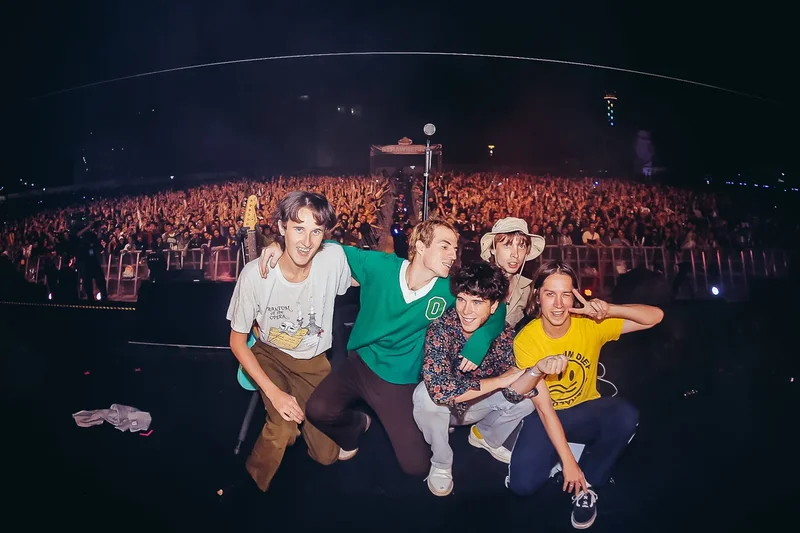
For British indie band Swim Deep, who completed their fourth tour last year, one of the most rewarding aspects of performing in China is feeling valued.
Formed in 2011, the Birmingham band has played over eight shows since 2014 and sold out many of them, playing to hundreds and sometimes thousands of fans.
“Every time we go back to China, we feel a little less like being a tourist there, it’s a bit more of a feeling of coming home,” said Austin Williams, the band’s front man.
One of Swim Deep’s most memorable China shows was the 2019 Strawberry Music Festival in Guangzhou, Guangdong province.
Keyboard player James Balmont said audience numbers in China often far surpass what they draw in the United Kingdom.
The biggest UK festival crowd they have played for was 500, while in Guangzhou, they performed to around 10,000 people on the main stage.
Touring in China sets a high standard for the rest of the world to follow. Also, the fans are always respectful and polite, show their loyal support in an orderly way, and welcome new music with open arms, Balmont said.
Sam Tucker, manager of Swim Deep, said: “I think the future of the Chinese music market is very bright. The way the Chinese live market has embraced international artists and tours enables so much potential future growth. As culture becomes less specific to one country or city, it feels like the Chinese music market can only continue to grow and develop.”