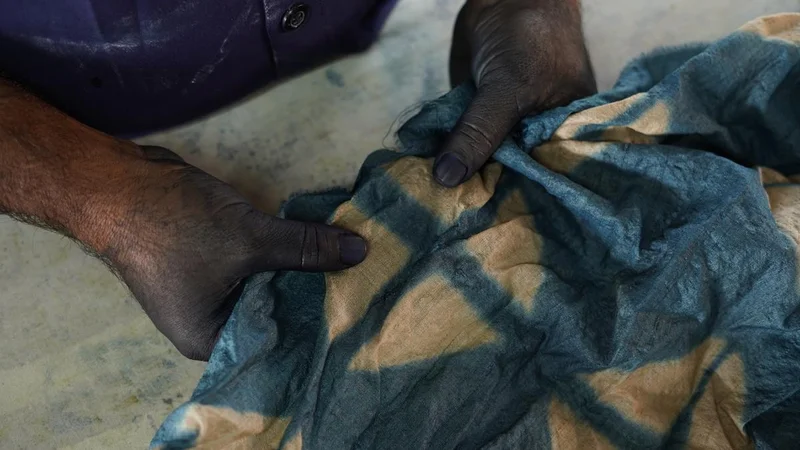
For two days, Chennai will play host to India’s vast textile heritage to commemorate Handloom Day (August 7) by turning MRC Centre into a showcase of diverse handcrafts from across the country. . From resist-dyeing techniques of bandhani and leheriya to the stitches of kantha and the geometric precision of ikat, the Crafts Council of India (CCI) is bringing together artisans, designers, and techniques that have kept these traditions alive for generations.
Spread across 39 stalls, the exhibition will showcase an array of saris, garments, and handcrafted fabrics, offering visitors a closer look at the people and stories behind the creations.
For Darshan Mekani Shah, founder, Weavers Studio from West Bengal, the showcase is an opportunity to bring Bengal’s rich textile vocabulary to Chennai, with a collection that moves between the traditional and contemporary. Her edit for the exhibition will feature hand-spun and handwoven textiles in khadi, cotton, linen and eri silk alongside Bengal’s gamcha and jamdani traditions. The collection will also include Tangail, garod, and Begampuri weaves, paired with vintage-inspired blouses, contemporary drapes, and traditional block prints drawn from Weaver’s Studio’s archive of local motifs. The garments range from easy tunics, kaftans, open jackets and co-ord sets to shirts, semi-stitched garments and unstitched sets.
“We wanted to focus on Bengal’s woven textiles, but also bring in some of the techniques and motifs that we haven’t used for a long time,” says Darshan. She is also introducing a small collection of accessories made entirely from leftover fabrics. Batwas and smaller bags have been created from the remnants from the khadi, indigo shibori, and block printing collections. “We’ve always worked with textiles and readymades, but we started thinking about what happens to the fabric left over when we cut a garment. Instead of creating waste, we wanted to turn it into something useful,” she says.
Eco-prints
Founded in 2020 by husband-and-wife duo Professor Vishal C Bhand and Bijoya Halder, Beej and Co is a sustainable textile brand based out of Shantiniketan (Bolpur), West Bengal, specialising in handcrafted eco-printed garments. The eco-printing technique, Vishal explains, is where the printing is done directly onto the fabric using real flowers and leaves, meaning no artificial dyes are used; instead, the natural pigments present in the leaves and flowers print onto the fabric.
“We will have saris and stoles, and every piece is one-of-a-kind because we print with flowers and leaves, so the same design can never really be repeated. We are also bringing a new collection of men’s shirts with marigold prints, which we have not shown in Chennai before,” says Vishal. To keep these craft traditions alive, he also works closely with artisan families who are increasingly moving away from such practices. “There are many families who depend on this work, and if we don’t support them, they don’t have a way to sustain themselves. So, we are trying to build a community where the weavers and tailors can continue to work and earn from their craft,” says Vishal.
From Benaras
Atmesh Selot, the third-generation custodian of Benaras-based Nilambari Sarees, founded in 1997, is bringing the brand’s traditional jamdani saris to the showcase. “Our signature collection is the jamdani of Benaras, which is woven in gold and silver zari and takes nearly three to three-and-a-half months to make, with two to three skilled weavers working on each sari.”
“Handlooms are always sustainable. All these yarns are natural; they’re not polyester-based yarns. And a sari as a garment is also very recyclable because it doesn’t require much fitting or anything. So it can be passed on through generations. The same sari can be used by the grandmother and then by the granddaughter as well, ” says Atmesh.
Kanta traditions
The event will also showcase Kantha traditions from Bengal. Founded by Farah Khan, the Kantha Store collaborates with rural women artisans across Bengal to preserve the traditional craft while also providing sustainable livelihoods. They will bring an edit of hand-embroidered saris, dupattas and stoles, along with table runners. Highlights will include kantha-stitched baby quilts, an accessory that was once a part of every childhood in Bengal. “Kantha, for me, is much more than embroidery. It is a part of Bengal’s cultural identity, and my life’s work has been about preserving this heritage while making it relevant and appealing to contemporary women, both in India and across the world,” says Farah.
Other labels to look out for include Abha Dalmia, Blue Lotus, Kapaas, Juanita, Mauna Dhwani, Neelgar, Rangila Dhaga, Weavers Studio, Rangrez Creation, Studio Rama, Tana Bana Maheshwari Handloom and Tritiya Designs, bringing together everything from Benarasi and Maheshwari weaves to bandhani, shibori, gamcha, kalamkari and contemporary handloom garments.
The Craft Council of India, texile exhibition will be held on August 7 and 8, at MRC Centre, 75/2, Santhome High Road.
Published - July 31, 2026 04:27 pm IST