Reading while sitting on the back veranda in a bright, sunny space during a winter morning in Johannesburg â with a steaming cup of coffee, mohair lap blanket and a docile cat close at hand â can be one of lifeâs quiet pleasures, but just as long as the worldâs trouble spots donât intrude. Alas, too often, they do.
New South African reads of note
While my winter reading has taken me many places, some local volumes have held particular interest. The 50th anniversary of the Soweto studentsâ rebellion is generating a boomlet of books, including a revised version of Noor Nieftagodienâs The Soweto Uprising, Sifiso Mxolisi Ndlovuâs The Soweto Uprisings and Julian Brownâs Soweto Uprising. Given my own memories of those events, I look forward to digging into these volumes, especially to see the changing ways those events are being seen half a century later. Brownâs book is intriguing as it is a compendium of eyewitness statements, contemporary reportage, affidavits, testimonies and police reports.
Concerning South Africaâs contemporary circumstances, I recently read Tara Roosâs Where to From Here? Populism and coalition politics in South Africa. The authorâs key insight is that âthe local elections [in 2026] are less a sideshow between national polls than a hinge. They will help determine whether South Africa settles into a pattern of permanent low-grade crisis, managed by an exhausted governing party and a noisy but insubstantial opposition, or whether new configurations â inside the old parties or outside them â can begin to build something more capable.â
I am slowly working through the new edition of Charles van Onselenâs New Babylon, New Nineveh: Everyday life on the Witwatersrand 1886â1914. Van Onselen, one of South Africaâs most eminent historians, digs deep into the countryâs roots to illuminate early elements of todayâs South African economic landscape. It is the kind of history readers should savour slowly.
Two other volumes on South Africa have also captured my attention. First is a collection of columns and essays by the late RW Johnson, what will now be his last published book, A Roving Eye. Johnson was a classic liberal who believed in a government that fostered economic growth; protected free speech; open meritocratic opportunities; and effective, honest governance. He stood against any slide towards identitarianism, absolute majoritarianism and rigid democratic centralism.
Like much that Johnson has written over the years, this book might drive some readers to angrily toss it into the fireplace, while others will be heartily cheering on his views. But all readers should relish â and admire â how Johnson works his command of the English language to full advantage. His topics range from constitutional history to Elon Musk to English football. Sadly, now that he has passed away, we shall miss any future collections of his essays and his strong voice that kept politicians on their toes.
The second book is by Max du Preez, The End of Normal. If readers have ever heard him on radio or TV, his writing has the same energetic, even, at times, a luminous texture. He is in full flower excoriating AfriForum and Solidarity.
Reading this memoir of a journey from neophyte reporter to thorn in the side of the old regime as he exposed its various hearts of darkness, Du Preezâs text reads almost like you are listening to him in an animated conversation over a really good dinner and a full-bodied red wine. It was hard to put down even when other tasks awaited.
The rest of my reading
One of my New Yearâs resolutions for 2026 was to tackle a bookshelf of nearly 100 volumes I had collected over the past 50 years, comprising books in the Library of America series. The individual volumes are beautifully bound and come with sturdy slipcovers, and the authoritatively edited texts are printed in a crisp, easy-on-the-eye font on rag paper. For novelistsâ works, there may be four or five in one volume.
Over the years, during snowy winter evenings in northern Japan, quiet afternoons and nights in Pretoria while it was in the hands of the National Party, or late nights in a languid Lagos, it was a treat to tackle a major chunk of a writerâs work. Besides novels, the series includes texts of the countryâs most celebrated political writing, classic sermons, autobiographies and memoirs, and even reporting and transcriptions of wartime broadcasters such as Edward R Murrow. (One recent volume offers Ursula K LeGuinâs novels, including The Left Hand of Darkness.)
Living in Southeast Asia, I enjoyed reading novels by expatriate westerners who had found themselves in that part of the world. These included George Orwellâs Burmese Days, Joseph Conradâs Almayerâs Folly, Eugene Burdick and William Ledererâs The Ugly American, Graham Greeneâs The Quiet American and stories by Somerset Maugham, Evelyn Waugh and Paul Theroux.
Similarly, I read memoirs by 19th-century diplomats assigned to Asia such as Townsend Harris and Sir Ernest Satow, among others. Reading how another foreigner attempted to come to grips with exotic (to him) circumstances illuminated my own experiences.
I also read works by Asian authors about their own evolving societies such as Yasunari Kawabataâs The Sound of the Mountain, Yukio Mishimaâs prolific run of novels and Ananta Praoedya Toerâs Indonesian trilogy, among others.
And, of course, in South Africa, there were all those now-classic works from the countryâs great fiction writers, as well as writers who have been published in the new century. In those recent works, it is fascinating to see how authors dealt with their society after the apartheid regime had died â and as the dichotomy of right versus wrong yields to more complex landscapes.
And so, there I was, at the beginning of January, ready to tackle that bookcaseâs top shelf, plunging myself into Americaâs literary output. But the world has pulled me in other ways.
The worldâs crises and my reading
In the early days of Russiaâs invasion of Ukraine, I sought out Serhii Plokhyâs The Gates of Europe and Anne Applebaumâs Between East and West, and I now have collections of essays by Ukrainian journalists, documenting the war. But they are very hard to read.
Instead I am now relying more and more on reporting in foreign periodicals and analyses from western think tanks, as opposed to deeper historical and political works.
For that other major global crisis, for many years I have been reading about Middle Eastern history, economics, politics, literature, and society âand the conundrums of the current conflicts â especially when I worked in the nation with the worldâs largest Muslim population. Early this winter, I read Peter Beinartâs Being Jewish After the Destruction of Gaza: A Reckoning and Douglas Murrayâs On Democracies and Death Cults: Israel, Hamas and the Future of the West in tandem.
In fact, it would be difficult to find two authors whose views were further apart than Beinart and Murray. But more recently, our reading largely comes from periodicals, professional journal articles and think tank studies. But readings about the conflicts in the Middle East, if one allows them to, can easily overwhelm one. Regardless, I realise I should read a comprehensive, yet readable history of Iran to help ground my knowledge of current conflicts where my understanding may be too rooted in the events of 1979 and the fall of the Shah and the theocratic revolution than several thousand years of history. All recommendations welcomed.
Embracing the dismal science
Instead, increasingly, I have focused my attentions elsewhere. Economic history has become the new rabbit hole. Andrew Sorkinâs volume on the origins of the Great Depression, 1929, and Patrick McGeeâs Apple in China are enormously informative and are books everyone eager to understand the contemporary global economy should read.
Sorkinâs book explores how a nearly unregulated economic sector imploded because of emotionally driven investments and subsequent financial panics. The author populates his book with a whole cast of thieves, villains and credulous investors. Although Sorkin doesnât drive the point too obviously, the real parallels with todayâs AI and crypto bubbles and rumoured insider trading seem all too similar.
Meanwhile, McGee describes how Apple, one of the worldâs dominant high-tech players, has embedded itself ever deeper into the marketing, manufacturing processes and supply chains increasingly subject to Chinese foreign investment policies. In the end, as McGee describes it, it has become hard to tell whether Apple is, effectively, an American or a Chinese company â or if it is some kind of Chimerican creature. Given current global trade tensions, his book is an important read.
Of philosophy and mythology
Of course, now that I have seen Christopher Nolanâs Odyssey, I have again begun to read Stephen Fryâs elegant treatment of one of the worldâs oldest works of literature. No spoilers from me, just in case you didnât read the Homeric text in school, havenât seen this film or earlier predecessors â or tackled James Joyceâs Ulysses.
I have always been attracted to the ideas of philosopher Baruch Spinoza, but have found it difficult to locate a good survey of his thinking. And so, I was amazed, recently, to find Christopher Norrisâs Spinoza and the Origins of Modern Critical Theory, in a secondhand book store. Norris argues the 17th-century writer â excommunicated from his synagogue in Amsterdam for heresy â helped set the ground for post-modernism, critical theory and Gaia-style environmentalism.
My view of Spinoza has been of a philosopher standing in opposition to his contemporaries, Descartes and Pascal, who held very different views. Pascal spoke of the necessity of belief, while Descartes argued we could explain the world rationally. Spinoza seemed to be saying humankind simply lacked the tools to answer such questions definitively â echoes of Donald Rumsfeldâs infamous known unknowns and unknown unknowns!
The actual volume has its own tale â deaccessioned from a university library in the American midwest and eventually ending up in Parkhurst, Johannesburg.
Governor Gavin Newsom as president?
Besides poking through used book stores, another of my habits is sampling newly published books in book stores to see if I really want to own a copy. And if the store has a coffee bar as well, Iâm happy to stay all day. In one such store, I recently read California Governor Gavin Newsomâs memoir of his childhood and political career, Young Man in a Hurry: A Memoir of Discovery.
I was amazed to learn he was friends with the scions of one of the richest American families â the Gettys â and entered politics after operating a trendy wine store and a chain of restaurants. That is definitely not the usual trajectory for a politician, even in northern California!
Nowadays, everyone running for president in the US publishes a book setting out their principles and his (or her) hopes for the country to create a buzz. Perhaps the most famous such volumes have been John F Kennedyâs Profiles in Courage and, more recently, Barack Obamaâs Dreams from my Father. But it is clearly a question if a wine merchant-turned-California governor is the person Americans will embrace as their next president.
With a real cat close to hand, Iâm re-reading Natsume Sosekiâs I Am a Cat â one of Japanâs most important early modern novels, describing a rapidly changing Japan, late in the 19th century, through the eyes of a stray cat. I read it many years ago and am enjoying a novel that is totally separate from todayâs crises.
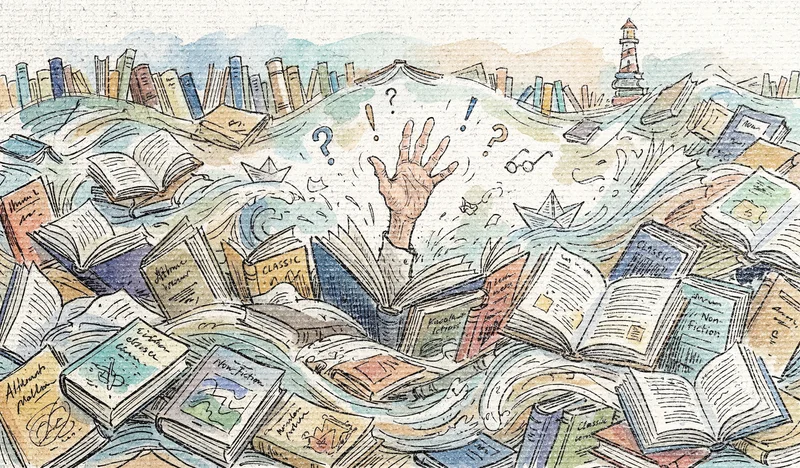
Still, I have a pile of books to finish (or even start) reading. By now, readers may have inferred that I am afflicted with the Japanese condition of tsundoku, a compulsion to purchase books even if they may not be read. And yet, such piles of books on a bedside night table give an intensely satisfying sense of engaging with the thoughts of authors back through the centuries or newly published.
We will just need to build more bookshelves very soon. DM