This text, written by Gustavo Cavalcante and with the collaboration of Rodrigo Borges Delfim, was originally published on the MigraMundo website on 29 May 2026. It is republished here under a partnership agreement with Global Voices, with edits.
This post is also part of Global Voices’ July 2026 Spotlight series, “Statelessness.” This series offers insight into the issue of statelessness and how it hinders people’s freedom of movement, educational opportunities, political access, and more. You can support this coverage by donating here.
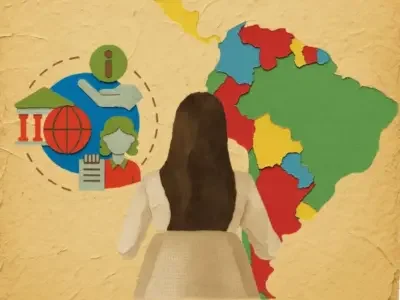
Maria* was between seven and eight years old when a Brazilian woman came to collect her in Santa Cruz de la Sierra, Bolivia, and take her to Brazil, without any documents or official record of her existence, nor being noticed by any authorities when crossing the border.
“I never went back. From that day I stayed in the house of one [person], [then] in the house of another, then I was going between places. I’ve been all over Brazil. I worked for food, I lived on the street. I was living on the street because that person mistreated me, beat me,” she told a Brazilian court, over 40 years later.
Maria’s told her story during a court hearing. In May 2026, a decision by the First Federal Court of Corumbá, in Mato Grosso do Sul state, Brazil’s Midwest Region, recognized her right to reside in Brazil through family reunification, as she had three Brazilian children, and initiated the procedure for the formal recognition of her stateless status. The court decided that the government and the Federal Police must adopt measures to guarantee their residency regularization, without requiring documents considered practically impossible to obtain because of her position of bureaucratic non-existence.
According to data released by the Federal Public Defender Office (DPU), which represented her, Maria spent much of her life without access to rights considered basic by most people. Without a birth certificate, an identity card, or a passport, she worked informally while raising her children, and always faced obstacles to accessing public services, such as enrolling her children in school or applying for public benefits after the death of her partner.
The public defenders also recounted that, while earning a living from selling cakes on the streets of Corumbá, she is being treated for breast cancer. Her plans now include going to school to learn to write and being baptized at the church, both institutions which require ID documentation.
Federal judge Rubens Petrucci Júnior said that in this case, the courts were presented with someone who, “for the Brazilian and Bolivian states, simply does not exist.” This situation goes beyond everyday bureaucracy and reveals a deep process of legal and social invisibility.
The situation in Brazil
Maria’s case is not unique in Brazil. In June 2023, MigraMundo told the story of Andrimana Buyoya Habizimana, “Abin”, who was born in Burundi and for various reasons was unable to get local citizenship, and was then recognized as stateless by the Brazilian government after years of struggle and residence in the country. He currently lives in Natal, Rio Grande do Norte state.
According to data from the Ministry of Justice and Public Security shared with Global Voices, between 2018 and April 2025, 58 cases of statelessness were analyzed in Brazil. Of these, 33 people were recognized as stateless, 17 had their cases rejected, and eight had other outcomes (shelved, expired, or annulled).
The ministry also said that there are eight cases being analyzed, and there is no official estimate of the number of stateless people in Brazil outside official registers.
Also, according to information from the Brazilian government, among the countries of origin of people recognized as stateless are: Germany, Angola, Argentina, Bolivia, Brazil, Burundi, China, Cuba, Egypt, United States, French Guyana, Netherlands, Italy, Japan, Jordan, Kuwait, Lebanon, Palestine, Paraguay, Peru, Russia, Syria, Suriname, Tibet, Uruguay, and Venezuela.
Brazil has had its own procedure for dealing with cases of statelessness since the 2017 Migration Act and a 2018 interministerial directive. Before that, the government explained, even though the country was a signatory to the 1954 Convention Relating to the Status of Stateless Persons, “there was no specific and structured administrative procedure in the migration legislation for the formal recognition of statelessness as in the current form.” Still, some cases, like Abin’s, went through the courts.
What is statelessness?
According to the United Nations’ definition, a stateless person does not have a nationality recognized by any state. This situation occurs for various reasons, mostly related to some type of judicial, political, religious, or social discrimination against minorities. Although it could seem like a purely diplomatic issue, statelessness impacts daily life in a profound and permanent way.
Statelessness is considered one of the most severe forms of contemporary institutional invisibility. Without legal recognition, these people live in legal limbo where basic rights cease to be universal guarantees and become dependent on administrative exceptions or court decisions.
The causes vary with each country’s political and historical context. Among the main factors are disputes between national legislations, discrimination against ethnic or religious minorities, territorial changes, dissolution of states, and failures in bureaucratic systems. Children born in conflict regions, for example, are often left without birth certificates, making them vulnerable to bureaucratic exclusion.
According to the UN Refugee Agency (UNHCR), there are at least 4.5 million stateless people worldwide. Although this data helps to measure the size of the phenomenon, the United Nations body itself admits that the real scale of statelessness is significantly higher.
The historical estimate used by international organizations indicates that the true number could be up to 15 million people, precisely because many governments do not have adequate mechanisms to identify people without citizenship or even produce official statistics, which generates a vicious cycle of invisibility and a lack of action to deal with the issue.
Among the most emblematic cases of statelessness are the Rohingya, a Muslim minority persecuted in Myanmar and deprived of citizenship for decades. There are also populations known as Bidun in countries of the Persian Gulf and historically excluded from government systems.
UNHCR says that in some regions, lacking documentation also increases the risk of labour exploitation, human trafficking, and institutional violence.
Global and local responses
In recent years, multilateral organizations have worked on campaigns to try to tackle the problem, such as “#IBelong,” led by UNHCR, which has already helped more than 550,000 people obtain or confirm a nationality. Some countries have started to change their legislation and develop mechanisms for documentary recognition. In 2024, for example, Thailand announced measures to accelerate granting citizenship to hundreds of thousands of people there without a recognized nationality.
In addition to being a member of the two international conventions of the United Nations on Statelessness — the 1954 Convention Relating to the Status of Stateless Persons and the 1961 Convention on the Reduction of Statelessness — Brazil approved the Constitutional Amendment No. 54 in 2007, which solved the problem of “stateless little Brazilians” — children of Brazilians born abroad who could not acquire nationality.
In 2018, the country officially recognized its first cases of stateless persons under the new legislation: the sisters Maha and Souad Mamo, born in Lebanon to Syrians, who were left without any recognized nationality because of conflicts between different countries’ legislation and religious discrimination. The case was publicized by UNHCR. The two received Brazilian naturalization in a ceremony that the agency viewed as historic.
Maha told her story in the book Maha Mamo —A Stateless Woman's Struggle for the Right to Exist, published in Brazil in 2020.
** A fictitious name was used to protect her identity.*