If you or someone you know doesnât live along Americaâs Pacific Northwest, chances are good youâve never heard of ShakeAlert®, the U.S. Geological Surveyâs endearingly goofy, trademarked earthquake early warning (EWW) system. ShakeAlert is the nationâs only public EEW system, but frankly itâs far from perfect. The service sent out false alarms over a nonexistent magnitude-5.9 quake last year, for example, as well as a heart-pounding 3:19 a.m. PT test warning back in 2023 due to an alleged time zone mishap.
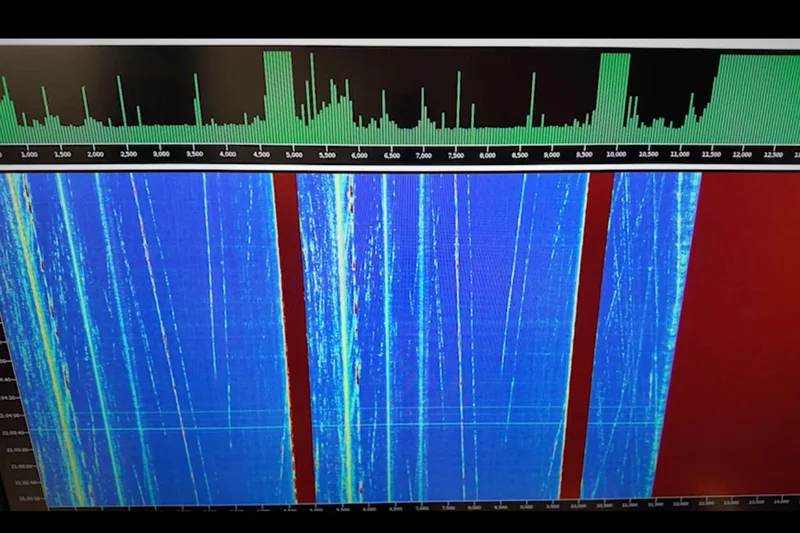
Fortunately, however, geophysicists with the USGSâs Earthquake Science Center have developed an unexpected and somewhat orthogonal solution to improve earthquake warning systemsâone that piggybacks ingeniously off of our preexisting broadband internet network. The concept essentially makes a virtue of tiny imperfections in high-speed fiber-optic cables, turning them into a sprawling interferometer, a scientific instrument that pulls data from interference in its signal transmissions.
The result, in this case, is whatâs known as a distributed acoustic sensing (DAS) seismometer. USGS researchers found that their DAS system reliably predicted magnitude-5.4 earthquakes and above in roughly 79% of cases compared to ShakeAlertâs mere 30% precision. And it did so with just the first four seconds of quake data.
âOne of the biggest challenges in earthquake early warning is determining how large an earthquake has become as quickly as possible,â USGS geophysicist Theresa Sawi, first author on the new study investigating this technique, explained in a statement.
âThis study shows that fiber-optic sensing may help answer that question within seconds,â Sawi said.
California feeling
Not unlike the rumbling sound waves from an oncoming thunderstorm, early seismic waves from an impending earthquake can carry information before the event fully arrives. In general, larger earthquakes generate seismic waves with lower-frequency vibrations, while higher frequencies tend to indicate a weaker earthquake that should dissipate faster with distance.
Sawi and her coauthors trained a machine-learning algorithm on yearsâ worth of borehole strainmeter data preserving lessons from past earthquakes like this across California, then applied those results to their fiber-optic test cables. These cables ran between the twin cities of Arcata and Eureka in Humboldt County, California: one of the most active earthquake hot spots in the continental U.S., just 30 miles north from where the San Andreas Fault terminates offshore.
The teamâs fiber-optic test cables have been maintained in collaboration with California State Polytechnic University in Humboldt, which collaborates with USGS on DAS seismometer development. While research into these techniques is not entirely new, as the researchers noted in their paper for Nature Communications, it has grown in use recently as a solution for studying isolated oceanic earthquakes, volcanic activity, and more via deep-sea fiber-optic lines.
âThis is a major leap in seismology research capability,â Eric Riggs, the dean of Cal Poly Humboldtâs College of Natural Resources and Sciences, said in a statement last December. âItâs ushering in a new era of earthquake detection and monitoring.â
Good vibrations
Traditional earthquake monitoring systems, like classic seismographs and those borehole strainmeters, depend on specialists installing well-calibrated instruments in specific locations for their success. Obviously, that can get a little impractical out in the open ocean or other remote regions, even though people living in those areas deserve as much early warning as anyone else.
Study coauthor Connie Stewart, executive director of Cal Poly Humboldtâs university initiatives, hopes the new research incentivizes greater investment in wider broadband access for rural communities that could also benefit from faster and more precise earthquake warnings. Stewart, who has a background in rural development policy, and her coauthors also noted that DAS systems linked to submarine cables could benefit coastal communities where oceanic seismic monitoring would help them prepare for tsunamis generated by undersea earthquakes.
âExpanding broadband infrastructure creates opportunities far beyond internet accessâespecially for rural communities on the North Coast,â Stewart said in a statement. âThis study demonstrates how investments in fiber optic networks can also advance scientific discovery and, ultimately, help build safer, more resilient communities.â