Central Africa Gets One QR Code for Six Countries
CENTRAL AFRICA · FINANCE
What the CEMAC QR code actually does
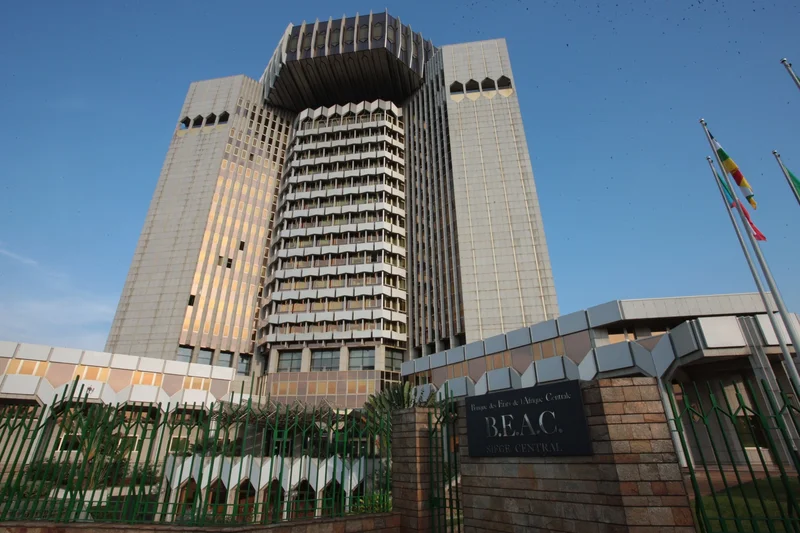
Yvon Sana Bangui, governor of the Bank of Central African States, launched the code at a ceremony in Douala on Wednesday 29 July. It is a single standard for the six countries of the monetary community.
In practice a customer scans one code at a shop or a service provider and the payment goes through, whatever institution holds their money. That is true whether the account sits at a commercial bank, a microfinance house, a payment institution or a mobile wallet.
“With the standardised and interoperable QR code, transactions will become faster, more secure and easier, while reducing the risks linked to the use of cash,” the governor said, according to the Ecofin Agency.
Why interoperability is the hard part
Digital payments have grown quickly across Central Africa, but they grew in silos. Each bank and each wallet built its own rails, and a merchant who accepted one often could not accept another.
That fragmentation is a tax on small businesses. It forces them to hold several devices and several relationships, or simply to keep taking cash.
The central bank’s answer is a common reference standard that every licensed player must be able to read. The technical barrier disappears without anyone having to merge.
The road from April to Douala
The board of the central bank approved the draft regulations introducing a community QR code in early April 2026. The Douala launch is the point at which the paperwork became a product.
Around the same time, the regional banking supervisor and the central bank have been working through a broader package of rules covering payment services, aggregators, transfer companies and fintechs. The market outran the rulebook, and the rulebook is catching up.
The stated ambition is harmonisation: one set of expectations for banks, microfinance houses, payment institutions and electronic money operators across all six states.
The continental piece behind it
In early July, Afreximbank announced that the central bank had joined the Pan-African Payment and Settlement System, developed with the African Union to handle cross-border payments in African currencies. CEMAC’s banks and financial institutions are due to be connected by the end of 2026.
That is the part with consequences beyond the region. It would let a business in Douala pay one in Lagos or Nairobi in local currency, rather than converting into dollars and back again.
Every one of those conversions costs money and takes time, and the foreign exchange has to be found first. Removing the step is a straightforward saving for anyone trading across African borders.
What it means for business across the region
For merchants, the immediate gain is that one sticker on the counter serves every customer. For consumers, it is one less reason to carry notes.
For companies with operations in more than one CEMAC state, the effect compounds. A common standard makes reconciliation simpler and reduces the number of banking relationships needed to run a regional business.
It also matters for anyone sending money home. Remittances into the region have depended on a patchwork of operators, and a shared standard is the precondition for competition on price.
What still has to happen
A standard only works if the institutions adopt it, and adoption across six countries and four categories of licensed player will not be uniform. The central bank has set the rules; the market has to build to them.
The PAPSS connection is the bigger prize and the later one, with a deadline at the end of this year. Technical work between the central bank and the platform is under way.
Neither step changes the underlying economics of the CFA franc arrangement. What they change is how easily money moves inside the zone, and how cheaply it can leave it.
Frequently Asked Questions
What is the CEMAC QR code?
It is a single standardised payment QR code covering the six member states of the Central African Economic and Monetary Community. A customer can pay any participating merchant regardless of which bank, microfinance house, payment institution or e-wallet they use.
When and where was it launched?
BEAC governor Yvon Sana Bangui launched it in Douala on Wednesday 29 July 2026. The central bank’s board had approved the regulations creating it in early April.
How does it connect to the rest of Africa?
CEMAC banks and financial institutions are due to join the Pan-African Payment and Settlement System by the end of 2026. That would let businesses and individuals settle across African countries in local currencies rather than routing through the dollar or the euro.
Why does interoperability matter here?
Central African payments have been split between banks, microfinance houses and rival mobile wallets that do not talk to each other. A common standard removes the technical barriers that kept those systems apart.
LatAm Markets: Live Signals → — real-time movers, turnover leaders and FX across Latin America.