ExxonMobil Guyana Drives Record Q2 Output as Profit Slips
Markets · Energy
ExxonMobil Guyana operations anchored a historic upstream performance in the second quarter of 2026, pushing total company production to its highest level in more than two decades. The United States oil major reported a record 4.514 million barrels of oil-equivalent per day (boe/d), even as overall profit fell short of Wall Street estimates due to extensive refinery maintenance.
Record Upstream Volumes Defy Downstream Weakness
ExxonMobil’s global upstream output surged to 4.514 million boe/d in Q2 2026, a figure not seen in over twenty years when excluding volumes historically affected by Middle East disruptions. The milestone underscores the company’s successful pivot to high-margin growth assets in the Americas.
The record production was powered primarily by two engines: the Permian Basin in the United States and the Stabroek Block offshore Guyana. Together, these assets are reshaping the company’s portfolio by delivering lower-cost barrels that remain profitable even during commodity price swings.
However, the strong operational performance upstream could not fully offset headwinds in the downstream segment. Quarterly profit missed analyst consensus, weighed down by scheduled refinery maintenance and compressed margins on fuel refining.
The maintenance cycle, which involved significant turnarounds at several global refineries, reduced throughput and captured value from crude processing. This dynamic created a split narrative for the quarter: operational excellence in extraction overshadowed by softer earnings from refining.
ExxonMobil Guyana Anchors Future Growth
The Stabroek Block, located roughly 120 miles off the coast of the small South American nation of Guyana, remains the crown jewel of ExxonMobil’s growth strategy. The block has transformed Guyana into one of the world’s fastest-growing oil producers since commercial production began in 2019.
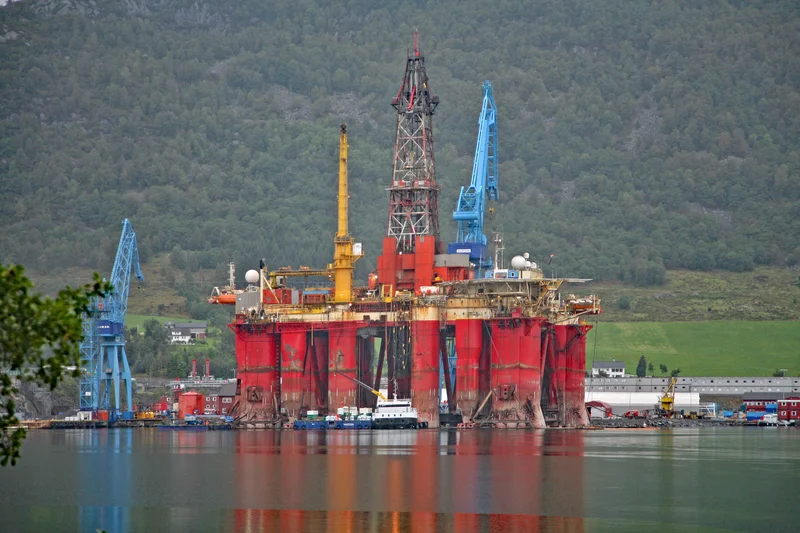
In a major logistical milestone, a fifth floating production, storage and offloading (FPSO) vessel set sail for the block during the quarter. The massive ship, named ‘Errea Wittu’, is planned to start operations in the fourth quarter of 2026.
This new FPSO will add approximately 250,000 barrels per day (bpd) of gross production capacity to the existing fleet. Once fully ramped up, the vessel will push total production capacity in Guyana well above 1.3 million bpd.
The rapid pace of development in Guyana is virtually unmatched in the industry. While other deepwater projects globally face delays and cost overruns, ExxonMobil has consistently brought Guyanese projects online ahead of schedule and under budget.
For international investors, the low cost of supply in Guyana is a critical moat. Production costs at Stabroek are estimated to be among the lowest in the world, ensuring strong cash flow generation even if global oil prices retreat from current levels.
Permian Basin Hits a New All-Time High
Alongside the growth in Guyana, ExxonMobil’s onshore operations in the Permian Basin of West Texas and southeastern New Mexico set a new output record. Production from the region surpassed 1.8 million boe/d for the first time.
The Permian record was driven by efficiency gains in drilling and well completion, leveraging advanced technology to extract more oil and gas from tight rock formations. The company’s scale in the basin allows it to optimize logistics and water handling across contiguous acreage.
Combined, the Permian and Guyana assets provide ExxonMobil with a geographically diverse but financially concentrated stream of high-return barrels. This dual-engine growth model is central to the company’s plan to more than double earnings potential by 2027 compared to 2019 levels.
The record output from these two regions highlights a deliberate strategy to focus capital on assets with the lowest cost of supply. This approach is designed to protect the dividend and fund share buybacks through commodity cycles.
Refinery Maintenance Caps Quarterly Profit
Despite the record upstream output, ExxonMobil’s second-quarter earnings per share came in below analyst forecasts. The primary culprit was a heavy schedule of planned maintenance in the company’s global refining network.
Refinery maintenance, or turnarounds, involves shutting down processing units for inspections, repairs, and upgrades. This scheduled downtime mechanically reduces the volume of crude oil that can be processed into fuels like gasoline and diesel.
The impact was compounded by weaker industry-wide refining margins during the quarter. As global refining capacity returns from maintenance, the crack spread – the difference between crude oil prices and refined product prices – narrowed, squeezing profitability.
This downstream softness is a cyclical feature of the integrated oil business model. While upstream profits soared on record volumes, the integrated earnings structure meant that the downstream drag was enough to cause a headline miss on total profit.
Analysts noted that the maintenance is temporary and positions the refineries for higher reliability in the second half of the year. The market reaction was muted, with investors focusing more on the structural growth narrative in upstream than on the transient downstream dip.
Strategic Implications for International Investors
For the expatriate and international investor community following Latin America, the quarter confirms that Guyana is no longer a frontier speculation but a core pillar of a global energy giant. The country’s oil boom is directly translating into record corporate performance.
The fifth FPSO sailing is a tangible signal that production growth will continue into 2027. Each new vessel represents billions of dollars in upfront investment but promises decades of steady, low-cost production from the prolific Stabroek Block.
ExxonMobil’s ability to hit a 20-year production record while peers struggle with resource maturity demonstrates the value of its Guyanese asset base. The country provides a rare combination of scale, low cost, and low political risk relative to other major oil provinces.
Investors should monitor the startup curve of the new FPSO closely. A smooth ramp-up in Q4 2026 could provide a further catalyst for production beats in subsequent quarters, potentially offsetting any lingering downstream weakness.
The dual record in Guyana and the Permian also reinforces the company’s capital allocation strategy. By concentrating spending on these two premier assets, ExxonMobil aims to deliver industry-leading returns on capital employed, a key metric for long-term valuation.
Outlook: Balancing Upstream Strength with Downstream Recovery
Looking ahead, the company’s guidance suggests that upstream volumes will remain elevated. The full-quarter contribution from the new Guyana FPSO in 2027 is expected to push total company production even higher.
The downstream segment is also poised for a sequential recovery as refinery maintenance concludes. A return to normal utilization rates should restore lost earnings power, potentially setting up a scenario where both upstream and downstream fire on all cylinders.
For Guyana, the focus now shifts to the next wave of development beyond the fifth FPSO. The government and ExxonMobil are already planning a sixth project, which would further cement the country’s status as a top-tier global oil producer.
The Q2 2026 results serve as a clear reminder that ExxonMobil’s growth story is firmly rooted in the Americas. For readers of The Rio Times, the narrative is clear: Guyana’s energy ascent is accelerating, and it is carrying the world’s largest non-state oil company to historic highs.
Frequently Asked Questions
Why did ExxonMobil’s profit miss estimates despite record production?
The profit miss was primarily due to scheduled refinery maintenance and weaker downstream refining margins. While upstream production hit a 20-year record, the downtime in refining units reduced the volume of crude processed into fuels, capping overall earnings.
How much oil is ExxonMobil producing in Guyana?
ExxonMobil’s total production capacity in Guyana is set to exceed 1.3 million barrels per day once the fifth FPSO, which adds about 250,000 bpd, starts up in Q4 2026. The company does not break out exact quarterly production for Guyana alone, but it is the primary driver of international growth.
What is the significance of the fifth FPSO for Guyana?
The fifth FPSO, named ‘Errea Wittu’, represents a major expansion of the Stabroek Block. Its startup planned for Q4 2026 will significantly boost the country’s oil output, increase government revenue from royalties and profit oil, and further establish Guyana as a top global oil producer.