Japan Puts Up to US$34 Million Into Namibia Rare Earths
NAMIBIA · CRITICAL MINERALS
What Japan is funding in Namibia rare earths
Jogmec, formally the Japan Organization for Metals and Energy Security, said on Thursday 30 July that it would invest up to C$47.7 million, roughly US$33.9 million, in a Toyota Tsusho unit developing a heavy rare earth deposit in Namibia. The Ecofin Agency reported the same commitment as 5.5 billion yen.
The money goes into TJ Namibia Rare Earths, a special-purpose company Toyota Tsusho created for the project. Jogmec made its first capital contribution on 23 July, a week before the announcement.
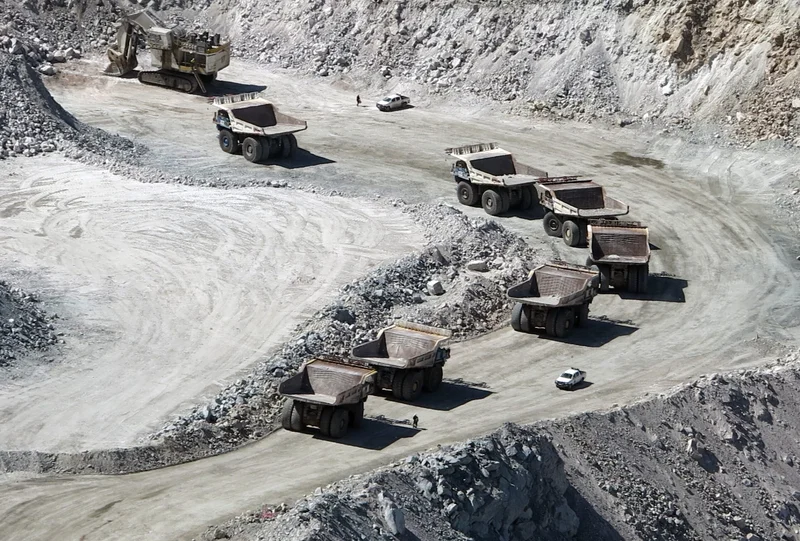
The deposit is at Lofdal, in the Kunene region of north-western Namibia. Reuters reported the partners’ view that it could become Japan’s first rare earth mine development on the African continent.
Why dysprosium and terbium are worth the trip
Lofdal is a heavy rare earth deposit, a narrower and more valuable category than the light rare earths that dominate global supply. Its commercially interesting elements include dysprosium and terbium.
Those two metals do an unglamorous but decisive job. They are added to permanent magnets so the magnets hold their strength when they get hot, which is exactly what happens inside an electric motor.
Without them, a magnet that performs on a test bench fails in a car. That is why an automotive trading house, rather than a mining major, is the party writing cheques in Kunene.
The Chinese squeeze that made Lofdal urgent
China dominates the separation and processing of heavy rare earths, and it has been using that position deliberately. Beijing imposed export controls on several heavy rare earths and related magnets in April 2025.
It then tightened restrictions on exports to Japan in January of this year, and twice more in February, according to Reuters. Each turn of the screw makes a deposit outside China worth more than its geology alone would suggest.
Japan has been here before. It rebuilt its supply chains after an export halt in 2010, and the current programme is the same reflex applied to a harder problem.
A Canadian junior, a Japanese trading house and a Namibian deposit
Lofdal began in 2020 as a joint exploration venture between Jogmec and Namibia Critical Metals, a Canadian company. Toyota Tsusho joined in March 2026 through a competitive bidding process, taking part of Jogmec’s option interest and becoming the development partner.
That structure is worth reading closely. The state agency carries the early risk, a trading house with an existing African footprint takes the operating role, and the listed explorer keeps its position.
Toyota Tsusho is not a stranger to the continent. It owns CFAO, the distribution group that sells and services vehicles across much of Africa.
What Latin America can read in this deal
The same logic has been playing out on the other side of the Atlantic. Brazil has spent the past year fielding competing approaches from Washington, Brussels and Beijing over its own rare earth reserves.
The difference in Namibia is the specificity. Nobody is buying into Lofdal for volume; they are buying two elements that decide whether a motor works.
For investors reading both regions, the lesson is that the scramble has moved from headline reserves to particular elements. Securing dysprosium and terbium is now a strategic question rather than a commodity one.
What has to happen before anything is mined
Nothing has been committed to construction. Jogmec and Toyota Tsusho will run a feasibility study through TJ Namibia Rare Earths and aim to decide on commercialisation in the fiscal year ending March 2027.
Namibia, meanwhile, has been pressing to keep more of the value chain at home rather than shipping out concentrate. That ambition and a Japanese magnet supply chain will have to be reconciled before a mine exists.
The realistic timeline is years, not quarters. What changed on 30 July is that a sovereign balance sheet now stands behind the drilling.
Frequently Asked Questions
How much is Japan investing in Namibia rare earths?
Jogmec, Japan’s state metals and energy security agency, will invest up to C$47.7 million, or about US$33.9 million. The Ecofin Agency put the same commitment at 5.5 billion yen.
Where is the Lofdal rare earth project?
Lofdal sits in the Kunene region of north-western Namibia, near Khorixas. It is a heavy rare earth deposit containing dysprosium and terbium.
Why do dysprosium and terbium matter?
They are added to permanent magnets so the magnets keep their strength at high temperatures. That is what allows an electric motor to work reliably once it heats up.
When will a decision on mining be taken?
Jogmec and Toyota Tsusho will run a feasibility study through TJ Namibia Rare Earths. They aim to make a final commercialisation decision in the fiscal year ending March 2027.
Sources: Jogmec; Toyota Tsusho; The Ecofin Agency.