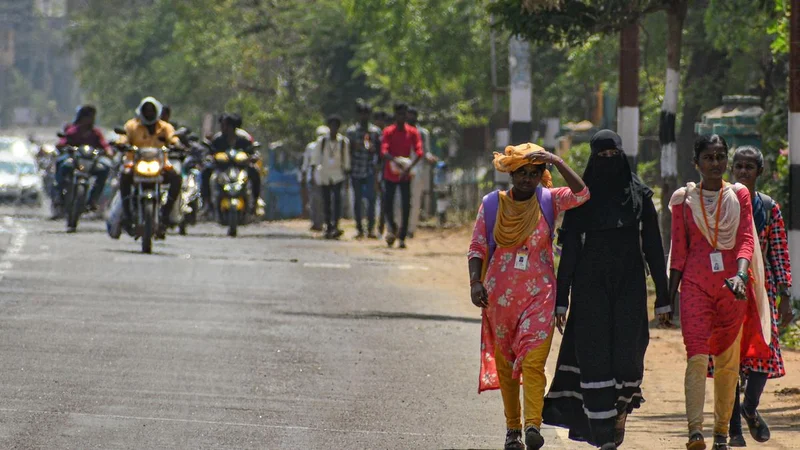
This year’s July was one of Tamil Nadu’s warmest in over three decades, with unusually high daytime temperatures and persistently warmer nights, according to an analysis of meteorological observations by the Regional Meteorological Centre (RMC).
The analysis indicated that this July was the second warmest July in the past three decades, with Madurai being the hottest weather station in the State. Madurai sizzled, with maximum temperatures rising above 40 degrees Celsius on most of the days last month.
The State had earlier experienced a warm July in 2015, with many weather stations recording high monthly mean temperatures.
According to meteorologists, temperatures remained higher than normal across several parts of the State during the month, with warmer nights adding to the overall heat stress.
Some of the hottest places in July were Madurai, Tiruchi, Nagapattinam, Vellore, and Chennai.
For instance, Madurai experienced both the highest maximum temperature in a day (42.5 degrees Celsius) and the highest monthly mean maximum this July since 1991. The monthly mean minimum temperature was also the highest, at 27.1 degrees Celsius. The district, therefore, experienced heat throughout the 24-hour cycle, with little overnight cooling.
V.R. Durai, Head, Regional Weather Forecasting Centre, RMC, said: “While daytime temperatures in July attracted attention, data on the minimum temperatures in many places across the State tell an equally important story.”
Citing the monthly mean minimum temperatures in places such as Meenambakkam in Chennai (28.3 degrees Celsius) and Puducherry (28.2 degrees Celsius), he said temperatures remained elevated throughout the night, increasing thermal discomfort.
Severe heat stress
Data indicate that coastal areas in the State are experiencing high humidity combined with elevated night temperatures, making heat stress severe, despite the moderating influence of the sea.
Another trend noticed was persistent heat in interior districts such as Madurai and Vellore, which are normally cooled by evening. This July, hot afternoons were followed by unusually warm nights, indicating a shift to persistent heat throughout the day and reduced nocturnal cooling.
While a few spells of rain brought relief to some areas, Mr. Durai said temperatures remained elevated through much of July, owing to the poor performance of the Southwest monsoon. The warming trend was noticed in hilly regions such as Kodaikanal and Coonoor as well.
El Niño condition
Officials also attributed the unusual increase in temperature to the prevailing moderate El Niño condition, which is likely to strengthen further through the monsoon, and the urban heat island effect.
On the forecast for August, Mr. Durai said wet weather was expected, particularly over coastal and interior parts, till mid-August.
The department has predicted that most parts of the State would experience above-normal maximum and minimum temperatures in August. Ends
Published - August 01, 2026 12:02 am IST