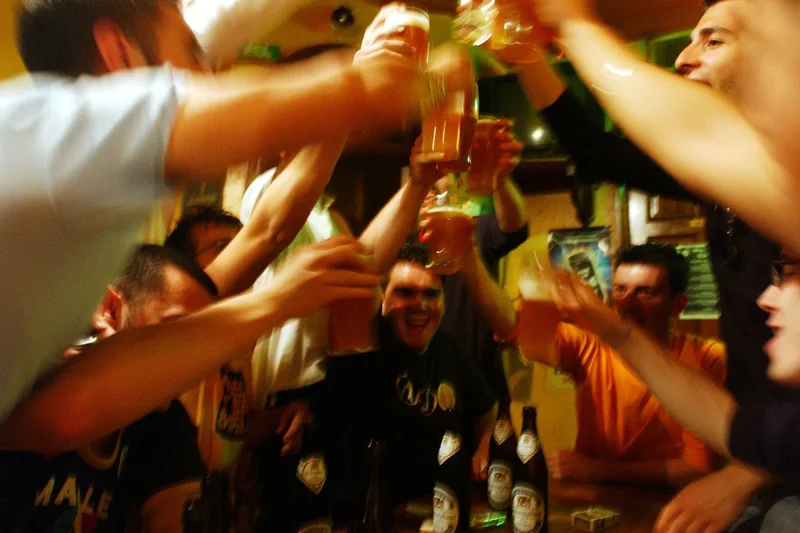
Partying like it’s 1999 is paying off for bar owners, who are embracing old-school events, classic hits and earlier happy hours to bring in Gen X as Gen Z drinks less.
While alcohol consumption among younger Americans fell to historic lows in 2024, Gen X largely maintained its drinking habits, according to a University of Michigan study tracking adults ages 19 to 65. That shift has led venues such as Philadelphia’s Trestle Inn to target customers born between 1965 and 1980 with throwback celebrations designed around their preferences, including events that start earlier and end well before midnight.
The Trestle Inn recently hosted a Prince-themed dance party where owner Ian Cross said a mostly over-50 crowd filled the dance floor by 7:30 p.m., sipping whiskey sours and celebrating with music and costumes.
"We realized that the younger generations weren't drinking as much, and these early parties were a way to get older folks in the door," Cross told The Wall Street Journal. "They spend money on cocktails, they drink, they have fun."
However, new data from IWSR, a company that provides data for the alcohol industry, challenges the idea that Gen Z is drinking far less than previous generations. The company reported this week that 74 percent of legal-age Gen Z adults now drink alcohol, up from 66 percent in 2023, putting them close to the overall U.S. adult drinking rate of 76 percent.
Meanwhile, Rob Kulathinal, an evolutionary geneticist in his 50s, told the WSJ that the difference between generations is noticeable on nights out in Philly.
"I've noticed it's the same people going up to the bar, and it's always the older folks. The young people come in and go straight to the dance floor," Kulathinal said. "On the plus side, it's never been easier to get a drink."
At Detroit’s Magic Bag, Gen X-focused events bring in about 25 percent more alcohol sales than Gen Z-targeted shows, Zack Bush, co-founder of Mad Room Hospitality, told the WSJ. The shift has pushed the venue toward nostalgia nights, including 1980s and 1990s parties and Earlybirds Club events that appeal to older millennials and Gen Xers looking for a night out without the late hours.
"Gen X drinks more intentionally and more consistently over the course of a night," Bush said. "They're showing up earlier and staying longer."
Gen X's relationship with alcohol was shaped by a very different era, researchers say. David Jernigan, a professor at Boston University School of Public Health, told the WSJ that alcohol companies aggressively marketed to young people during the ‘80s and '90s with products like wine coolers and sweet alcopops, helping establish drinking habits that often lasted into adulthood.
Gen Z, meanwhile, has grown up with greater awareness of alcohol’s health risks and a stronger focus on wellness, fitness and healthier lifestyles.
"It's never too late but - and the industry knows this - drinking patterns, like so many other things, are set in adolescence into the early 20s," Jernigan said.
Previous research has also pointed to recreational marijuana and changing social habits as factors contributing to younger generations' not drinking as much alcohol, Time reported in January.
The average amount of time Americans spent with friends face-to-face dropped from about 30 hours a month in 2003 to just 10 hours in 2020, with the biggest decline among people ages 15 to 24, according to the U.S. Surgeon General.
“Alcohol tends to be a social drug, even for young people, so part of the decline in underage drinking could be related to less in-person socializing,” George F. Koob, director of the National Institute on Alcohol Abuse and Alcoholism, told the outlet.