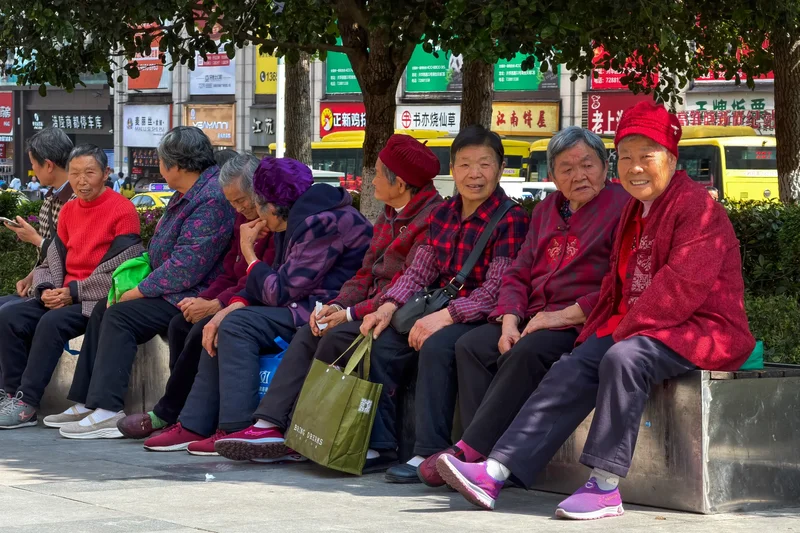
Population aging is one of Asia’s defining social challenges. As people live longer and fertility rates remain low, several Asian economies now face the prospect of a shrinking labor force alongside a rising share of older people.
This problem is primarily viewed through a fiscal lens: Rising healthcare costs and a shrinking workforce put mounting pressure on public finances.
But that framing misses a more important question: what if longer lives could strengthen, rather than strain, economic growth?
It’s true that population aging increases healthcare spending. Older people need more frequent medical care, including for chronic conditions. Newer, more effective treatments are more expensive. More sedentary lifestyles, greater health awareness, and wider access to care have also increased the use of healthcare systems.
But aging doesn’t need to be an economic and fiscal drag. In fact, with the right policies, it can unlock an economic dividend.
As populations age, healthcare policy will become increasingly intertwined with macroeconomic policies, particularly around the labor market and economic growth. A well-designed healthcare system will keep people healthy and economically active for longer—and thus ensure that economies stay healthy too.
Lessons from Singapore and Japan
Singapore and Japan are demonstrations of how rising healthcare costs are not the same thing as unsustainable healthcare costs.
Singapore’s healthcare system combines public subsidies with compulsory medical savings and co-payments, encouraging people to take greater responsibility for their own healthcare spending, while still keeping things affordable.
Its financing framework is anchored by the 3Ms—MediSave, MediShield Life, and MediFund—which help contain costs while preserving access to affordable healthcare for Singapore residents. Policymakers emphasize disease prevention through demand-side initiatives such as Healthier SG and Age Well SG, which promote healthier lifestyles, regular screening, and stronger community support.
These efforts form part of a broader transition from hospital-centered care toward preventive and community-based care. At the same time, supply-side measures—including digitalization, artificial intelligence (AI), and greater price transparency—are deployed to improve efficiency and lower costs.
Japan is taking a different approach. The country’s universal healthcare system provides broad and equitable access to care through a nationally regulated fee schedule that standardizes medical prices. Coverage is provided by Employees’ Health Insurance and National Health Insurance schemes; private insurance only plays a supplementary role. Policymakers focus on continuous reform, ensuring that care is fiscally sustainable as the population ages.
Japan also combines preventive health initiatives, including Health Japan 21, with digitalization, regular revisions to medical fees, assessments of the cost-effectiveness of new health technologies, and closer integration of healthcare and long-term care. Together, these measures improve efficiency even as Japan ensures universal access to medical treatment.
Turning aging into an economic opportunity
Even as they take different approaches to healthcare provision—Singapore’s greater reliance on compulsory healthcare savings and cost-sharing, and Japan’s on social health insurance—Singapore and Japan still share a common philosophy: healthcare systems should focus on spending better, not simply spending more.
Improving the efficiency of healthcare delivery, strengthening community-based care, and investing in prevention can improve health outcomes while helping contain long-term costs.
Both countries view healthy aging as an economic opportunity rather than solely a healthcare objective. Better health enables older individuals to stay economically active for longer, helping offset the effects of shrinking workforces and supporting long-term growth.
Singapore supports this objective through labor market policies that promote lifelong learning, career transitions, re-employment, and age-friendly workplaces. Japan similarly complements its healthcare reforms with its own measures that enable older workers to remain economically active. These policies are increasingly important for enhancing older workers’ employability as AI and technological change reshape jobs and skill requirements.
This makes Japan and Singapore leaders in both healthy life expectancy and labor force participation among older workers. Their experience suggests that better health expands the ability for older individuals to remain economically active.
Policy lessons for ASEAN+3
ASEAN+3—a regional grouping that brings together ASEAN with China, Japan, and Korea—encompasses economies at different stages of demographic transition and healthcare-system development. Health spending efficiency varies widely across the region. Although higher-income economies generally have better health outcomes, system design and the effectiveness of service delivery also influence how efficiently healthcare resources are used. For example, Japan’s nationally regulated fee schedule standardizes medical prices and is regularly revised to support more efficient service delivery. In some ASEAN countries, shortages or uneven geographic distribution of healthcare workers constrain access, particularly in rural areas.
While their priorities may differ, many ASEAN+3 economies face a common challenge: adapting healthcare systems and labor market policies to support healthier, longer, and more productive lives.
The experiences of Japan and Singapore offer lessons that are broadly applicable across the region.
First, healthcare strategies should place greater emphasis on prevention. Shifting resources toward preventive and community-based care can improve health outcomes through earlier diagnosis and treatment and better management of chronic diseases.
Second, policymakers should focus on outcomes rather than just spending levels. Healthcare expenditure needs to deliver measurable improvements in health and economic outcomes. All economies should improve efficiency and quality as well as align capacity with long-term demand. However, for economies with limited access, immediate priority should be given to expanding basic capacity and coverage.
Third, governments should strengthen the links between health and labor market policies. Complementing healthcare reforms with lifelong learning, age-friendly workplaces, and flexible employment can keep older people in the workforce. This can mitigate the economic effects of population aging while expanding opportunities for older people who wish to keep working.
Aging will reshape Asia’s economies regardless of policy choices. What is still within policymakers’ control is whether it becomes a fiscal burden or a growth opportunity. As Japan and Singapore demonstrate, managing aging is not just about containing costs: healthcare and labor market policies can support growth by enabling healthier, longer, and more productive working lives.
The opinions expressed in Fortune.com commentary pieces are solely the views of their authors and do not necessarily reflect the opinions and beliefs of Fortune.
Fortune Leaders Forumwill convene Fortune 500 executives and founders of leading Asian companies to help define the future of leadership in an age of convergence and complexity.
September 8 in Macau.
Apply here
.