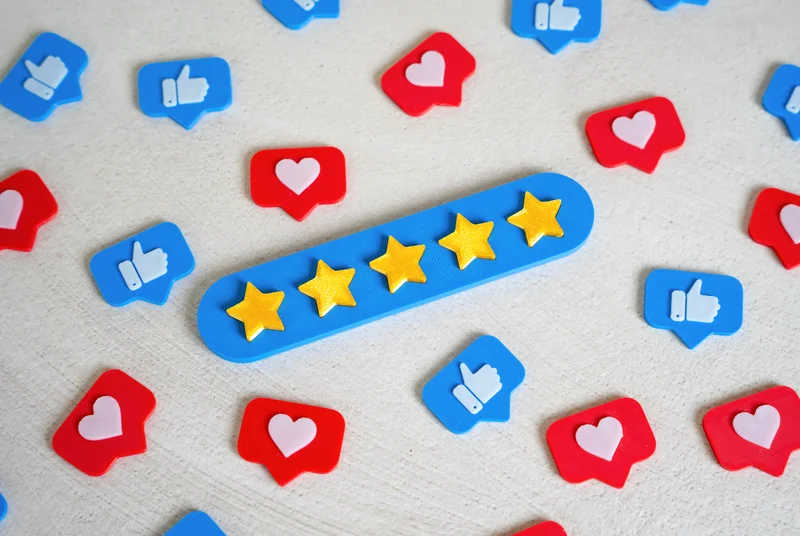
Does a flawless 5-star rating still seal the deal for customers? Is this indicator of brand performance still the number one signifier of trustworthiness? Recent online review trends say no.
Increased sensitivity to fake and AI-written online reviews has motivated a major shift in consumer perceptions and behavior. Consumers are looking beyond the surface and beyond opaque star ratings in search of real experiences that actually justify a brand’s good online image.
Why Star Ratings Aren’t Enough
Skepticism has become a key factor in the way consumers approach online reviews. Overlooking scores, potential buyers are instead paying more attention to real review content.
Why is this? Consumers want to see the experiences behind the ratings. How did the company earn the score? How do they perform when a customer has a problem? People want genuine accounts of real experiences with a brand’s service and product. These are elements that a simple score can’t express, and they form the more complete picture that today’s more cautious consumers are looking for.
Do 5-Star Ratings Actually Arouse Suspicion in Consumers?
It depends. Whilst a strong reputation built on genuine, exemplary performance is possible, research suggests that only 20.5% of people will trust a brand with a perfect review score. This tells us that skepticism has become so prevalent that the knee-jerk response to a high rating is: ‘It must be too good to be true.’
Seeking authenticity, consumers feel that a few negative reviews validate the positive ones. With so many things that can go wrong and so many different types of people to please, a flawless performance seems unrealistic, so a few negative reviews can actually enhance a brand’s credibility.
Why Responding to Reviews is So Important
The reason consumers are so interested in online reviews is that they provide credible insight into the customer experience. This evaluation starts with the brand’s engagement with reviews. Professional, constructive, and human responses to reviews are a green flag for curious consumers, whereas dismissive, copy and paste replies, or worse, a complete absence of response at all are the red flags that tell the customer to look elsewhere.
How Does the Fear of AI-Produced Reviews Affect Consumer Behavior?
Online review trends of 2026 indicate that the massive expansion of AI-generated content has also raised consumer doubts about authenticity. According to an online reviews report, 62.3% of consumers distrust AI-generated online reviews.
With actual human experience being the reason people refer to reviews, even the slightest suggestion that they are automated will be enough to make someone instantly turn away from a brand.
What introduces these doubts? People are suspicious of glowing praise, vague reviews that don’t directly detail experience with a product, massive volumes of reviews with repeated or similar content, and reviewers with little to no review history.
How Can Your Business Build Trust?
We can rephrase this question as: ‘How can your business prove authenticity?’ The answer is transparency. Transparency comes through clear, consistent communication. How does this work in the context of online reviews? Dialogue. A good customer relationship is built on engagement, listening, and acting on online review insights.
This dialogue is initiated by encouraging users to leave feedback after interacting with your business. All customer reviews shall then be addressed with a prompt, personalized response. This response shall be empathetic, courteous, and specifically address the issues and concerns raised. Conclude with the next step on the path to resolving the issue.
Can Negative Reviews Actually Benefit Brand Reputation?
Yes, they can. The deciding factor is how a business responds to the negative review. Handled correctly, a bad review sets the stage for an exemplary display of customer service. An online review report, smart review management, and a thoughtful reply show the public that your company is committed to customer satisfaction and is invested in building a healthy customer relationship.
Following this approach, the occasional negative review can prove more helpful to building credibility than a positive one. It reassures consumers that your business's reviews are actually useful and aren’t just an attempt to manipulate your brand image. Indeed, it is highly inadvisable for any company to censor or delete negative reviews. It is a delaying tactic, at best, and a reputation-ruining scandal, at worst.
Tackling The Trust Issue is Your Chance to Stand Out
Advancements in AI technology have brought many benefits, but as technology grows in sophistication, so does the ability to deceive. Consumers are well aware of this shift, and as such are looking for a little more than a simple star rating to be convinced that a brand is worthy of their trust.
Gaining customer trust in this context centers on striking the correct balance; knowing the strengths and weaknesses of the tools available and understanding how they are best applied. Consumers have made it clear that they are over contextless scores and hollow praise. They want real-life examples, real interactions, and a real human connection.
Success will be the reward for businesses that approach all customer feedback as an opportunity to properly engage with and learn from their customers. Against a backdrop of meaningless content that leaves consumers jaded and alienated, authenticity is your strongest asset.