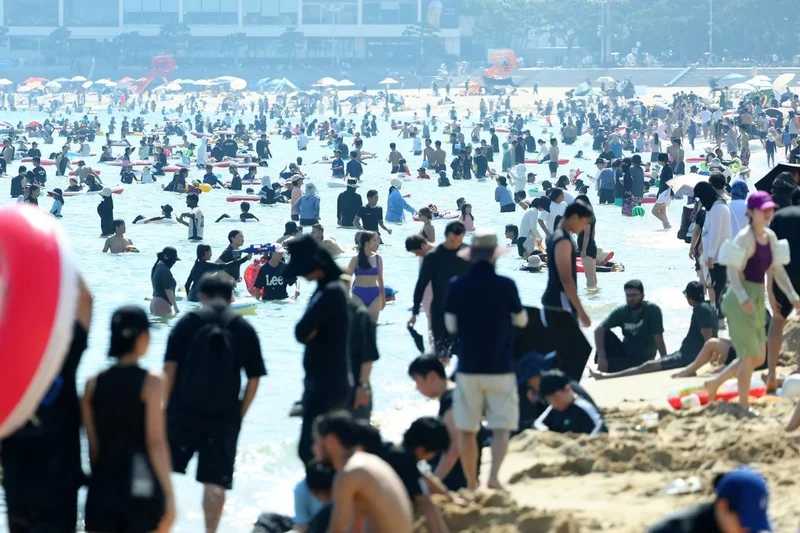
Driven by a surge in visitors from across Asia and a blockbuster June stadium concert by K-pop juggernaut BTS, international tourism in the southern port city of Busan shattered postpandemic records during the first half of 2026.
According to municipal data released Thursday, Busan welcomed more than 2.42 million foreign visitors between January and June — a 43.9 percent jump compared to the same period of 2025. The strong turnout puts the coastal metropolis well on track to hit its ambitious target of 4 million foreign tourists by year’s end, having already achieved over 60 percent of that goal in six months.
Leading the influx were travelers from Taiwan and mainland China, who accounted for nearly 40 percent of total arrivals. Taiwanese tourists surged 54 percent year-on-year to rank first overall, while Chinese arrivals nearly doubled, surging 90.7 percent. Visitors from the United States grew by 76.4 percent, with European markets like France and Britain also posting substantial gains.
The surge in foot traffic translated into a massive windfall for the local economy.
Foreign credit card spending in Busan soared to 591.4 billion won ($428 million) in the first half of the year, representing a 63 percent increase over 2025 — outpacing Korea’s national tourism spending growth rate of 55 percent.
The city’s tourism high-water mark came in June, when 484,000 international visitors arrived in a single month. That peak was heavily catalyzed by BTS' world tour stop in Busan held at the Busan Asiad Main Stadium.
Big-data analysis tracking cellular signals and card transactions revealed that during the concert week, international visitor foot traffic within a 3-kilometer radius of the venue surged by 341.9 percent compared to the week prior. Foreign credit card spending around the stadium more than doubled to 548 million won, while nearby auxiliary fan hubs — such as the Love Song Lounge at Haeundae Beach — saw spending approach nearly 1 billion won.
City planners also noted a healthy geographic dispersion in tourism dollars. While spending was historically concentrated along the famous beachfronts of Haeundae, this year’s data showed money spreading evenly into central commercial hubs like Busanjin-gu and northern districts like Gijang-gun.
Busan Mayor Chun Jae-soo credited the numbers as proof that the city is cementing its status as a premier global destination, adding that officials will now focus on extending average stays and enriching cultural offerings.
This article was published with the assistance of generative AI and edited by The Korea Times.