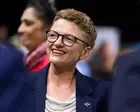
Labour has stormed to a decisive victory in the Greater Manchester mayoral byelection, seizing back areas that recently fell to Reform UK and the Greens.
Labour’s Bev Craig, the Manchester city council leader, will now succeed Andy Burnham and hold one of the most powerful political positions outside Westminster.
Labour won 47% of the vote, with Reform UK way behind on 21% and Greens in third on 12%.
The contest took place under the supplementary voting system, meaning that as no candidate achieved more than 50% then voters’ second preferences were counted.
When voters’ second choices were counted and other parties were discounted, Labour’s share rose to 66% and Reform UK’s to 33%.
The scale of the victory is a significant boost for the new prime minister, suggesting Labour can win back both left and right-leaning voters who deserted the party under Keir Starmer.
It also poses troubling questions for Nigel Farage, whose party has surrendered its year-long lead in the national polls and is in a deepening crisis over questions about its funding.
A poll last month had Labour and Reform UK virtually neck and neck in the battle for the mayoralty.
In the May elections, Farage’s party won more than 100 seats across Greater Manchester, including all but one of the 25 up for grabs in Wigan – the council of Burnham’s new constituency – and 18 out of 19 in Tameside, both once solidly Labour areas.
However, Farage scuppered the party’s mayoral campaign when he announced he was standing down as an MP in order to fight a self-imposed parliamentary byelection in Clacton after scrutiny over his funding.
Before the result was officially declared, Labour sources said it had won in every ward in boroughs including Bury, Tameside and all but one Trafford, where both Reform UK and the Greens made inroads in May.
In Oldham, where Reform UK gained 13 councillors and ended Labour’s 15-year grip in power two months ago, Labour won 17 of the 20 wards in the mayoral contest, it is understood. Sources said Labour had won every ward in Gorton and Denton, the constituency won by the Green party’s Hannah Spencer in February.
One senior Labour source said it looked as if Reform UK had “massively underperformed” and that the result was a combination of Burnham’s prime ministership signalling “you can vote Labour again” and voters feeling confident they could vote for Craig.
For the Greens, which won 7% of the vote against Burnham when the Greater Manchester mayoralty was last contested in 2024, a doubling or more of their vote share demonstrates the party’s ability to expand outside its recently formed urban-liberal power base.
Geraldine Coggins, the Green party candidate, said she was pleased with its campaign and that there had been a “surge” of support for the party under Zack Polanski’s leadership.
She claimed the result was “not a ringing endorsement” of Craig, comparing her with Burnham who never won less than 60% of the vote in each of his three victories since 2017.
“The fact this has even gone to the second round is devastating for them,” Coggins said. “To have lost this much support in the honeymoon period of a new prime minister is not a positive sign for them.”
The contest was triggered by Burnham winning the Makerfield byelection on 18 June, meaning he had to step down as mayor of the most powerful combined authority outside London.
The byelection was the biggest contest of its kind in British political history, with more than 2 million eligible voters.
However, the turnout was down on previous Greater Manchester mayoral contests – only 25%, the third lowest of any mayoral byelection to date – due to a combination of low voter awareness and it taking place in the summer holidays.