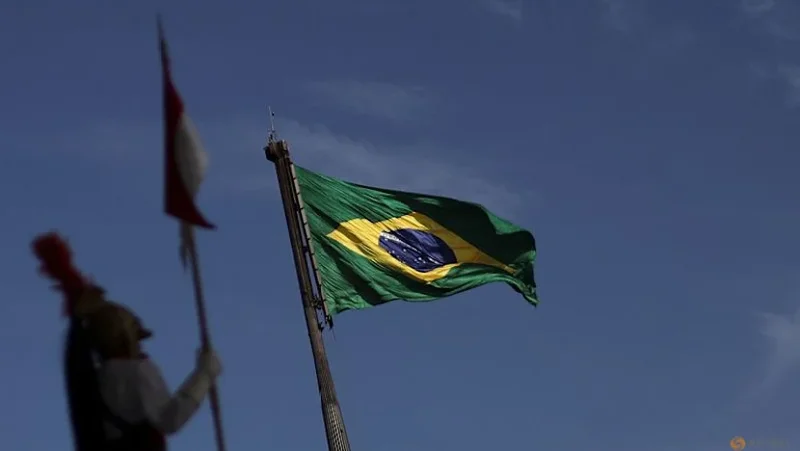
SINGAPORE: A free trade agreement between Singapore and the South American trade bloc MERCOSUR has entered into force between Brazil and Singapore, the Ministry of Trade and Industry (MTI) said on Saturday (Aug 1).
The MERCOSUR-Singapore Free Trade Agreement is Singapore's 29th free trade agreement and its first trade pact with the founding members of the bloc comprising Argentina, Brazil, Paraguay and Uruguay. MERCOSUR has a combined gross domestic product of nearly US$3 trillion with a population of more than 295 million as of 2025.
The agreement had previously entered into force for Singapore with Paraguay and Uruguay, while ratification procedures are ongoing with Argentina.
MTI said the development was a "milestone" in Singapore's economic engagement with Latin America, with the agreement coming as Singapore and Brazil prepare to mark 60 years of diplomatic relations in 2027.
The ministry noted that Brazil is MERCOSUR's largest economy and one of Singapore's largest trading partners in the region. Singapore is also Brazil's largest trading partner in Southeast Asia.
The agreement aims to deepen economic integration between Singapore and the four South American economies by reducing trade barriers, strengthening investment conditions and enhancing cooperation in areas such as digitalisation, government procurement, sustainable development, trade facilitation and food security.
Under the pact, MERCOSUR members will eliminate import tariffs on about 96 per cent of products over a period of up to 15 years, with more than a quarter of tariff lines liberalised immediately.
The agreement could also create new opportunities for Singapore businesses operating in Latin America in sectors such as manufacturing, infrastructure, energy, agri-commodities, hospitality and digital solutions.
In an Instagram post, Deputy Prime Minister Gan Kim Yong said the agreement would allow Singapore businesses to "gain better access to overseas markets" and expand, creating new opportunities and supporting "good jobs here at home".
The pact could also support Singapore's efforts to diversify its food import sources. Brazil and other Latin American countries are major exporters of agricultural products, and Singapore is looking to increase imports of products including meat, fruits, vegetables and "superfoods" as part of its food resilience strategy.
According to MTI, nearly 200 Singapore companies operate across MERCOSUR markets, while trade in goods between Singapore and the bloc's four member states accounted for more than 30 per cent of Singapore's total trade with Latin America in 2025.
Vice president of tech giant Sea, Junjie Zhou, said that the agreement would help more businesses, especially small- and medium-size enterprises (SMEs), reach new customers and grow across borders through the lowering of trade barriers and deepening digital cooperation.
Seatrium CEO Chris Ong noted that Brazil has been a "strategic market" for the company for decades, adding: "The entry into force of the MERCOSUR-Singapore Free Trade Agreement for Singapore and Brazil is set to create an even more conducive environment for long-term investment."