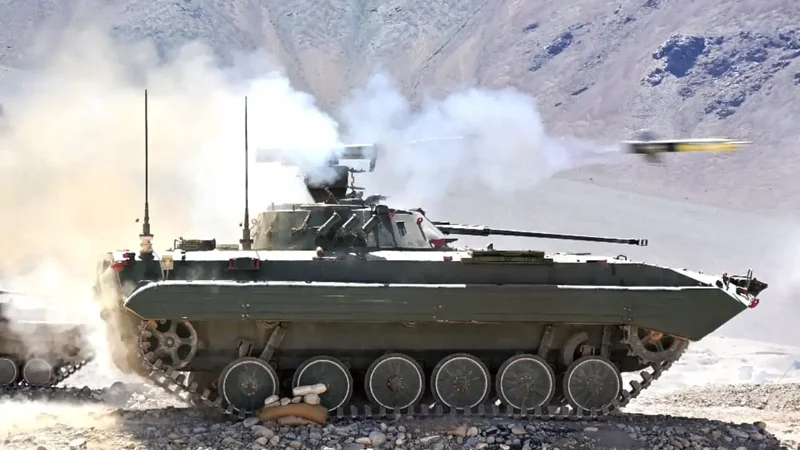
In a bid to improve the combat readiness in the high altitude terrain of Easter Ladakh and else where along both the Line of Actual Control (LAC) the Line of Control (LoC) the army has unveiled a significant technological advancement with the launch of the indigenously developed Xtreme Weather Grade (XWG) diesel. The specialised fuel is designed to ensure mobility, safety and operational availability of combat and logistics vehicles in extreme climatic conditions.
The launch comes against the backdrop of the armyâs expanding infrastructure in Eastern Ladakh, where hundreds of tanks and infantry combat vehicles are deployed along the LAC. The need for this fuel arises as regular diesel often thickens and clogs filters at sub-zero temperatures, severely impacting vehicle operations in snow-bound and high-altitude areas.
XWG Diesel addresses this challenge by remaining effective at temperatures as low as minus 42° Celsius. The fuel is compliant with BS-VI standards and IS 1460:2025 specifications, the fuel can be seamlessly used across the Armyâs existing fleet without requiring engine modifications or re-homologation.
The Chief of Army Staff described the development as a âgame-changing indigenous innovationâ that will enhance operational readiness and mission reliability, while eliminating cumbersome practices previously adopted to keep vehicles functional in severe winters.
The army had set up procedures such as routinely having soldiers start and run vehicles at regular intervals in a bid to ensure that the fuel does not freeze in the vehicles damaging components. This also put stress on both men and machines as these procedures have to be followed both day and night, which also reduces the engine life, especially as they run at high altitudes where the fuel air mixture is not the same due to the thin air found at lower altitudes, in which vehicles are designed to operate.
He also expressed confidence in further collaborations for specialised fuels tailored for the army's diverse operational needs. This fuel has been developed jointly with oil marketing firms in a short time frame of less than a year.
In an effort to maintain the combat readiness of its armoured vehicles, the army has established two of the worldâs highest armoured vehicle maintenance and repair facilities at Nyoma and the DBO sector, both situated at altitudes exceeding 14,500 feet. These facilities ensure the combat fleet, including T-90 and T-72 tanks, BMP-2K infantry combat vehicles and K-9 Vajra self-propelled howitzers, remains operationally ready despite rugged terrain and temperatures plunging to minus 40° Celsius.
The developments strengthens the military's preparedness along its frigid frontiers, this fuel will also be available to civilians living in these areas and face severe winter conditions.