*Power Shift is Ellyn Lapointeâs ongoing Gizmodo series that explores advancements in green technology, with a focus on renewable energy, grid modernization, and emissions reduction. *
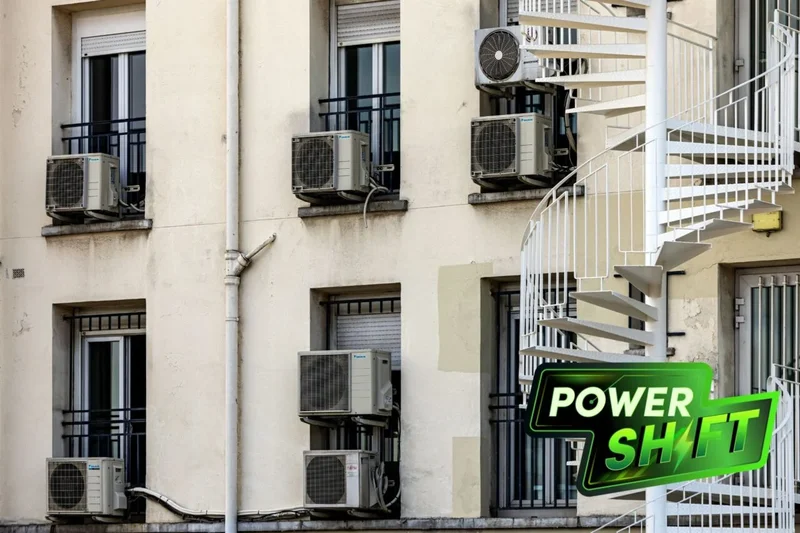
As carbon emissions push Earth’s average temperature to new heights and usher in unprecedented heat waves, humanity’s reliance on air conditioning is growing. The trouble is, AC consumes massive amounts of energy andâdue to the world’s continued reliance on fossil fuelsâemits lots of carbon.
Overcoming this feedback loop presents a significant engineering challenge that is becoming increasingly urgent as the world warms. Enter passive cooling: non-mechanical approaches to lowering indoor temperatures.
This certainly isn’t a new concept. Passive cooling relies on architectural techniques used for centuries in hotter regions, though scientists are advancing these methods with modern materials and technologies. Several have made impressive strides in recent years, but each strategy comes with its own benefits, tradeoffs, and limitations.
In a review published earlier this month in the journal Nature Reviews Clean Technology, researchers evaluated advances in various passive cooling techniques at different stages of development and deployment. They found that advanced passive cooling technologies can lower peak urban temperatures by up to 6.75 degrees Fahrenheit (4.5 degrees Celsius), significantly reducing mechanical cooling demand.
“Without intervention, cooling demand is projected to become one of the fastest-growing energy uses globally,” co-author Matthaios Santamouris, distinguished professor of high-performance architecture at the University of New South Wales, told Gizmodo in an email. “Our review argues that passive cooling should be considered the first layer of defense, significantly reducing cooling loads before mechanical systems are required.”
AC in the hot seat
According to Santamouris and his co-authors, cooling currently accounts for almost 10% of global electricity consumption, and by 2050, the electricity needed to cool buildings worldwide is projected to increase 210% above 2024 levels, with greenhouse gas emissions from air conditioning tripling over the same period.
“Passive cooling alone will not solve climate change, but it can make a substantial contribution to both climate mitigation and adaptation,” he said. What’s more, scaling this approach could provide more equitable access to cooling, as the cost of air conditioning is often unaffordable for low-income populations who are especially vulnerable to extreme heat.
The researchers assessed advancements in smart solar control, ventilation, radiative cooling, evaporative cooling, and hybrid systems. The first aims to reduce the amount of solar heat entering a building. Today, this approach leans on advanced shading systems, reflective surfaces, window glass that blocks certain types of solar radiation, and smart materials that change color with temperature fluctuations to control how much heat they absorb. According to Santamouris, the main barriers to scaling this approach are higher upfront costs, limited awareness, and the slow renovation rate of existing buildings.
Ventilation uses outdoor air to remove indoor heat. Traditionally, it relies on wind and buoyancy forces, but new approaches combine intelligent controls and personalized ventilation systems, Santamouris explained. However, “its main limitation is that it depends heavily on outdoor conditions,” he said. “During heat waves, when outside air is also hot, the cooling potential decreases significantly.”
Radiative cooling works by emitting heat from building surfaces into space. It uses building materials that reflect most incoming sunlight while efficiently emitting heat as infrared radiation through the “atmospheric window,” which allows this radiation to pass through without being blocked or absorbed by gases. Radiative cooling was previously limited to nighttime use, but recent advances in nanomaterials have made it possible during daytime, according to Santamouris. Still, high-performance materials are not yet produced at the scale needed for mass adoption.
Evaporative cooling harnesses the cooling effect of water evaporation. There are several types of evaporative cooling systems, but direct evaporative coolingâwhich moves air through water-soaked padsâis most commonly used in residential settings. While it can be highly efficient and requires very little energy, it becomes less effective in humid conditions, Santamouris explained.
Finally, hybrid systems integrate multiple cooling mechanisms to maximize performance under varying climatic conditions. “These systems are particularly promising because they can overcome some of the weaknesses of individual technologies,” Santamouris said. Radiative-evaporative systems can be more resilient to humidity than purely evaporative systems, for example. “The challenge is complexity, cost, and the need for further large-scale demonstration projects,” he added.
The future of cooling
As temperatures and humidity levels rise, advanced solar-control technologies and radiative cooling systems will likely emerge as the dominant passive cooling strategies, in addition to hybrid systems. These climatic changes will exacerbate the limitations of evaporative cooling and ventilation, though they may still prove effective in cooler, drier parts of the world.
But the biggest barrier to scaling passive cooling isn’t technical, Santamouris said. Most of these technologies already exist and are proven, but integrating them into mainstream building practice, regulations, financing mechanisms, and urban planning is a major challenge, he explained.
Based on the findings of his review, the benefits may be well worth the effort. Depending on the local climate, building type, and cooling technologies involved, passive measures can significantly reduce cooling energy demandâin some cases by more than half. “When deployed at scale across cities, this translates into major reductions in electricity consumption, peak demand, and associated greenhouse gas emissions,” Santamouris said.
Still, it will take a long time to get there. In the meantime, “there’s a lot that we could be doing with very simple technology that we aren’t,” Alexandra Rempel, an associate professor of environmental design at the University of Oregon, told Gizmodo. She argues that while cutting-edge passive cooling technologies are exciting, there are plenty of effective strategies that are readily available.
Shading east-facing windows in the morning and west-facing windows in the afternoon can make a significant difference, Rempel said. Exterior window shading is particularly effective because it blocks solar heat before it enters the home. Her research group is even developing an app that monitors indoor conditions and tells users when it’s time to shade their windows.
“The integration of passive cooling with smart-home systems is on the horizon,” Rempel said.
She also emphasized the use of low-tech, non-energy-intensive airflow strategies. “I’m a huge fan of fans,” Rempel said. While they don’t actually lower air temperatures, they make people feel cooler by aiding the evaporation of sweat from the skin. What’s more, using them at night can effectively circulate cooler air throughout your home.
While it’s inevitable that air-conditioning demand will continue to grow as the world warms, wider deployment of passive cooling could dramatically reduce that growth, lower electricity demand, decrease emissions, reduce grid stress, and make cooling more equitable. “The goal is not to eliminate air conditioning, but to ensure that we do not become entirely dependent on it,” Santamouris said. “As we note in the review, we cannot air-condition our way out of climate change.”