Brazil · Politics
Key Facts
—Who. Senator Tereza Cristina, a key agribusiness leader and member of Progressistas (PP).
—What. She declined the vice-presidential slot on Flávio Bolsonaro’s 2026 ticket.
—When. The refusal was reported on July 21, 2026, ahead of a July 25 party convention.
—Why. She aims to run for president of the Senate in 2027 and avoid an unsettled national race.
—Reaction. PL president Valdemar Costa Neto said the party will now negotiate with other center-right groups.
Tereza Cristina, the influential Brazilian agribusiness senator, has declined the vice-presidential slot on Flávio Bolsonaro’s 2026 ticket, a decision that exposes growing fragmentation on the right.
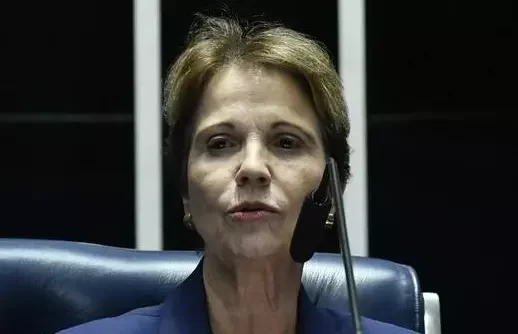
Senator Tereza Cristina declined the vice-presidential slot on Flavio Bolsonaro’s ticket.
One-stop reference
Company Intelligence
Every listed company in Latin America — financials, ownership and structure for 1,450+ companies across 26 exchanges, in one place.
RTAsk Rio TimesWhat this means, and what's next›
A Pragmatic Refusal
Senator Tereza Cristina told Progressistas (PP) president Valdemar Costa Neto that her goal is to run for president of the Senate, not to join the national race. The meeting confirming no agreement was reached was reported on July 21, 2026.
She had signaled caution for months. On February 11, she said it was “too early” to discuss a vice-presidential candidacy, adding the decision would be made later by allied parties.
Her stance is rooted in a calculated political timeline. By aiming for the Senate presidency in 2027, she positions herself for a powerful institutional role that controls the legislative agenda, a prize that may offer more concrete influence than a high-risk vice-presidential bid.
For foreign investors, the Senate presidency is a gatekeeper role that can fast-track or stall economic reforms. Her preference for this post signals she sees greater long-term value in shaping policy from within Congress rather than tying her future to an uncertain presidential campaign.
Why Tereza Cristina Was the Ideal Pick
A report by Brazilian magazine Veja noted she was seen as an ideal vice-presidential candidate. She is a woman with strong ties to the powerful agribusiness sector.
Her technical and moderate profile was expected to help the ticket reach business sectors and female voters beyond the hard-core bolsonarista base. Her refusal complicates Flávio Bolsonaro’s effort to broaden his appeal.
Agribusiness is Brazil’s economic engine, responsible for roughly a quarter of the country’s GDP. Tereza Cristina, a former agriculture minister under Jair Bolsonaro, carries enormous credibility with large-scale farmers and commodity exporters who are often skeptical of purely ideological campaigns.
For expats and foreign investors watching Brazil, her absence from the ticket removes a familiar, market-friendly face. International agribusiness firms and commodity traders viewed her as a bridge between Brasília’s political noise and the practical needs of one of the world’s largest food exporters.
A Fragmenting Right Before 2026
The decision deepens a right-wing split our reporting has tracked for months. One strand wants to avoid an early presidential lock-in, while another seeks to rally around Flávio Bolsonaro.
Tereza Cristina’s choice to prioritize the Senate suggests prominent conservative figures do not yet see a fully unified right-wing path to 2026. She had previously argued the right lacks a clear unifying strategy.
This fragmentation mirrors a broader identity crisis within Brazilian conservatism. Since Jair Bolsonaro’s 2022 defeat and subsequent legal troubles, no single figure has consolidated leadership of the movement, leaving room for multiple power centers to compete rather than coalesce.
For readers accustomed to two-party systems, Brazil’s multi-party landscape can feel chaotic. The right’s current disarray means the 2026 race remains highly unpredictable, with potential for new alliances or even a surprise centrist candidate to gain traction.
What Happens Next
Valdemar Costa Neto said the PL will keep negotiating with other center-right parties to build a more competitive alliance. The party had been scheduled to settle the vice choice at its convention on July 25, 2026.
The timeline shows a rapid shift. On June 27, Tereza Cristina said she felt prepared to be vice but that the choice was not hers alone. Less than a month later, she formally stepped away.
The PL now faces a narrowing window to find a replacement who can replicate her cross-sector appeal. Potential alternatives may come from center-right parties like União Brasil or Progressistas, but few carry the same agribusiness credentials and moderate tone.
For tourists and short-term visitors, this political maneuvering may seem distant, but it directly affects the stability of the Brazilian real and market confidence. A fragmented right could lead to a more polarized and volatile election cycle, influencing everything from exchange rates to domestic travel costs.
What This Means for Expats and Investors
Political uncertainty in Brazil often translates into currency swings. The real has historically weakened during periods of electoral confusion, and Tereza Cristina’s exit from the national ticket removes a stabilizing, pro-business signal that markets had begun to price in.
Expats living in Brazil should monitor how this fragmentation affects the broader reform agenda. A divided right may struggle to present a coherent economic platform, potentially delaying key legislation on tax reform, privatization, and infrastructure that directly impacts the cost of living and doing business.
Investors with exposure to Brazilian equities, particularly in the agricultural and energy sectors, should watch for signs of a more populist tilt in Flávio Bolsonaro’s eventual ticket. Without a moderate counterweight like Tereza Cristina, the campaign may lean harder into polarizing rhetoric that can spook international capital.
On the ground, the Senate presidency race she now prioritizes will be a critical bellwether. If she secures that post in 2027, it could mean a more business-friendly legislative environment, even if the presidential race remains turbulent.
Background: Tereza Cristina’s Political Rise
Tereza Cristina Corrêa da Costa Dias is not a career politician in the traditional sense. She built her reputation as a technical expert, serving as president of the Brazilian Confederation of Agriculture and Livestock before entering government.
Her tenure as agriculture minister from 2019 to 2022 earned her respect across party lines for maintaining open trade channels, particularly with China, Brazil’s largest soybean buyer. That pragmatic approach made her a rare figure capable of appealing to both pro-business conservatives and centrist pragmatists.
Since joining the Senate in 2023, she has focused on legislation affecting rural producers, land rights, and trade policy. Her decision to pursue the Senate presidency reflects a long-term strategy to institutionalize her influence rather than gamble on a vice-presidential role that historically carries limited executive power in Brazil.
Frequently Asked Questions
Why did Tereza Cristina refuse the vice-presidential slot?
She stated her goal is to run for president of the Senate in 2027 and wanted to avoid a high-risk national ticket whose composition is still unsettled. The Senate presidency offers concrete legislative power, including control over which bills reach the floor, making it a strategically valuable position for advancing her agribusiness-focused agenda.
How does this affect Flávio Bolsonaro’s campaign?
It complicates his effort to broaden his appeal beyond his hard-core base, as she was seen as a moderate figure who could attract business sectors and female voters. Without her, the ticket risks being perceived as more ideologically narrow, which could alienate centrist voters and market-oriented allies essential for a competitive general election run.
What does this say about the Brazilian right?
Her refusal highlights a lack of unity, with prominent figures still unwilling to fully commit to a single right-wing presidential path for 2026. The movement remains split between those wanting to rally early around a Bolsonaro name and those preferring to keep options open, reflecting deeper disagreements over strategy, tone, and electability.