Dear Bel,
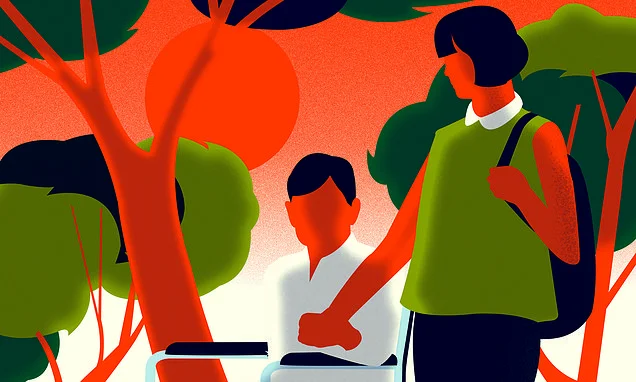
Three years ago, when I was 29, I was involved in a motorcycle accident that left me paralysed from the waist down. The months afterwards are a bit of a blur - hospitals, physio and people telling me how ‘inspiring’ I was for getting on with life.
I know they meant well, but there were days when I didn’t feel inspiring at all. I just wanted my old life back.
Eventually I accepted that wasn’t going to happen. I went back to work in IT, learned to drive again, moved into my own adapted flat and, on the whole, I’d say I’m happy. My friends treat me exactly as they always did, which is probably why they’re still my friends.
Dating has been another matter. At first, I avoided it altogether because I couldn’t imagine anyone looking past the wheelchair. Then, with encouragement from my sister, I joined a dating app. Most conversations fizzled out after a few messages, which happens to everyone, I reckon.
But then I met Sophie - the friend of a friend which made it easier. She’s funny, bright, fanciable and easy to be around. We can sit in a pub for hours talking complete rubbish, and time disappears.
We’ve been seeing each other properly for nearly three months now and shared kisses but nothing more. I’ve found them awkward because I no longer feel I can take the lead, as I would have before.
But of course, she’s expecting the relationship to move forward physically. Any other man would probably be wondering when they might end up in bed together. The old me would have crossed that bridge ages ago but now I’m wondering how long I can avoid it.
I realise this is a subject you are unlikely to discuss with friends so feel glad you have asked for advice, even if it’s far from easy to give it, writes Bel Mooney
I’ve become surprisingly good at suggesting dates that don’t lead naturally back to either of our flats. Another coffee. Another meal. Another ‘walk’ by the canal. She probably thinks I’m taking things slowly because I’m a gentleman. Truth is – I’m terrified.
Not because I don’t want to sleep with her. I do. It’s because I don’t know what she’ll think when she sees my body.
I have scars across my stomach, muscles that no longer work properly and practical realities that make intimacy more complicated than it used to be. Even writing that makes me feel exposed.
Of course, we’ve talked about the accident. But talking about disability over dinner feels very different from being naked in front of someone. Sometimes I think I’m protecting myself by keeping the relationship where it is. Or am I denying both of us the chance to discover my fears are worse than the reality.
Sophie has never given me a reason to doubt her; the insecurity comes from me. I spent so long learning how to live with a wheelchair that I never learned to believe someone could love me in one. I’ve had therapy (still on-going) but I’d appreciate a female perspective.
TOM
Bel replies: It’s brave of you to write and I’ve so glad you did. I realise this is a subject you are unlikely to discuss with friends so feel glad you have asked for advice, even if it’s far from easy to give it.
I’ll start by telling you that when I was 17 my late brother (two years older) broke his back in an horrific car crash, and thus began a lifetime of suffering. My parents were told he would never even be able to make it from into a wheelchair, and all these years later I can remember the feelings of disbelief and joy we felt when his bloody-minded grit proved them wrong.
Eleven years after the crash he got married – something we never thought would happen.
I assure you many men who severe disabilities (after army service, for example) establish and secure relationships, even one I met who met his wife after losing both legs below the knee.
So I do advise you to be hopeful, because being positive is the first step to happiness.
I sense two issues behind your letter. The first is a fear that Sophie may be repelled by your appearance – the scars, legs that have lost their musculature, etc. All I can tell you is that good women don’t worry about such things – not if there’s already a warm and caring relationship established. It’s understandable that you will worry, but try hard to think your way through the fear.
Second must be a dread of not being able to ‘perform.’ Anybody – both sexes - will understand that. I can sense what pain and embarrassment lie behind your words and really sympathise. Again I can only ask you to realise that for some women this might not be as much of an issue as you fear.
Yes, for some women sex is vitally important but for others it’s not, compared to loving kindness.
It would be good also to consider the ways in which non-penetrative sex can be used within an intimate relationship to achieve satisfaction. You could look this up – and that might help you understand that it’s by no means strange or abnormal, but actually generous.
Why not start by just lying down together – clothes if you like - and seeing how that feels? Think slow and gentle.
It might be hard. But you’ve known Sophie for three months, and I doubt you’d have written if you were not ready to try intimacy with her. Of course it’s time to be honest with her. You really must.
You want the female perspective from me but now you need it from her. Women like men to share feelings. A few drinks might help.
Loss of my dear dog is all encompassing
Dear Bel
I lost my beloved dog six weeks ago, just after I’d had cardiac surgery. She became unwell a day later and the vet had to tell me what was wrong. Because there was hope I gave permission for surgery. But when operating they discovered multiple tumours, so I took the terrible decision to let her go. Not to suffer any more.
Since then I’ve been in a tunnel of total darkness. I can go out, get on a bus, act. Inside I am devastated. I have been through bereavement before - losing my wonderful dad when I was thirteen.
My lovely mum died suddenly when I was 33. I lost a baby at 19 weeks and then my former husband died two years later. I know that grief never is a guarantee for fortitude. I now feel weaker than ever without my beautiful soul mate Ruby, my dog, my collie-cross and dear companion in life.
How can I deal with people who are already telling me ‘It’s time to move on’?
I just freeze. I want to tell them how strong I have been, but don’t know how to even start. After Dad died, I studied very hard, went to Cambridge and had varied and good careers. But now I am sixty and single and the loss of my dear Ruby is all encompassing..
DAPHNE
Bel replies: I’ve had your letter filed for some time now, feeling rather bad about it because I so understand your pain.
But here’s the truth: when, in the past, I’ve published a letter about the loss of a pet there’s always a critical letter (or two) back reprimanding me for ‘wimbling on about dogs’ (as one man told me contemptuously) when there is so much human suffering to deal with. But since every day I look with love at a beautiful framed photo of my beloved little Maltese, Bonnie, who died on November 4th 2015 (you never forget the date, do you?) I’ll ignore those who just don’t understand.
The naysayers simply do not realise that losing a beloved pet is like experiencing the death of a human family member, all the more so if you are alone. Sharing your life with a dog (or cat), especially when it’s just the two of you in this world, is a powerful relationship.
I know somebody whose life companion for many years was a parrot and she was utterly devastated when he died. The bird talked to her which is more than her ex-husband used to do.
Animals (especially dogs) give you unconditional love - a special feeling only those who know it can fully comprehend.
When Bonnie died I wrote a whole book (‘Goodbye Pet & See You in Heaven’) about how I felt, and researched widely, leading me to conclude that my dog had a soul which would always be with me. As Ruby’s will be with you.
‘Moving on’ after bereavement is rather meaningless. Yes, the passage of time makes grief less acute, but there is no way it can be left behind. On the contrary it accompanies you through the rest of your life.
'The naysayers simply do not realise that losing a beloved pet is like experiencing the death of a human family member'
You, Daphne, know a lot about sorrow. You recount the various losses you endured in a lifetime, all of which (strange as it may seem) contributed to that strength you have been so proud of.
I’ve no doubt Ruby’s death reawakened all those memories - but that’s all right, you know. Such feelings place each of us firmly within that universal sadness which defines the human condition.
Of course, it doesn’t negate happiness. But the hours of companionable delight we share with our pets are always compromised by the knowledge that it must all end.
That’s how it is. Do you know how I helped myself come to terms with the loss of my Bonnie? Yes, we gave a happy home to a two year old Chihuahua cross, so that all the love taught by Bonnie could be passed on. We now have three little dogs, all so different.
So I hope you too will be able to take the same lesson from your Ruby, because dogs know how to make us happy – and that blessing doesn’t stop when they die.
And Finally: Thank you for everything, Doctor...
On Tuesday my daughter Kitty and I went to a funeral. On a blazing day we joined a throng at the West Wiltshire Crematorium to say goodbye to a man called Richard Spicer. The distinguished consultant paediatric surgeon and trailblazing researcher operated on my daughter three times (one operation lasting nearly eight hours) – when her brilliant previous consultant at Great Ormond Street had judged more surgery to be life-threatening.
I can see him now on his ward rounds at Bristol Children’s Hospital, wearing the Disney kipper ties that delighted his patients.
Once, observing teenage Kitty’s desperate misery and despair at her condition, he sat by her bed and became visibly upset. I will never forget those tears of empathy from a senior medical man who had never lost his humanity.
Perhaps that seems obvious to you, but sadly it’s not. Over the course of my daughter’s childhood and youth and into adulthood I met countless doctors, nurses and technicians - naturally as different as the leaves from separate trees.
Richard Spicer was kind. He reassured me, gave Kitty’s father complicated medical details when I was too catatonic with worry to take them in, and always had a smile to cheer us. Twenty-eight years after he was last her doctor (she had to leave the paediatric system at 18) my daughter visited Richard in hospital in Bath when he had just weeks to live.
How delighted he was to see her and learn that his former patient, that bolshie, brave child, is now the Head of Communications and Stakeholder Engagement for the New Hospitals Programme within the Department of Health.
So things come full circle.
At the funeral a stranger asked me, ‘What’s your connection with Richard?’ I replied, ‘I’m just the mother at the bedside, saying thank you.’
Bel answers readers’ questions on emotional and relationship problems each week.
Write to Bel Mooney, Daily Mail, 9 Derry Street, London W8 5HY, or email bel.mooney@dailymail.co.uk. Names and details are changed to protect identities. Bel reads all letters but regrets she cannot enter into personal correspondence.