I remember a time when a phone had a missed event. There'd be a small icon on the screen showing whether I had a missed call, text, or email. It didn't show the content; it only let me know I missed something.
If I was lucky, the phone would also have an LED indicator as a gentle reminder that I needed to check back when I had time.
Then things started to change as software and hardware progressed. At some point, it all became too much.
The goal became to provide as much information as possible in the fastest way possible.
The lock screen, which used to be a safe space, became overrun with message previews, live activities, widgets, and more.
So much information was being delivered to users that the focus started to shift.
Companies like Google had to figure out what information was most important to a user, and the best way to get it to them front and center.
But now, things might be shifting again. And this time, we might be going back to something simpler.
The ball starts rolling
People have been wanting this for a long time
Despite calls to bring back the LED indicator on phones for years, major brands like Samsung, Google, Motorola, and OnePlus never produced a modern phone with the feature.
Then in 2022, Nothing delivered the Phone 1, with an LED array on the rear as its main selling point.
This LED arrangement would provide information to users in a much simpler way, and it could even be customized.
This was the start. A brand was finally aware that having too much information wasn't a good thing.
Breaking things down and simplifying a notification was still an option. LED indicators could be something powerful even in an age where always-on displays are a thing.
Google wants to give it a shot
A throwback to the Nexus One
We've seen Nothing make iterative changes to its LED indicator, which often becomes the backbone of its releases.
But with a company of its size, it can only reach so many people.
So, when a brand like Google decides to pick it up and do something with it, you know that things could potentially change in a big way.
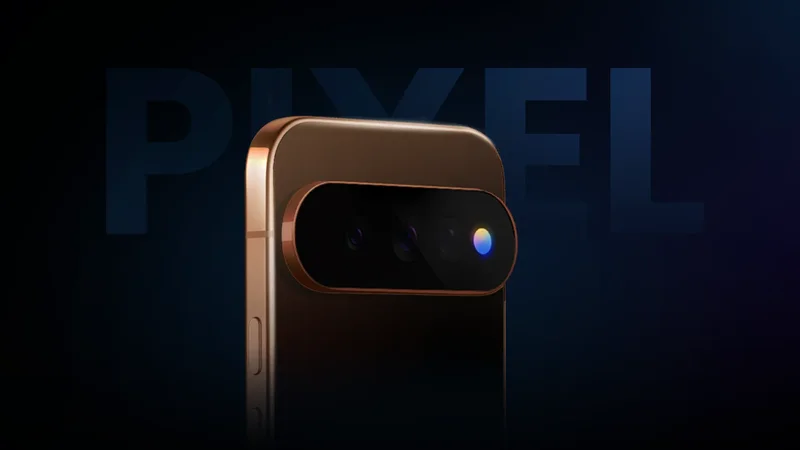
At this time, we still don't know what Pixel Glow will be. We saw a small preview and heard rumors, but this could be more than any of us could imagine.
Now, let's get one thing clear — the evolution of how we get notified needed to happen. We weren't always going to have to open messages, emails, or apps to see what kind of communication we had received.
There's just too much
And that's the problem
That's just too clunky, and it doesn't streamline the experience.
Being able to get a small preview or get information through a widget or live activity makes things more efficient while also improving daily flow.
However, the problem arises when you combine all the notifications from these apps.
When every app is trying to notify you of something, it's too much information to take in. You start moving backwards because you're swiping away the mess and forgetting what's important.
It becomes a daily challenge to keep up with what's actually vital.
It's a companion piece
I don't think we should blow it up and go back to square one. The system we have now is good; it just needs to be tweaked.
Google works on this constantly, while also providing tools for refinement. It's also partially up to the user because everyone has different needs.
I also think that Google going back to an LED indicator is proof that notifications need to be simpler.
It complements what's already there, and provides the at-a-glance information you need. If it's important, you check the phone. If it's not, leave it as is. That blinking light will remind you later on.
Again, we don't know how Pixel Glow will work. It could be even more clever or dumber than what we're hoping for.
Still, I'd like to think that Google is trying to introduce this feature so that we will have a healthier relationship with the information that comes from our devices.
We'll never go back to how it used to be, but maybe we can change things. Less can certainly be more, and that might be the way going forward.