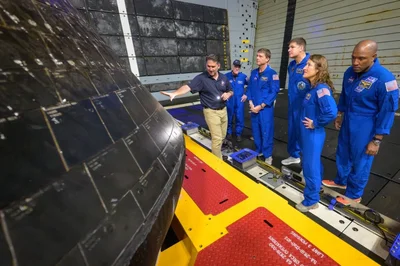
When Artemis 2 came blazing back to Earth on April 10, all eyes were on the Orion spacecraftâs heat shield. This critical hardware, designed to protect the capsule and its crew from the extreme temperatures of atmospheric reentry, didnât perform as expected during the uncrewed Artemis 1 mission. But this time, it proved itself.
After conducting an initial review of the heat shield, NASA confirmed Monday that it âperformed as expected, with no unusual conditions identified.â Underwater photographs taken after splashdown, followed by inspections aboard the recovery ship, showed the abnormal charring that occurred during Artemis 1 was âsignificantly reduced, both in terms of quantity and size.â
NASA will continue to assess the heat shieldâs performance over the coming weeks, but these early findings clearly show a significant improvement between Artemis 1 and Artemis 2.
Case closed on that âmissing chunkâ
After Artemis 2 splashed down, the spaceflight community was quick to begin its own review of the heat shield based on photos released by NASA. One zoomed-in image that made the rounds on social media appeared to show a large chunk of material missing from Orionâs underside, where the heat shield is located.
Controlled ablation is expected during reentryâthatâs how the shield transfers heat away from the capsule. But the photo led some to speculate that this missing chunk was a sign of abnormal ablation. NASA Administrator Jared Isaacman quickly assuaged those concerns in a statement posted on X, and a newly released photo of Orion taken by the dive team now offers a clearer view of the area in question.
The image confirms that the discolored patch was not caused by unexpected material loss. In his earlier statement, Isaacman said it aligned with the heat shieldâs compression pad area, which behaved as engineers expected based on pre-flight testing, and the photo corroborates that assessment.
A clean slate for Orion
Itâs easy to understand why some jumped to conclusions after seeing the initial image.
When Artemis 1 exposed a worrying problem with Orionâs heat shield, NASA opted to modify Artemis 2âs skip-entry trajectory rather than alter the shieldâs design. Based on a thorough investigation of the issue, engineers believed this would prevent gas from building up beneath the shieldâs outer layer, which is what caused the cracking and abnormal ablation.
Some members of the spaceflight community were skeptical of this fix. Charles Camarda, a retired NASA astronaut, argued that engineers didnât fully understand the root cause of the Artemis 1 heat shield damage and therefore couldnât predict how it would perform under a modified reentry profile.
Fortunately, the fix worked. The Artemis 2 astronautsâNASAâs Reid Wiseman, Victor Glover, Christina Koch, and the Canadian Space Agencyâs Jeremy Hansenâreturned to Earth safe and sound, and NASAâs initial review raises no major concerns about the heat shieldâs performance.
Over the next few weeks, the agency will review airborne imagery of Orion captured during reentry to pinpoint exactly when the minimal charring occurred and further assess the heat shield. The capsule will return to the Multi-Payload Kennedy Space Center later this month for additional examination during de-servicing, and over the summer, the heat shield will undergo sample extraction and internal X-ray scans at Marshall Space Flight Center.
While more details about the heat shieldâs performance will likely surface from this review process, itâs already clear that it did its job. This achievement will pave the way for Orion to fly future crewed missions to the Moon and beyond.