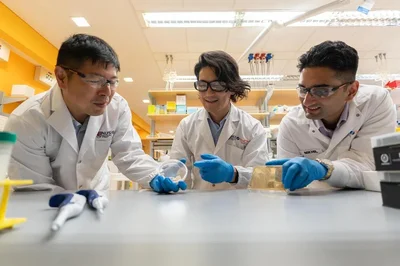
SINGAPORE – Researchers from the National University of Singapore (NUS) have successfully engineered strains of good gut bacteria to protect the brain from toxins produced as a result of liver failure.
The programmed bacteria prevent the toxins from reaching the brain and also reduce their build-up – the levels of toxins from liver failure, such as ammonia, are up to 10 times lower, comparable to brain ammonia levels in healthy conditions.
These results came from an eight-year study published on April 24 in Cell, a peer-reviewed scientific journal that focuses on research in the life sciences.
When the liver fails, ammonia – which should be filtered from the blood – builds up and reaches the brain, resulting in hepatic encephalopathy (HE), a neurological complication of liver disease that can cause anxiety, confusion, memory loss and, in severe cases, coma and death.
HE is a common endpoint of liver cirrhosis. “It is the No. 1 cause of hospital readmissions for patients with liver cirrhosis and 40 per cent (of them) experience recurrence,” said Dr Nikhil Aggarwal, a senior research fellow on the team behind the study.
It is a frequent cause of hospitalisations for such patients and places a heavy burden on the patients and healthcare systems worldwide, he added.
Professor Matthew Chang, who led the study, said NUS Synthetic Biology for Clinical and Technological Innovation has applied for a patent to support the translation of the technology towards clinical use.
The next steps for these researchers would be evaluating the long-term performance of the engineered strains of the bacteria, and expanding the platform to target other diseases linked to metabolic imbalance.
“We want to move our work from bench to bedside and even into the clinic in the long run, and develop a new class of programmable, microbe-based therapies,” said Prof Chang, director of NUS-SynCTI.
The current treatments for HE – using lactulose, which is a laxative, and rifaximin, an antibiotic – offer only partial relief.
“(They) work primarily by reducing ammonia production in the gut, but neither corrects the full spectrum of metabolic disruptions that drive the disease. Patients remain vulnerable to recurrence,” said Prof Chang.
“Rifaximin carries the added risk of disrupting the gut’s natural microbiome. Therefore, we saw that a fundamentally different approach was needed to tackle several disease drivers at the same time.”
Unlike the standard treatments, which broadly suppress gut bacteria, Prof Chang added that the approach by his team uses live biotherapeutics to precisely reprogramme metabolism while preserving the natural gut ecosystem.
The scientists from NUS-SynCTI redesigned the bacteria into two complementary therapeutic strains for consumption in the form of powder or capsule.
The first strain absorbs excess ammonia from the gut and converts it into amino acids, the building blocks of proteins. The second breaks down Lglutamine, a non-essential amino acid present abundantly throughout the body, before it is converted into ammonia.
“We found the engineered gut bacteria can simultaneously remove toxic ammonia, restore essential nutrients and improve brain-related outcomes,” Prof Chang said.
“This directly addresses a major limitation of the current treatments, which typically target only a single root cause rather than the full spectrum.”
Compared with the antibiotics currently used, the engineered bacterial cocktail also achieved stronger improvements in reducing anxiety and short-term memory loss.
With the engineered gut bacteria, neuronal signalling was also found to normalise and brain swelling reduced, suggesting gut metabolic correction can drive benefits in the central nervous system, Prof Chang said.
Safety studies in the laboratory of around a month showed the bacteria were well tolerated, showed no signs of systemic toxicity, and were cleared within 72 hours of the final dose, Dr Aggarwal said.