The story so far:
The Union Cabinet on Friday (July 31, 2026) approved an outlay of ₹84,084 crore for the Oil Ministry’s National Offshore Exploration Scheme.
‘Samudra Manthan’ seeks to provide a fillip to India’s ambitions in deepwater and ultra-deepwater explorations. The scheme, which, among other things, seeks to de-risk offshore exploration and catalyse private investments, calls for the corpus to be utilised through fiscal year 2030-31.
What purpose is the ₹84,084 crore allocation intended to serve?
Hydrocarbon exploration by its very nature is a complex, capital-intensive activity which holds long gestation periods – typically five to ten years spanning from when an exploration block is awarded to the commencement of commercial production.
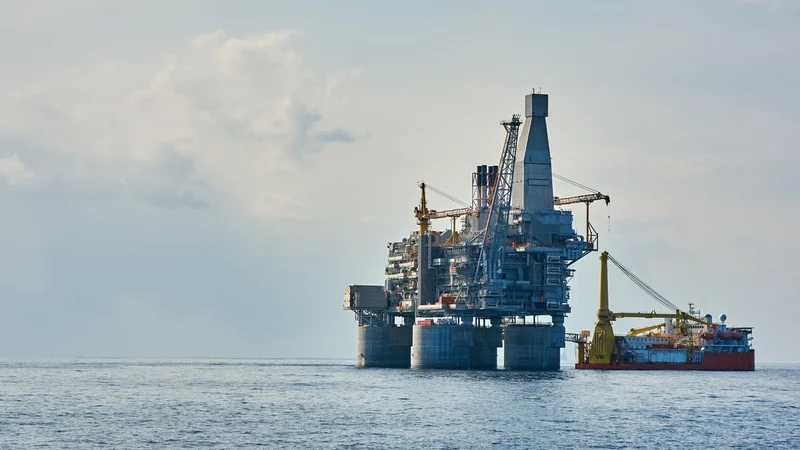
Deepwater and ultra-deepwater – which entail extracting oil and gas from beneath the ocean’s floor – require further advanced technology and enhanced investment.
The Oil Ministry sees future hydrocarbon potential in India’s deepwater and ultra-deepwater basins, such as Krishna-Godavari, Cauvery, Mahanadi and the Andaman region.
According to government estimates, a single deepwater exploratory well in these frontier areas could cost approximately $125 million to $150 million.
Thus, with exploration being mired in probabilities about the potential for hydrocarbon presence, it makes it a risky and expensive bet. This is precisely the paradigm the government is looking to de-risk.
“Recognising the high-risk, high-cost nature of such exploration, the Government is adopting a risk-sharing approach to encourage sustained investment, accelerate exploration, and unlock India’s offshore hydrocarbon resources,” read the government statement.
An additional factor for the impetus for driving exploration in deepwater and ultra-deep water is to avert the complete reliance on ageing oil and gas fields at present.
According to government estimates, existing oil and gas fields have witnessed a natural production decline of about 6-7% every year.
What are the specific components of the outlay?
The overall outlay is categorised into four broad components.
The first of these entails seismic data acquisition – that is, mapping the location and properties of oil and gas that may be present under the seabed. It carries an outlay of ₹28,534 crore.
The other concern is the development of common offshore infrastructure hubs to facilitate commercialisation of discoveries, which would be accounting for an outlay of ₹10,000 crore.
The third of these concerns the establishment of oil and gas manufacturing and services zones – seeking to promote domestic manufacturing and localisation of critical equipment and services – and tabulates an outlay of ₹2,000 crore.
Finally, the most important of these relates to drilling 60 deepwater exploration wells for which the Cabinet has allocated ₹43,200 crore.
This is inclusive of the government of up to 50% of the eligible drilling cost or ₹675 crore per well.
Where do we currently stand with our deepwater and ultra-deepwater explorations?
India’s two major exploration-production companies, that is, state-owned Oil India Limited (OIL) and Oil and Natural Gas Corp (ONGC), have made significant strides in the realm.
ONGC has charted plans to drill 150 deepwater wells over the next seven years and tap into an estimated 5,600 million metric tonnes of oil equivalent (MMTOE) of deepwater and ultra-deepwater hydrocarbon potential.
Its peer Oil India is already exploring the Andaman frontier and has reported natural gas in Vijayapuram-2 and Vijayapuram-3.
Further, round ten of the Oil Ministry’s Open Acreage Licensing Policy (OALP) put up one block in deep water and twelve blocks in ultra-deep-water areas for auctioning.
The latest round, eleven, features one block in deepwater and four blocks in ultra-deepwater areas.
Subject to exploration success, the Samudra Manthan program seeks to increase the country’s domestic oil and gas production from about 62 million metric tonnes of oil equivalent (MMTOE) to 80 MMTOE annually.
It also intends to expand the country’s hydrocarbon resource base from 1.6 billion tonnes of oil equivalent to 2.2 billion tonnes of oil equivalent.
“The additional production has the potential to reduce crude oil imports by nearly ₹1 lakh crore annually, strengthening India’s energy security and reducing import dependence,” the government observed.
Published - August 01, 2026 09:33 pm IST