So, when the University of Otago contacted me a few months later and asked if I’d be interested in taking part in a heart study, I naturally assumed they simply wanted the cute patient back.
As it turns out, it had a little more to do with heart failure than the way I looked in a hospital gown, which, despite the name, is really just a large bib with containment issues.
Maybe it’s time for a redesign. We can replace heart valves and perform keyhole surgery; surely someone can invent a gown that successfully contains a grown adult.
I am still sorry to the lady who witnessed my wardrobe dome malfunction.
So back to business, the study is looking at musclin, an exercise-responsive hormone, and how it may affect people with heart failure.
Now, I could pretend I understood every scientific detail explained to me, but anyone who knows me also knows my scientific career peaked when I successfully made a baking-soda volcano in primary school.
There were bubbles. There was vinegar. It was magnificent. But it has been downhill academically ever since.
My only question for the scientists was whether this would make me better ... stronger ... faster.
After all, I grew up watching The Six Million Dollar Man, so I thought I had a pretty good understanding of how these things worked.
I then watched my joke crash with about the same impact as Steve Austin’s rocket. Slight hit to my stand-up ego.
And I do still find myself running in slow motion every now and then, just in case that famous “duh duh duh duh ...” soundtrack suddenly kicks in.
But the real reason I said yes had nothing to do with slow-motion soundtracks.
After everything that happened last year, taking part in the study felt like the smallest opportunity to repay a tiny part of the debt I owe the people who looked after me.
Because before I ended up in hospital, if you’d asked me who worked there, I probably would’ve said doctors and nurses.
Now I realise that’s a bit like saying the All Blacks are just the Barretts.
They’re incredibly important, of course. But they’re only part of the team.
Hospitals are full of people quietly doing jobs most of us never really think about until we’re the person lying in the bed.
Of course you notice the doctors and nurses.
But you also notice the healthcare assistants checking your blood pressure and pulse at three in the morning, somehow managing to be cheerful at an hour when neither of you really wants to be awake.
You notice the orderlies who steer hospital beds through corridors with the sort of precision that makes supermarket trolley navigation look amateurish.
You notice the cleaner who quietly appears and somehow makes a hospital room feel just a little bit more like somewhere you wouldn’t mind spending another day.
They even do that little chop thing with the pillow.
You notice the person delivering meals. And this may be controversial, but I actually liked the hospital food.
Every week, there seems to be another story about artificial intelligence, automation and technology making things faster, cheaper and more efficient within our health system.
And don’t get me wrong. Some of that is exciting.
If technology can reduce paperwork, speed up diagnoses or give doctors and nurses more time with patients, that’s a wonderful thing.
But I hope we never mistake efficiency for humanity.
I don’t want a robot delivering my meal, taking my blood pressure.
Because the moments I remember most from the hospital weren’t particularly medical.
They were human.
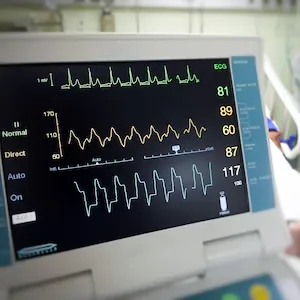
Someone noticing I looked worried and explaining what the tangle of wires connected to my chest were for. Don’t cut the red wire!
The person who sat with me at two in the morning while I had a panic attack.
When I agreed to be part of the heart study, I thought I was giving something back.
Maybe I did. But I suspect I got far more out of it than they did.
So to everyone who looked after me, and to the researchers still trying to make life a little better for people they’ll probably never meet, thank you.
You reminded me that, while machines can monitor a heartbeat, it’s people who help to heal one.